
Zimbabwe’s capital markets are undergoing a historic shift after billionaire telecoms magnate Strive Masiyiwa drove the Victoria Falls Stock Exchange (VFEX) past its 132-year-old rival, the Zimbabwe Stock Exchange (ZSE), in total market value. The milestone follows the $1 billion listing of Econet InfraCo, a key infrastructure arm of Econet Wireless, on March 31. The listing alone now accounts for nearly a quarter of VFEX’s total market capitalisation, underscoring the growing influence of the US dollar-denominated exchange. A turning point for Zimbabwe’s markets Launched in 2020 at the heig
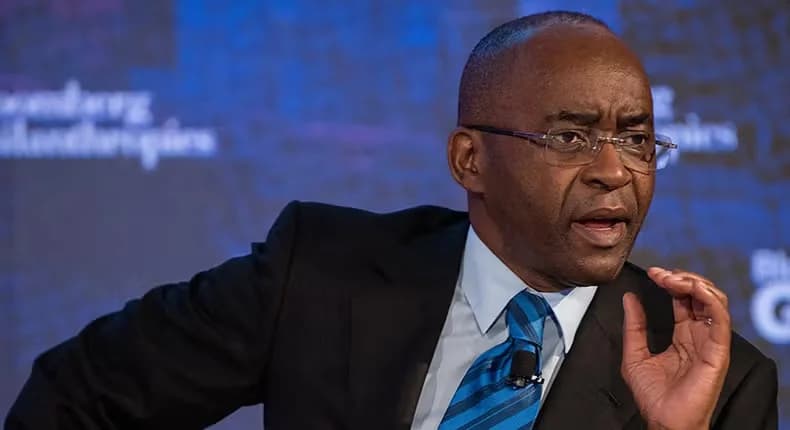
Zimbabwe’s capital markets are undergoing a historic shift after billionaire telecoms magnate Strive Masiyiwa drove the Victoria Falls Stock Exchange (VFEX) past its 132-year-old rival, the Zimbabwe Stock Exchange (ZSE), in total market value. The milestone follows the $1 billion listing of Econet InfraCo, a key infrastructure arm of Econet Wireless, on March 31. The listing alone now accounts for nearly a quarter of VFEX’s total market capitalisation, underscoring the growing influence of the US dollar-denominated exchange. A turning point for Zimbabwe’s markets Launched in 2020 at the height of Zimbabwe’s currency volatility, the VFEX was designed to attract foreign and institutional investors by offering trading exclusively in US dollars. That model has increasingly appealed to investors wary of exchange rate instability and capital controls that have long affected valuations on the ZSE. The latest development signals a decisive shift in investor confidence. While the ZSE has historically dominated Zimbabwe’s financial landscape, concerns over local currency depreciation have pushed companies and investors to seek more stable alternatives. VFEX’s structure, which ensures pricing stability and easier capital repatriation, has positioned it as a rising hub for regional capital flows. Econet’s strategic restructuring At the centre of this transformation is Econet’s ongoing restructuring. Once the most valuable and actively traded counter on the ZSE since its 1998 listing, Econet has gradually moved critical assets to the VFEX. Econet InfraCo now houses the group’s telecom towers, fibre networks, and rapidly expanding data centre operations. The spin-off is also expected to anchor several of Masiyiwa’s long-term investments, including the planned Econet Tech City near Harare’s airport, a luxury resort development in Victoria Falls, and further digital infrastructure expansion. The transition has not been without controversy. Earlier this year, shareholders raised concerns over delisting terms and valuation transparency. However, revisions to the process allowed the migration to proceed, clearing a major hurdle for the company’s restructuring strategy. Growing pressure on the ZSE VFEX’s rise is already reshaping Zimbabwe’s financial ecosystem. With its market capitalisation now surpassing that of the ZSE, pressure is mounting on the older exchange as more listed firms consider migrating to the dollar-based platform. Analysts view the shift as part of a broader realignment of Zimbabwe’s capital markets toward hard-currency instruments. For policymakers, it presents both an opportunity to attract foreign investment and a challenge to restore confidence in the local currency system. A symbolic and strategic shift For Strive Masiyiwa, the move represents more than a corporate restructuring—it marks a strategic bet on the future of Zimbabwe’s financial markets. By anchoring major assets on the VFEX, Econet has effectively accelerated the exchange’s rise and reshaped the country’s investment landscape. As VFEX gains momentum, its success could redefine how capital is raised and deployed in Zimbabwe, potentially setting a precedent for other African markets grappling with currency volatility and investor confidence.



Comments
No comments yet. Be the first to share a thought.