
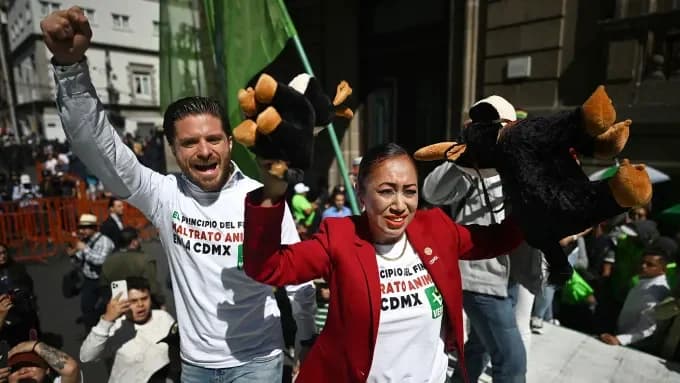
Mexico City has taken a historic step in reforming bullfighting practices, passing a measure aimed at significantly reducing harm to both bulls and matadors. Introduced by Mayor Clara Brugada of the Morena party, the legislation received strong backing with 61 votes in favor and just one against, reflecting a growing movement towards animal welfare. The new regulations strictly prohibit the use of sharp weapons, including spades, lances, banderillas, and swords. Instead, bullfighters are limited to using capes and muletas, while bulls will have their horns covered to minimize human injury. Mo
Mexico City has taken a historic step in reforming bullfighting practices, passing a measure aimed at significantly reducing harm to both bulls and matadors. Introduced by Mayor Clara Brugada of the Morena party, the legislation received strong backing with 61 votes in favor and just one against, reflecting a growing movement towards animal welfare. The new regulations strictly prohibit the use of sharp weapons, including spades, lances, banderillas, and swords. Instead, bullfighters are limited to using capes and muletas, while bulls will have their horns covered to minimize human injury. Moreover, bulls will now spend a maximum of 15 minutes in the ring before being returned to their owners without being sacrificed. Animal rights activists have hailed the decision as a significant victory. Anton Aguilar, executive director of Humane World for Animals Mexico, emphasized that while it is not an outright ban, it represents a crucial step toward eliminating animal cruelty for entertainment. The law will take effect in 210 days, allowing time to develop detailed guidelines. Despite support from activists, the reform has ignited fierce opposition among bullfighting enthusiasts and industry stakeholders. Outside the local congress, angry protests erupted as demonstrators clashed with police, some even attempting to break into the building. Traditionalists argue that the new regulations undermine a cultural practice dating back to 1526 and pose a threat to the economy. The bullfighting industry claims to generate around 80,000 direct jobs and 146,000 indirect jobs nationwide, contributing approximately $400 million annually. According to Reuters, this decision aligns with a growing trend in Latin America, where several countries, including Colombia, are phasing out violent bullfighting practices. Additionally, multiple Mexican states such as Sonora, Guerrero, Coahuila, Quintana Roo, and Sinaloa have enacted full bans, reflecting a shift in public sentiment. As Mexico City prepares for the implementation of the new regulations, debates continue over whether the changes strike the right balance between preserving cultural heritage and promoting animal welfare. The upcoming months will be crucial in determining the effectiveness of the reform and its acceptance among both advocates and critics.



Comments
No comments yet. Be the first to share a thought.