
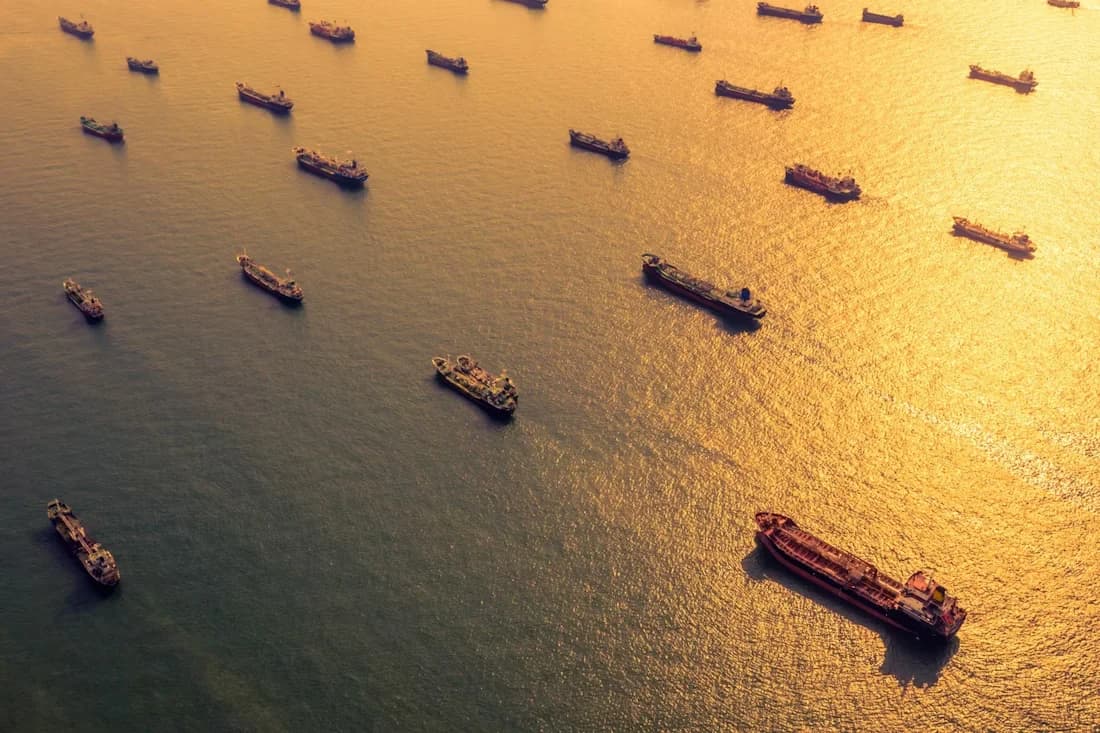
The ongoing conflict in the Middle East has triggered the largest disruption in global oil supply in history, according to the International Energy Agency (IEA) March 2026 Oil Market Report. Crude and refined oil flows through the Strait of Hormuz have plunged from around 20 million barrels per day (mb/d) before the conflict to a near standstill, forcing Gulf producers, including Iraq, Kuwait, Saudi Arabia, the UAE, and Qatar, to cut at least 10 mb/d of oil production. Analysts say the situation has worsened significantly: Iran has begun laying mines in the Strait, according to US intelligence
The ongoing conflict in the Middle East has triggered the largest disruption in global oil supply in history, according to the International Energy Agency (IEA) March 2026 Oil Market Report.
Crude and refined oil flows through the Strait of Hormuz have plunged from around 20 million barrels per day (mb/d) before the conflict to a near standstill, forcing Gulf producers, including Iraq, Kuwait, Saudi Arabia, the UAE, and Qatar, to cut at least 10 mb/d of oil production.
Analysts say the situation has worsened significantly: Iran has begun laying mines in the Strait, according to US intelligence sources cited by CNN, while Iranian forces have fired on at least one vessel attempting to pass. US Central Command destroyed 16 Iranian minelaying vessels on March 11 in a preemptive strike, though the threat to shipping remains active.
Global oil supply is projected to fall by 8 mb/d in March, with losses partially offset by higher output from non-OPEC+ producers such as Kazakhstan and Russia. On average, global oil supply is expected to rise 1.1 mb/d in 2026, entirely driven by non-OPEC+ producers.
The conflict has also hit refined product markets. More than 3 mb/d of Gulf refining capacity has shut due to attacks or limited export outlets, while diesel, jet fuel, and LPG markets are particularly vulnerable. Petrochemical production has slowed, and flight cancellations in the region are curbing jet fuel demand.
In response, IEA Executive Director Fatih Birol announced on 11 March that 400 million barrels from emergency reserves will be released to support global markets. Birol said the emergency stocks provide only a temporary buffer, and that restoring transit through the Strait of Hormuz remains the critical factor for market stability.

Dr Fatih Birol, Executive Director of the International Energy Agency
Market analysts warn that the reserve release will only offset a fraction of the roughly 15 mb/d net supply loss if the Strait closure continues, leaving prices highly sensitive to ongoing disruptions.
Oil prices have been volatile. Following joint U.S.–Israel strikes on Iran on 28 February, Brent crude surged $20/bbl to nearly $120/bbl, then eased to around $92/bbl before climbing back to $97.67/bbl as of the evening of March 11, according to France 24. Analysts caution that prices remain highly unstable and could react sharply to further developments.
The IEA report underscores that even with emergency stock releases, global energy markets face sustained risk until shipping routes are secured and regional infrastructure restored. https://www.iea.org/reports/oil-market-report-march-2026



Comments
No comments yet. Be the first to share a thought.