
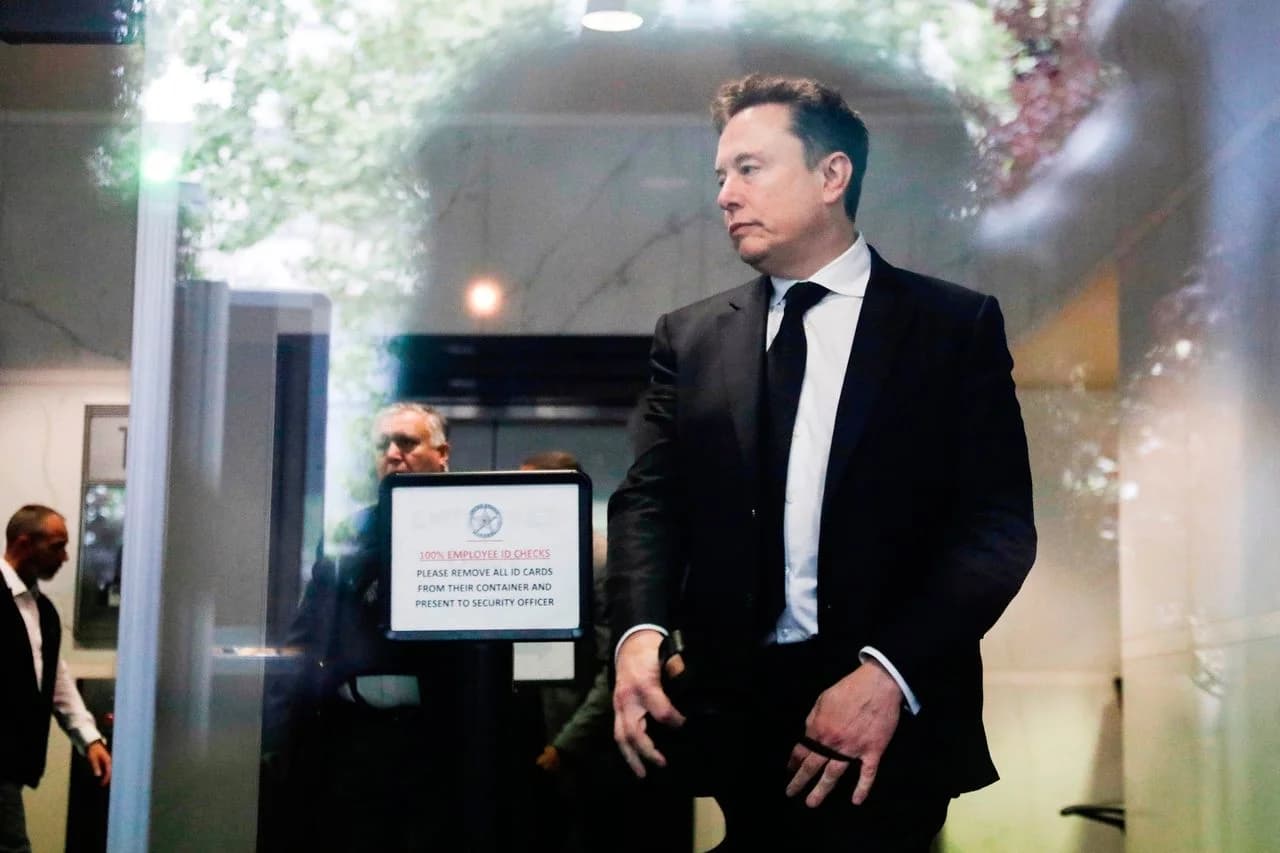
A United States jury has ruled against tech billionaire Elon Musk in his legal battle against artificial intelligence company OpenAI, finding that he waited too long to bring his claims to court. The jury in Oakland, California, reached its advisory verdict after roughly 90 minutes of deliberation on Monday, concluding that Musk's lawsuit was barred by the statute of limitations. Presiding Judge Yvonne Gonzalez Rogers said she agreed with the finding and confirmed she would adopt it as the court's own. "I think there is a substantial amount of evidence to support the jury's finding, which is w
A United States jury has ruled against tech billionaire Elon Musk in his legal battle against artificial intelligence company OpenAI, finding that he waited too long to bring his claims to court.
The jury in Oakland, California, reached its advisory verdict after roughly 90 minutes of deliberation on Monday, concluding that Musk's lawsuit was barred by the statute of limitations. Presiding Judge Yvonne Gonzalez Rogers said she agreed with the finding and confirmed she would adopt it as the court's own.
"I think there is a substantial amount of evidence to support the jury's finding, which is why I was prepared to dismiss on the spot," Rogers said.
Musk, who helped co-found OpenAI and contributed approximately 38 million dollars to the organisation in its early years, filed suit in February 2024 against Chief Executive Sam Altman, company president Greg Brockman, and OpenAI itself. He alleged the company's transition to a structure incorporating a for-profit arm amounted to the theft of a charitable organisation.
"I was a fool," Musk told the court earlier this month. "I gave them free funding to create a startup."
OpenAI began as a nonprofit in 2015. It restructured into a capped for-profit entity in 2019 and completed a full conversion into a public benefit corporation late last year. Musk left the organisation in 2018, founded rival AI firm xAI in 2023, and in February 2025 made an unsolicited bid to acquire OpenAI for 97.4 billion dollars, a bid that was rejected.
In an amended filing ahead of the trial, Musk sought 134 billion dollars in damages, directing that any award go to OpenAI's nonprofit arm rather than to himself. He also demanded the removal of Altman and Brockman and called for both executives to surrender all equity and personal financial benefits obtained through OpenAI's for-profit operations to the charity. He further sought to have the company's corporate restructuring unwound entirely.
The jury found, however, that Musk had been aware of the conduct he cited in his lawsuit as far back as 2021, years before he filed the case. OpenAI's legal team argued the suit was brought only after Musk founded xAI, characterising the litigation as a calculated attempt to undermine a rival.
"The finding of the jury confirms that what this lawsuit was, was a hypocritical attempt to sabotage a competitor," said OpenAI attorney William Savitt. "OpenAI is a not-for-profit, mission-driven organisation that has been and will continue to be faithful to that mission."
OpenAI's defence further maintained that Musk's early donations carried no binding commitment to keep the company as a nonprofit, and that he had at various points privately pushed for a for-profit structure to compete with Google.
Attorneys also alleged Musk sought control of that for-profit entity and departed the organisation after failing to obtain it. A prior investigation by the New Yorker found that Musk was involved in discussions about reconstituting OpenAI as a for-profit company as early as September 2017, and had demanded majority control of any such structure.
Microsoft, named as a co-defendant over its investments in OpenAI, welcomed the outcome. "The facts and the timeline in this case have long been clear, and we welcome the jury's decision to dismiss these claims as untimely," a company spokesperson said.
The verdict is a significant relief for OpenAI, which is reportedly targeting an initial public offering as early as the fourth quarter of this year.



Comments
No comments yet. Be the first to share a thought.