
This photo provided by NASA shows the Artemis II SLS (Space Launch System) rocket with the Orion spacecraft atop a mobile launcher at Launch Complex 39B, Thursday, Jan. 29, 2026, at NASA's Kennedy Space Center in Florida. Cape Canaveral, Florida — NASA has postponed its first crewed moon mission in over 50 years due to near-freezing temperatures at Kennedy Space Center, pushing the Artemis II launch to no earlier than February 8, 2026. The space agency canceled a critical fueling test of the 322-foot moon rocket that was scheduled for Saturday, January 31, citing expected extreme cold. The dre
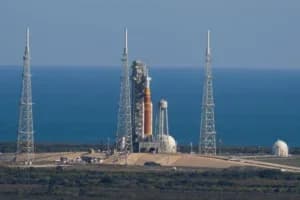
This photo provided by NASA shows the Artemis II SLS (Space Launch System) rocket with the Orion spacecraft atop a mobile launcher at Launch Complex 39B, Thursday, Jan. 29, 2026, at NASA's Kennedy Space Center in Florida.
Cape Canaveral, Florida — NASA has postponed its first crewed moon mission in over 50 years due to near-freezing temperatures at Kennedy Space Center, pushing the Artemis II launch to no earlier than February 8, 2026.
The space agency canceled a critical fueling test of the 322-foot moon rocket that was scheduled for Saturday, January 31, citing expected extreme cold. The dress rehearsal has been rescheduled for Monday, February 2, weather permitting.
Officials said heaters are keeping the Orion capsule warm atop the rocket, and purging systems are being adapted to handle the cold conditions. The delay leaves NASA with only three days in February to launch four astronauts on their journey around the moon before orbital mechanics force the mission into March.
The Artemis II mission will send astronauts farther from Earth than anyone has traveled since the Apollo program ended in 1972. The crew will orbit the moon but not land, testing systems needed for future lunar landings planned under Artemis III.
NASA Administrator Jared Isaacman has stated that a final launch date will only be confirmed after the dress rehearsal is successfully completed. The mission has faced previous delays due to investigations into the Orion spacecraft's heat shield, which showed unexpected erosion during the uncrewed Artemis I test flight in 2022.
The current cold snap affecting Florida is part of the same winter storm system that has brought record low temperatures and heavy snow across much of the United States this month.



Comments
No comments yet. Be the first to share a thought.