
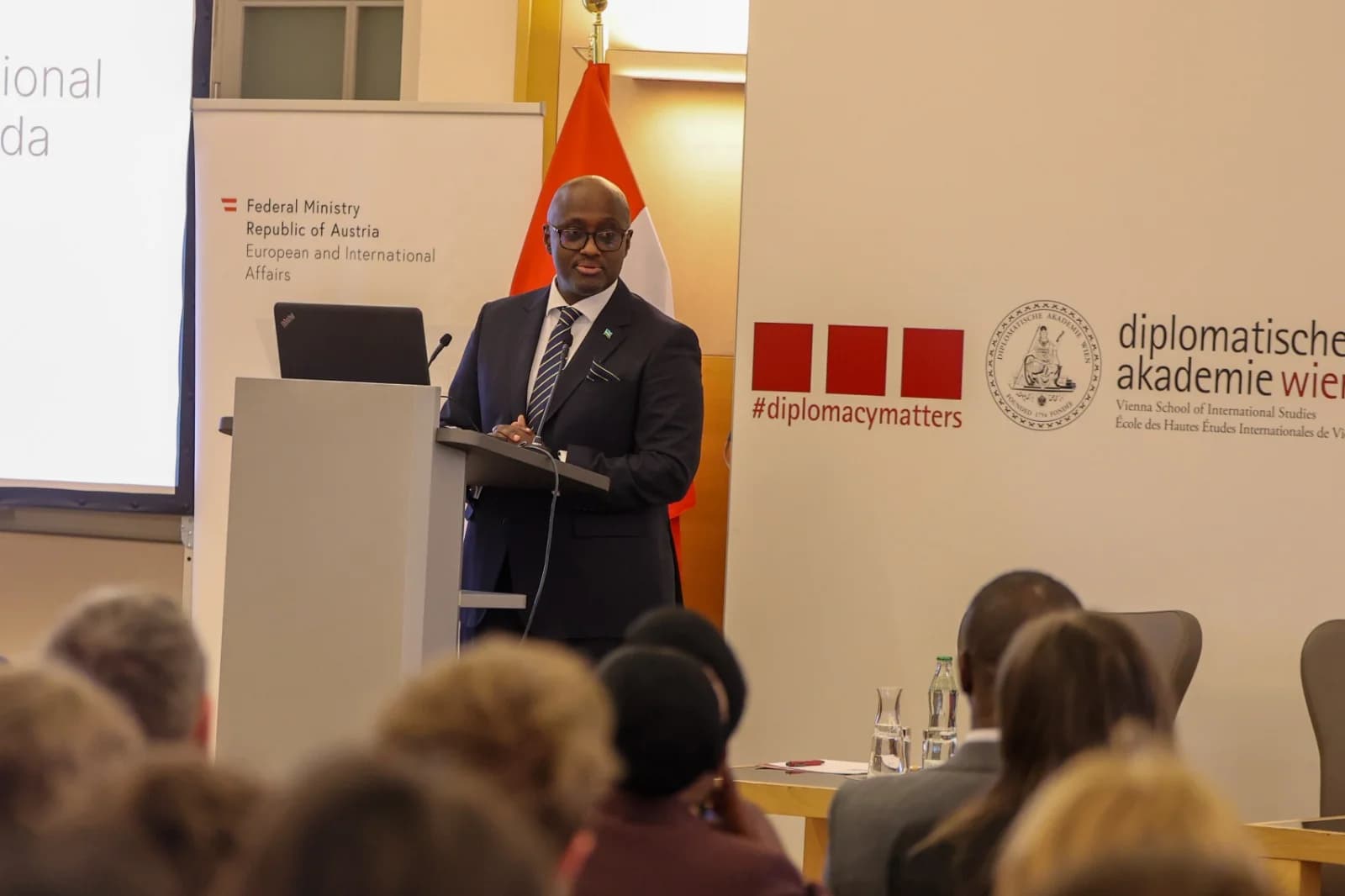
Rwanda’s Minister of Foreign Affairs and International Cooperation, Olivier Nduhungirehe, has called on the international community to remain vigilant against the growing threat of genocide ideology, denial, and distortion worldwide. The Minister made the remarks upon his arrival at the Vienna School of Diplomacy in Vienna, where he is participating in an international conference titled “Learning from the Past, Shaping the Future: Remembrance, Reconciliation and Reintegration – the 1994 Genocide against the Tutsi in Rwanda.” The event is organized by the Austrian Service Abroad in partnership
Rwanda’s Minister of Foreign Affairs and International Cooperation, Olivier Nduhungirehe, has called on the international community to remain vigilant against the growing threat of genocide ideology, denial, and distortion worldwide. The Minister made the remarks upon his arrival at the Vienna School of Diplomacy in Vienna, where he is participating in an international conference titled “Learning from the Past, Shaping the Future: Remembrance, Reconciliation and Reintegration – the 1994 Genocide against the Tutsi in Rwanda.” The event is organized by the Austrian Service Abroad in partnership with the Federal Ministry for European and International Affairs and the Diplomatic Academy of Vienna. In his address, Nduhungirehe stressed that despite global efforts to combat genocide, dangerous narratives continue to evolve. “We are living in a time when genocide ideology, denial, and distortion are not only persisting, but evolving,” he said. He further highlighted the situation in eastern Democratic Republic of the Congo, warning that extremist ideologies targeting Tutsi communities, including the Banyamulenge, remain a serious concern. “In Eastern Democratic Republic of Congo, extremist ideologies targeting Tutsi communities, including Banyamulenge, continue to fuel violence, persecution, and displacement,” he noted. The Minister emphasized that the international community must draw lessons from the 1994 Genocide against the Tutsi in Rwanda and act decisively to prevent similar tragedies. “We cannot afford, as an international community, to repeat the mistakes of 1994,” he concluded. The conference brings together diplomats, scholars, and policymakers to reflect on the legacy of the genocide and explore strategies to strengthen remembrance, reconciliation, and reintegration efforts globally.



Comments
No comments yet. Be the first to share a thought.