
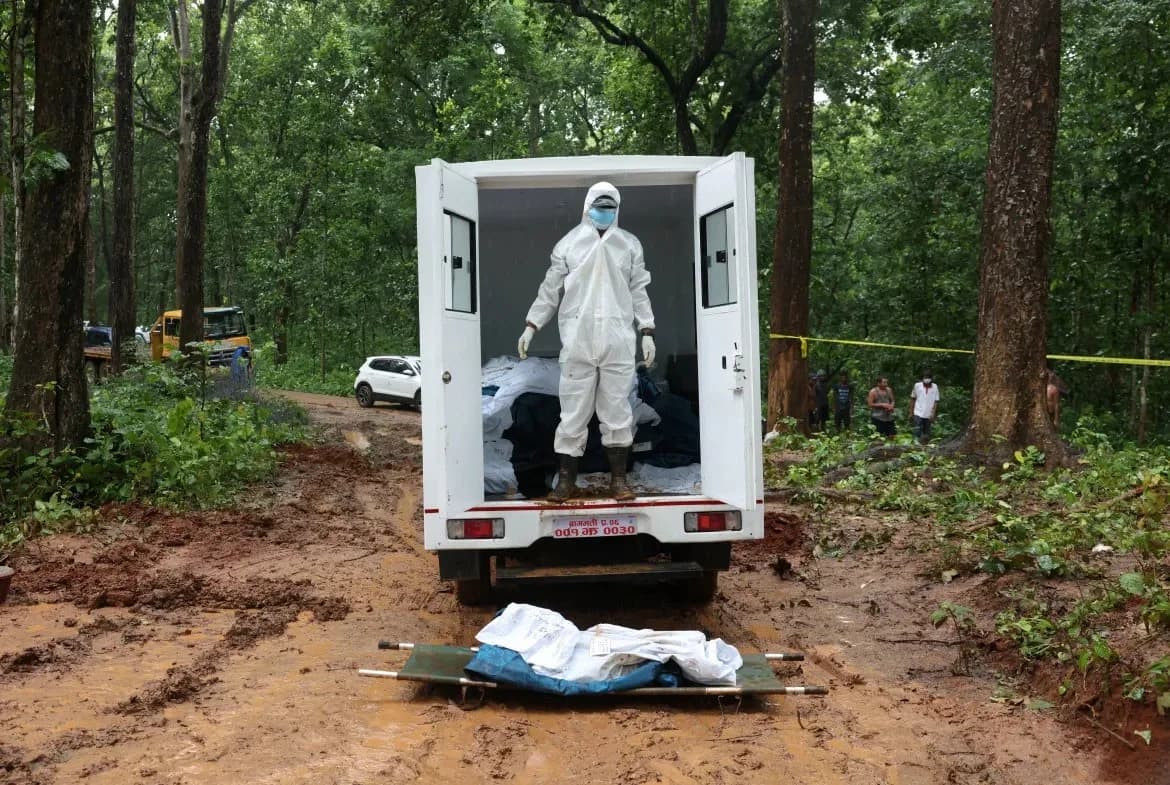
Nepal has begun burying victims of last week’s devastating floods in mass graves after authorities collected DNA samples, as the scale of the disaster overwhelms efforts to identify and provide traditional Hindu funeral rites to the dead. Authorities said Tuesday that 1,003 bodies had been recovered , while 3,916 people remained missing after a massive surge of water, rocks and debris swept through Himalayan valleys on August 26. The disaster was triggered by a high-altitude glacial collapse that sent a destructive wave through parts of Nepal, leaving communities buried under mud and debris.
Nepal has begun burying victims of last week’s devastating floods in mass graves after authorities collected DNA samples, as the scale of the disaster overwhelms efforts to identify and provide traditional Hindu funeral rites to the dead. Authorities said Tuesday that 1,003 bodies had been recovered, while 3,916 people remained missing after a massive surge of water, rocks and debris swept through Himalayan valleys on August 26. The disaster was triggered by a high-altitude glacial collapse that sent a destructive wave through parts of Nepal, leaving communities buried under mud and debris. At the Devghat mass burial site in Chitwan district, unidentified victims are being buried after DNA samples are collected. The number of bodies has made it impossible for authorities to store or identify every victim individually. The mass burials have also disrupted traditional Hindu practices of cremation, prayer and final farewell, leaving families facing the painful uncertainty of not knowing whether their loved ones have been identified. Search teams continue to look for survivors and recover bodies. Police using drones discovered 24 bodies inside a single house in Nuwakot district, while at least 17 bodies have been recovered from rivers downstream in India. Prime Minister Balendra Shah described the catastrophe as “unimaginable and heartbreaking.” As rescue and recovery operations continue, authorities are struggling to balance the urgent need to manage the growing number of victims with families’ desire to give their relatives a dignified final farewell. The disaster has left thousands of families waiting for answers, while Nepal confronts one of the deadliest natural disasters in its recent history.



Comments
No comments yet. Be the first to share a thought.