
Israeli Prime Minister Benjamin Netanyahu’s rejection of a 15-point US-backed roadmap aimed at disarming Hamas and advancing a new political framework for Gaza is unlikely to mark the end of negotiations, with Washington reportedly viewing his position partly through the lens of Israel’s upcoming election. Netanyahu told his cabinet on Sunday that Israel would not accept the proposed roadmap and insisted that Israeli forces would not withdraw from Gaza until Hamas had been fully disarmed. He said disarmament must include all weapons, from heavy weaponry to smaller arms, and warned that Israe
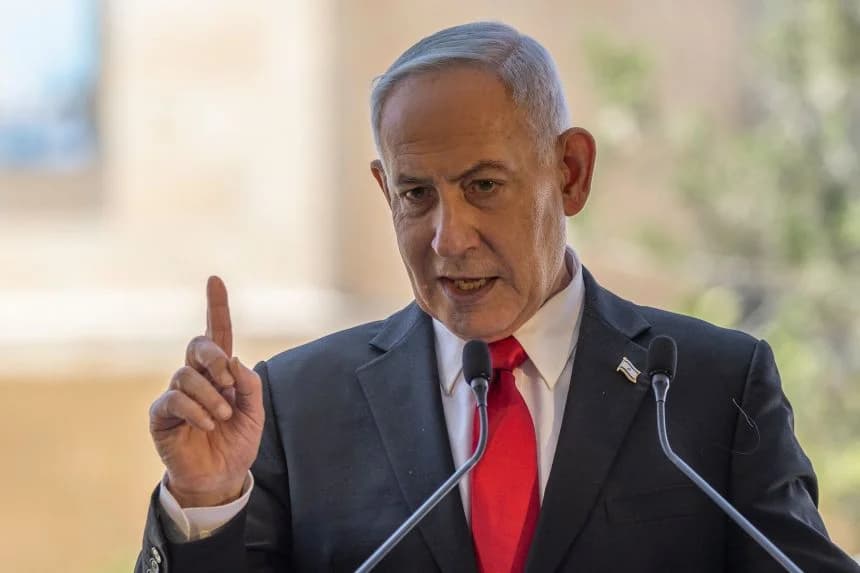
Israeli Prime Minister Benjamin Netanyahu’s rejection of a 15-point US-backed roadmap aimed at disarming Hamas and advancing a new political framework for Gaza is unlikely to mark the end of negotiations, with Washington reportedly viewing his position partly through the lens of Israel’s upcoming election. Netanyahu told his cabinet on Sunday that Israel would not accept the proposed roadmap and insisted that Israeli forces would not withdraw from Gaza until Hamas had been fully disarmed. He said disarmament must include all weapons, from heavy weaponry to smaller arms, and warned that Israel would not accept what he described as a symbolic or incomplete process. Despite the strong rejection, the White House has not publicly condemned Netanyahu’s position. Reports suggest US officials understand the political pressures facing the Israeli leader ahead of Israel’s general election, scheduled for 27 October. The US administration is reportedly more focused on ensuring that Israel continues to limit military operations in Gaza and supports efforts to implement the broader peace framework. The apparent pause in Israeli strikes in recent days has been seen as a possible indication that discussions remain alive. Hamas had demanded a halt to Israeli attacks as part of its agreement to the US-backed roadmap. The plan proposes a phased process under which Hamas and other Palestinian armed groups would surrender and decommission their weapons. Those weapons would then be stored and eventually rendered unusable under the supervision of a new Palestinian administration reporting to the proposed Board of Peace. The framework would also involve an Israeli military withdrawal from large parts of Gaza and the deployment of an International Stabilization Force, which would work alongside a newly established Palestinian police force to provide security. Preparations for the first base for the international force are reportedly still expected to begin in Rafah, in southern Gaza, later this month, potentially opening the way for reconstruction efforts. The roadmap had initially been presented as a potential breakthrough after months of negotiations. Hamas officials indicated that they had accepted the framework, subject to Israel also complying with its commitments. The United Kingdom welcomed the agreement, while the European Union described it as an important step. Israel, however, delayed giving a formal response. Netanyahu eventually rejected the document, reflecting deep scepticism within Israel over whether Hamas would genuinely surrender its weapons and abandon armed resistance. Netanyahu has repeatedly stressed that Israel cannot withdraw from areas of Gaza while Hamas remains capable of operating or governing the territory. The Israeli position is also shaped by the trauma caused by the Hamas-led attacks of 7 October 2023, which triggered the devastating war in Gaza. Netanyahu’s political calculations are particularly important because he is preparing for a difficult election campaign. The 27 October vote will be Israel’s first general election since the October 2023 attacks, and Netanyahu has faced growing pressure over his government's handling of the war and its failure to achieve the “absolute victory” over Hamas that he previously promised. Former US diplomat and veteran Middle East negotiator Aaron David Miller said Netanyahu was facing one of the most consequential elections of his political career, forcing him to balance domestic political pressure with the need to maintain strong relations with US President Donald Trump. Meanwhile, officials involved in the Gaza roadmap have continued efforts to reassure Israel that the proposed arrangement would prioritise Israeli security. Nickolay Mladenov, the High Commissioner for Gaza and one of the key figures involved in negotiations with Hamas, said the plan was designed to ensure Gaza could no longer pose a security threat to Israel. He said the process would be based on verification rather than trust, with Israeli withdrawals taking place only after weapons were independently verified as being removed, stored and eventually rendered unusable. Hamas has indicated that it remains committed to the roadmap and has called on mediators and the Board of Peace to pressure Israel to honour the terms of the agreement. Netanyahu has also confirmed that discussions with US officials are continuing, suggesting that Sunday's rejection may not necessarily end the diplomatic process. Pressure on both Netanyahu and Trump is expected to grow in the coming months. Netanyahu faces a high-stakes election at home, while Trump is preparing for the US midterm elections and faces political pressure over his administration’s handling of the wider Middle East conflict. For now, the future of the Gaza roadmap remains uncertain. Netanyahu’s rejection represents a major obstacle, but continued US-Israeli talks, Hamas’s stated commitment and preparations for an international security presence suggest that negotiations over the plan are far from over.



Comments
No comments yet. Be the first to share a thought.