
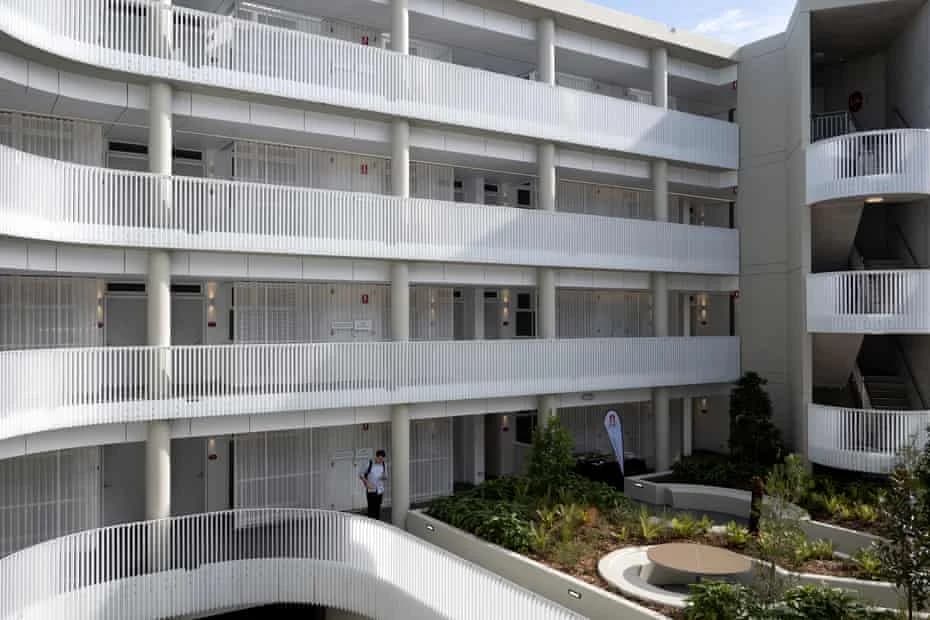
Hundreds of residents will soon move into a new block of inner Sydney apartments designed to combat Australia’s housing crisis by offering modern homes with rents capped at 30% of household income, according to The Guardian's report. The Boronia apartments, in Sydney’s rapidly developing inner south, include induction cooktops, access to a nearby Metro station and a leafy central courtyard. More importantly, they have been purpose-built for people in need of discounted rent, low-income workers, older single women, and those at risk of homelessness. For Vivian Tran, 31, securing one of the 74
Hundreds of residents will soon move into a new block of inner Sydney apartments designed to combat Australia’s housing crisis by offering modern homes with rents capped at 30% of household income, according to The Guardian's report. The Boronia apartments, in Sydney’s rapidly developing inner south, include induction cooktops, access to a nearby Metro station and a leafy central courtyard. More importantly, they have been purpose-built for people in need of discounted rent, low-income workers, older single women, and those at risk of homelessness. For Vivian Tran, 31, securing one of the 74 apartments has meant she can remain in Sydney with her young daughter, Lyla. Until recently, she was considering moving more than three hours north to Forster to live with her parents after private rentals either exceeded her budget or were taken before she could inspect them. “That was very exciting when I received [Boronia’s] email,” Tran said. “It’d be nice to have our own space and start fresh and really start living our lives a little bit.”

Vivian Tran and her four-year-old daughter Lyla will be moving into a Boronia apartment (File: The Guardian)
The five-storey complex features studios through to three-bedroom apartments, all designed to be accessible and easily retrofitted for ageing residents. Project architect Khoa Nguyen from Turner Studios said the aim was to create “a place where you’re proud to live.” Boronia’s rent model is well below typical affordable housing schemes, which often charge 75% of market rates. For a worker earning $1,000 a week after tax—about $52,000 a year—market rents for a two-bedroom apartment nearby would consume their entire income. In Boronia, they would pay around $300 per week. “This is what tackling the housing crisis looks like,” said Michael Fotheringham, managing director of the Australian Housing and Urban Research Institute. “That’s 74 households able to actually have a more productive life. There are lots of other families that need it too.” Australia’s housing need far outpaces supply. About 452,000 households currently live in social housing, but up to 640,000 more may require housing support, according to a May report by Housing Australia. While social housing stock grew by 24,000 dwellings over the past decade, the number of people on public housing waitlists who were homeless or at risk rose by 66%. Dedicated social housing now accounts for just 4% of Australia’s housing stock, down from 6% in the 1990s. Housing Australia has recommended governments restore social housing to 6% of all dwellings in the short term and 10% in the long term. Boronia, delivered by City West Housing, cost $66 million to acquire and build. Unlike for-profit developments, social housing providers cannot sell units to recover costs, meaning the capital remains tied up while ongoing operational expenses continue. “Our purpose is to house people,” said City West Housing chief executive Leonie King. “It’s not the standard development model where you build and sell. You’ve got people who want a long-term home.”
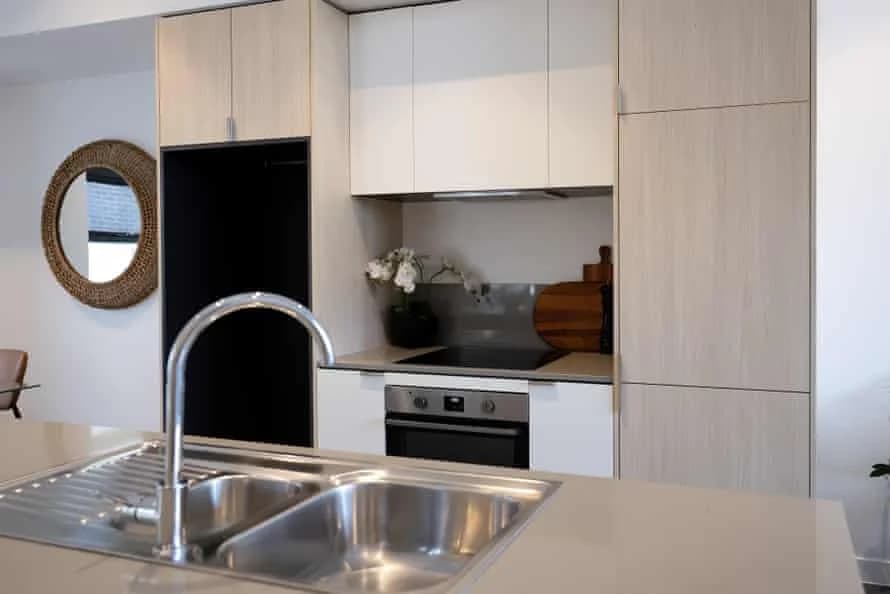
Boronia Apartments’ 30% cap on rents is designed to be well within household budgets. Photograph: Steven Markham/AAP via The Guardian
Boronia received funding from the federal government’s $10 billion Housing Australia Future Fund (Haff), as well as state and local contributions. The Haff aims to deliver 20,000 social housing units and 20,000 “affordable” homes between 2024 and 2029. However, no further funding rounds have been announced, creating uncertainty for providers planning beyond 2029. “The issue is, you eventually run out of cash,” King said. “We’re going to get two projects to shovel-ready, and we think we’ll be able to solve the funding issue, but there’s a bit of a leap of faith.”



Comments
No comments yet. Be the first to share a thought.