
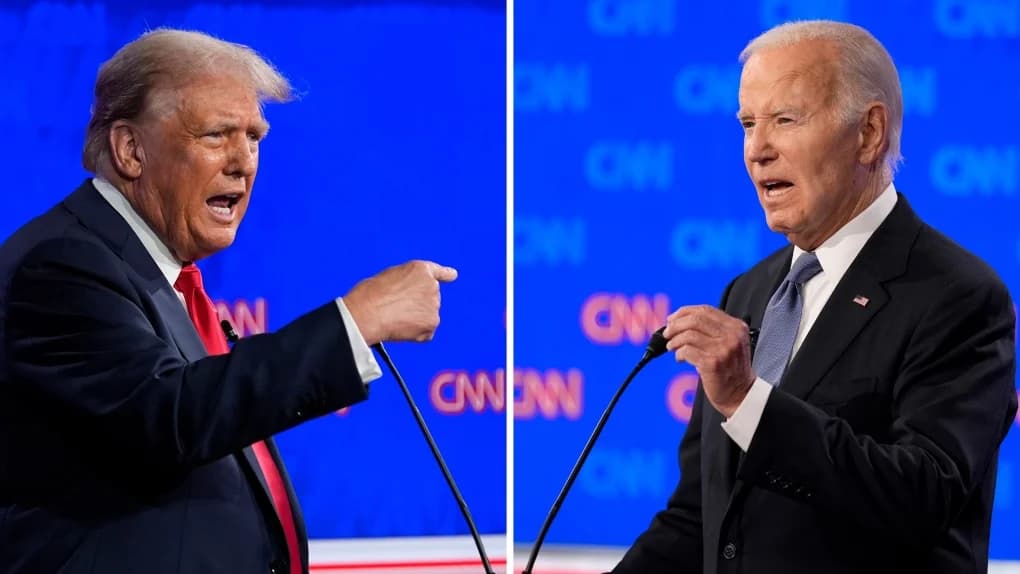
In the ever-evolving landscape of American politics, the role of new media has become increasingly influential. The historic debate on June 27th between President Joe Biden and former President Donald Trump was no exception. Media outlets across the nation were quick to focus on Biden's perceived poor performance during the debate. However, a crucial aspect that has received significantly less attention is the barrage of brutal attack ads launched by the Trump campaign against Biden on the same night. The debate itself was a spectacle of political theater, with both candidates exchanging barb
In the ever-evolving landscape of American politics, the role of new media has become increasingly influential. The historic debate on June 27th between President Joe Biden and former President Donald Trump was no exception. Media outlets across the nation were quick to focus on Biden's perceived poor performance during the debate. However, a crucial aspect that has received significantly less attention is the barrage of brutal attack ads launched by the Trump campaign against Biden on the same night. The debate itself was a spectacle of political theater, with both candidates exchanging barbs and policy disagreements. Critics of President Biden highlighted his occasional stumbles and moments of hesitation, painting a picture of a leader struggling to articulate his vision. Headlines the next day were dominated by critiques of Biden’s debate performance, with numerous articles and opinion pieces scrutinizing his every word and gesture. Yet, amidst the frenzy over the debate, the aggressive media strategy employed by the Trump campaign has been largely overlooked. On the night of the debate, the Trump team unleashed a series of attack ads targeting Biden. These ads were not only strategically timed to coincide with the debate but were also designed to amplify the perceived weaknesses displayed by Biden on stage. The content of these attack ads was brutal and unrelenting. They portrayed Biden as out of touch, ineffectual, and incapable of leading the country. The ads capitalized on moments from the debate, using Biden's own words against him, and were disseminated across multiple platforms, including social media, television, and streaming services. The immediacy and reach of these ads ensured that they were seen by millions of viewers, further shaping public perception of Biden's performance. The new media landscape allows for instantaneous and widespread distribution of political content, and the Trump campaign adeptly utilized these tools. The attack ads were meticulously crafted to resonate with specific voter demographics and to reinforce existing narratives about Biden's competency. By leveraging the power of new media, the Trump campaign effectively amplified the impact of their message, creating a parallel narrative that ran alongside the debate itself. This strategy highlights a broader trend in modern political campaigns, where traditional debates are only one aspect of a multifaceted media approach. The use of real-time attack ads represents a shift towards more aggressive and immediate forms of political communication. It underscores the importance of media literacy among voters, who must navigate an increasingly complex information environment to discern the full picture of political events. While much of the new media focus has been on Joe Biden's debate performance, it is essential to consider the sophisticated and aggressive tactics employed by the Trump campaign. The brutal attack ads launched during the debate exemplify the evolving nature of political strategy in the digital age. As we move forward, understanding these dynamics will be crucial for both political analysts and the electorate in comprehending the full scope of campaign strategies and their impact on public perception



Comments
No comments yet. Be the first to share a thought.