
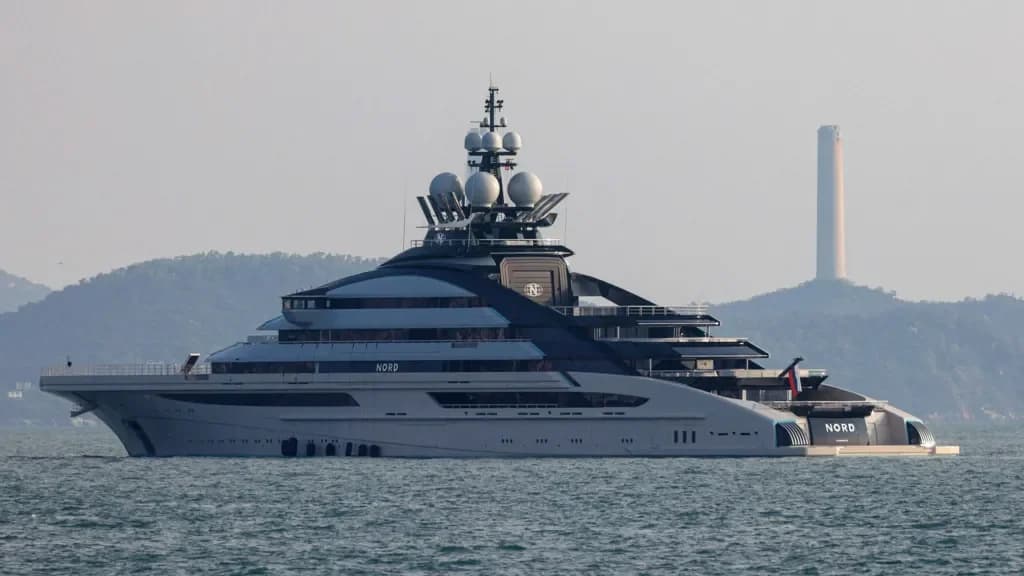
A Russian-linked superyacht has sailed through the heavily restricted Strait of Hormuz after neither Iran nor the United States moved to block its passage, highlighting the diplomatic selectivity shaping access to the critical waterway amid the ongoing regional conflict. The vessel, the Nord , is linked to sanctioned Russian billionaire Alexei Mordashov , owner of steel giant Severstal . Valued at roughly $500 million, it is among the largest superyachts in the world. Alexei Mordashov, with an estimated net worth of about $37 billion (£27 billion), is the richest Russian national, according to
A Russian-linked superyacht has sailed through the heavily restricted Strait of Hormuz after neither Iran nor the United States moved to block its passage, highlighting the diplomatic selectivity shaping access to the critical waterway amid the ongoing regional conflict.
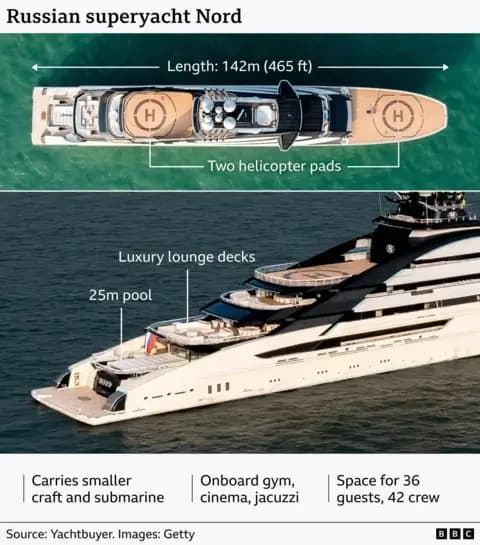
The vessel, the Nord, is linked to sanctioned Russian billionaire Alexei Mordashov, owner of steel giant Severstal. Valued at roughly $500 million, it is among the largest superyachts in the world.

Alexei Mordashov, with an estimated net worth of about $37 billion (£27 billion), is the richest Russian national, according to the U.S. business magazine Forbes. /Getty Images
According to reporting citing a source close to Mordashov, neither Iran nor U.S. forces objected to the yacht’s movement, a decision seen as diplomatic rather than procedural.
Tracking data shows the Nord departed from Dubai on Friday, passed through the Strait of Hormuz, and arrived in Muscat on Sunday morning local time.
Iran did not interfere with the transit because the yacht was considered a civilian vessel from a friendly country conducting peaceful passage, according to a source close to Mordashov cited by The Irish Times.
The Strait of Hormuz, one of the world’s most important oil chokepoints, has seen a sharp decline in traffic since the escalation of the Iran conflict.
Nearly 800 vessels have been left waiting near the passage since the start of the crisis, affecting an estimated 20,000 mariners. Daily ship movements have dropped from more than 150 vessels before the conflict to fewer than 25.
Against that backdrop, the successful transit of a high-profile vessel underscores how access to the strait is being shaped not only by security concerns but also by political calculations.
While oil tankers and commercial cargo vessels remain the primary focus of restrictions, the passage of the Nord illustrates how non-strategic vessels can still move through the corridor when neither side sees an incentive to intervene.
The Strait of Hormuz remains central to global energy flows, and any disruption, or selective enforcement, continues to influence oil markets and geopolitical tensions.



Comments
No comments yet. Be the first to share a thought.