
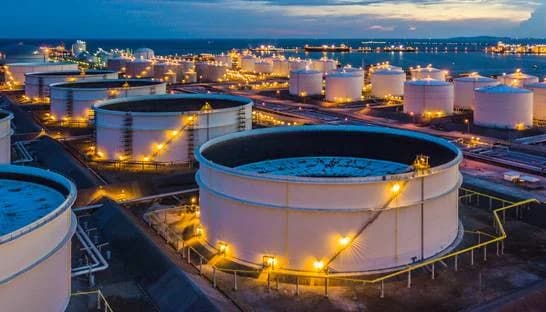
Global oil prices dropped sharply on Tuesday following news that Israel and Iran had agreed to a ceasefire, ending nearly two weeks of heightened conflict that had rattled energy markets. According to the report by BBC, Brent crude, the international benchmark for oil, fell by almost 5% to $68 a barrel; its lowest level since before Israel launched airstrikes on Iran’s nuclear facilities on 13 June. The sharp decline followed concerns in recent days that Iran might retaliate by disrupting global oil supplies through the Strait of Hormuz, a strategic waterway crucial for global oil and gas sh
Global oil prices dropped sharply on Tuesday following news that Israel and Iran had agreed to a ceasefire, ending nearly two weeks of heightened conflict that had rattled energy markets. According to the report by BBC, Brent crude, the international benchmark for oil, fell by almost 5% to $68 a barrel; its lowest level since before Israel launched airstrikes on Iran’s nuclear facilities on 13 June. The sharp decline followed concerns in recent days that Iran might retaliate by disrupting global oil supplies through the Strait of Hormuz, a strategic waterway crucial for global oil and gas shipments. Such fears had driven prices up to as high as $81 a barrel, prompting worries over rising petrol and diesel costs, and broader inflationary pressure. However, markets responded positively to the ceasefire announcement. Stock indices in the UK, Europe, and Asia all posted gains after U.S. President Donald Trump confirmed that a ceasefire “is now in effect,” a move later verified by Israeli authorities. Priyanka Sachdeva, senior market analyst at Phillip Nova announced, "If the ceasefire is followed as announced, investors might expect the return to normalcy in oil." However, she cautioned that "the extent to which Israel and Iran adhere to the recently announced ceasefire conditions will play a significant role in determining oil prices." Oil prices began to pare losses after Israel accused Iran of violating the agreement by launching a missile strike, casting some doubt over the ceasefire’s durability. Despite that, investor optimism lifted major indices. The UK’s FTSE 100 rose by 0.4% in early trading, while France’s CAC-40 climbed 1.4%, and Germany’s DAX jumped 2%. In Asia, Japan’s Nikkei index ended the day up 1.1%, and Hong Kong’s Hang Seng surged by 2.1%. President Trump urged both sides to respect the terms of the truce. Israel said its decision to agree to the ceasefire followed its success in “eliminating the Iranian nuclear threat.” The ceasefire came as relief to energy markets, which had been grappling with fears of prolonged instability. Wholesale UK gas prices, which had surged amid concerns about supply disruptions, dropped 12.5% on Tuesday. Qatar, one of the world's leading suppliers of liquefied natural gas, exports through the Strait of Hormuz, making it a key player in the global energy chain. On Monday, Iran had launched a missile attack on a U.S. military base in Qatar in retaliation for earlier American airstrikes on its nuclear sites, escalating tensions just hours before the ceasefire was announced. The earlier spike in oil prices had reignited fears of rising costs for consumers and businesses worldwide, echoing the economic shock felt after Russia’s invasion of Ukraine three years ago. Economists warned that sustained energy price increases could have led to higher inflation globally, driving up the cost of everything from fuel and food to travel.



Comments
No comments yet. Be the first to share a thought.