
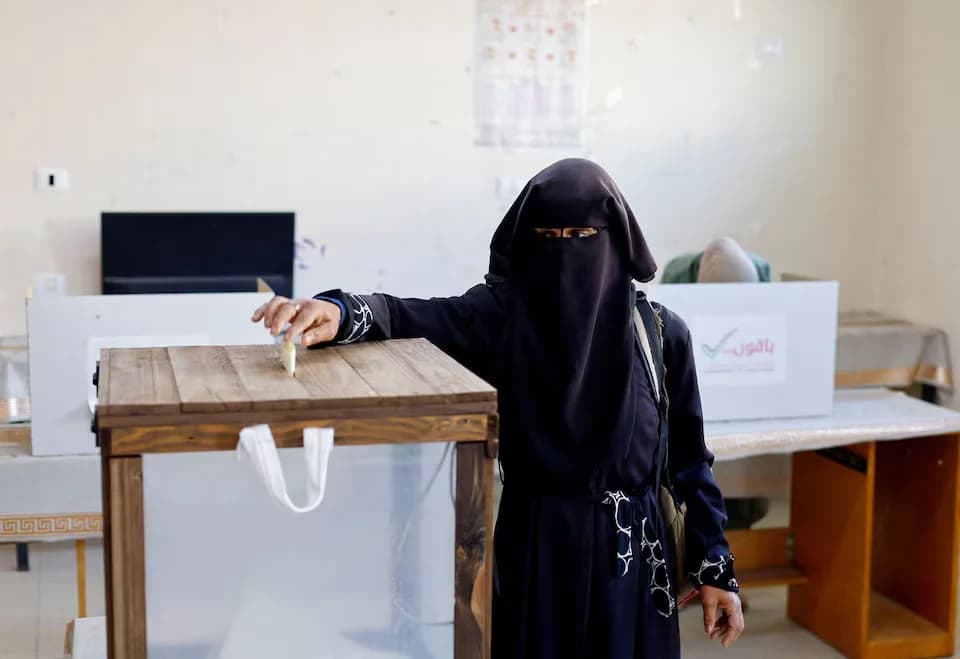
Palestinians cast ballots in local elections on Saturday in a vote that, for the first time in nearly two decades, includes participation from the Gaza Strip. The elections are being viewed as an important test of political sentiment and a potential step toward restoring broader democratic processes across Palestinian territories. Voting in Gaza is limited to the central city of Deir al-Balah, marking the first electoral participation there since 2006. In the West Bank, where local elections were last held four years ago, turnout was higher but still modest. Early figures showed participation
Palestinians cast ballots in local elections on Saturday in a vote that, for the first time in nearly two decades, includes participation from the Gaza Strip. The elections are being viewed as an important test of political sentiment and a potential step toward restoring broader democratic processes across Palestinian territories. Voting in Gaza is limited to the central city of Deir al-Balah, marking the first electoral participation there since 2006. In the West Bank, where local elections were last held four years ago, turnout was higher but still modest. Early figures showed participation at 13.8% in Deir al-Balah and 25.3% in the West Bank by midday, reflecting both logistical challenges and ongoing political uncertainty. The Palestinian Authority, led by President Mahmoud Abbas, hopes the inclusion of Gaza—where it lost control to Hamas in 2007—will reinforce its claim to govern the territory. Abbas emphasized that Gaza remains an integral part of a future Palestinian state and expressed hope that the elections would eventually expand across the entire enclave. Despite the symbolic importance of the vote, the elections are taking place under complex conditions. Much of Gaza remains devastated after years of conflict, and large areas are either under Israeli control or heavily affected by infrastructure damage, limiting where voting can occur. Electricity shortages also forced polling stations in Deir al-Balah to close earlier than those in the West Bank. The broader political context remains tense. Israel continues to exert significant control over both Gaza and the West Bank, while international efforts to establish a long-term political solution have stalled. A U.S.-brokered ceasefire reached in late 2025 has not yet translated into a clear pathway toward peace or statehood. Economically, the Palestinian Authority is under severe strain, struggling to pay public sector wages as Israel withholds tax revenues it collects on its behalf. The financial pressure has raised concerns about institutional stability and added urgency to calls for reform and renewed political legitimacy. The elections have also exposed internal divisions. Hamas officially boycotted the vote, though some candidate lists in Gaza are believed to have links to the group. Meanwhile, many candidates in both Gaza and the West Bank are running under the banner of Fatah or as independents. Analysts say the results could provide insight into public support for different factions, particularly in Gaza, where political dynamics have been largely frozen for years. More than one million Palestinians are eligible to vote, including around 70,000 in Gaza, with results expected within days. While limited in scope, the elections are seen by some as a cautious step toward restoring democratic governance and potentially paving the way for long-delayed legislative and presidential elections across Palestinian territories. Tools



Comments
No comments yet. Be the first to share a thought.