
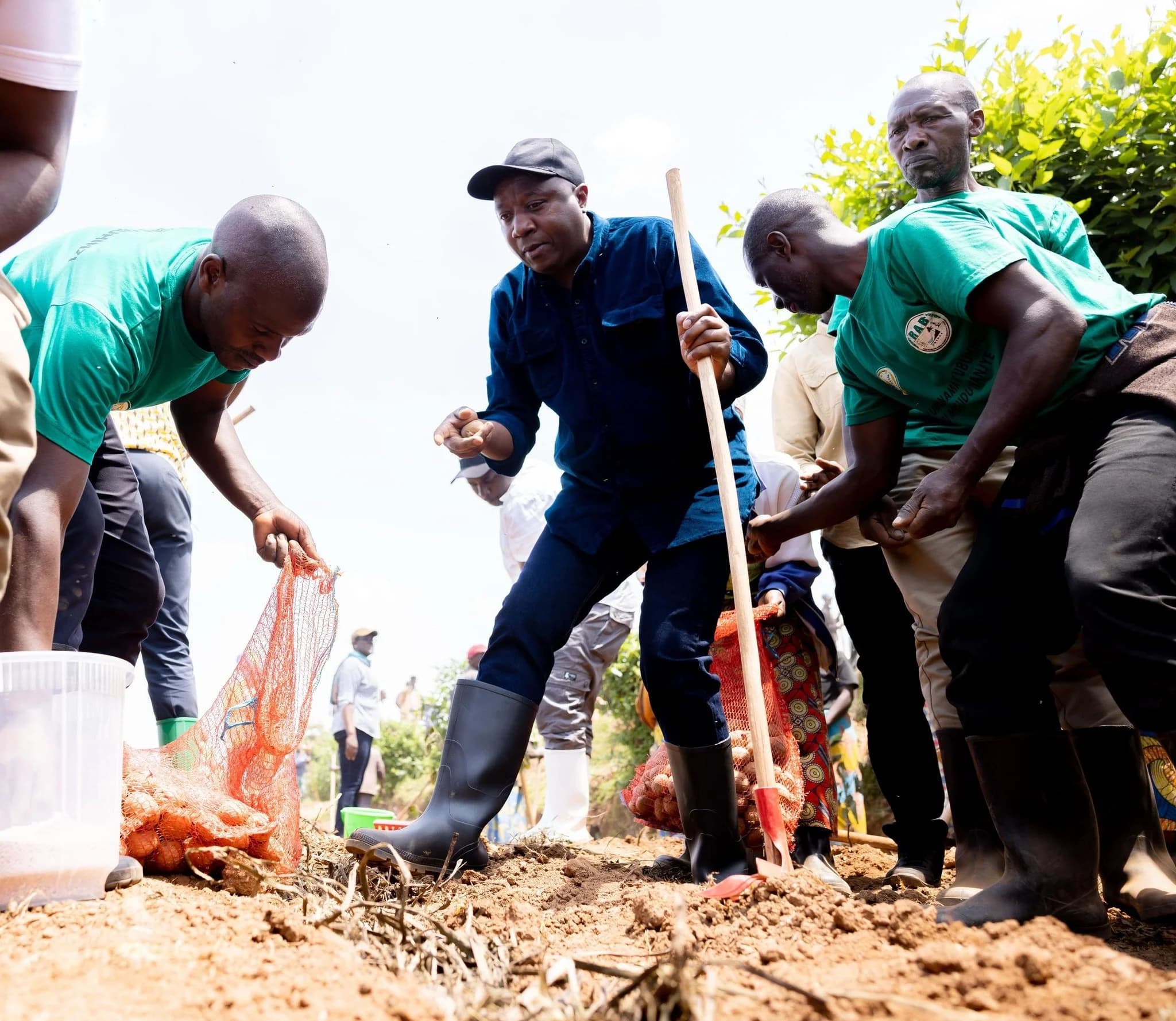
Rwanda’s Prime Minister, Dr. Edouard Ngirente, officially launched the 2025 B Agricultural Season on Friday, February 28, in Burera District, Northern Province. The Prime Minister joined farmers at the Rutuku site in Rusarabuye Sector, Burera District, where potato seeds were planted on 16 hectares. Across the entire Burera District, a total of 7,000 hectares are planned for potato cultivation this season. In this region, potatoes are grown on high hills and wetlands, where the land has been well-prepared and terraced to ensure proper soil conservation. Besides potatoes, farmers in Burera
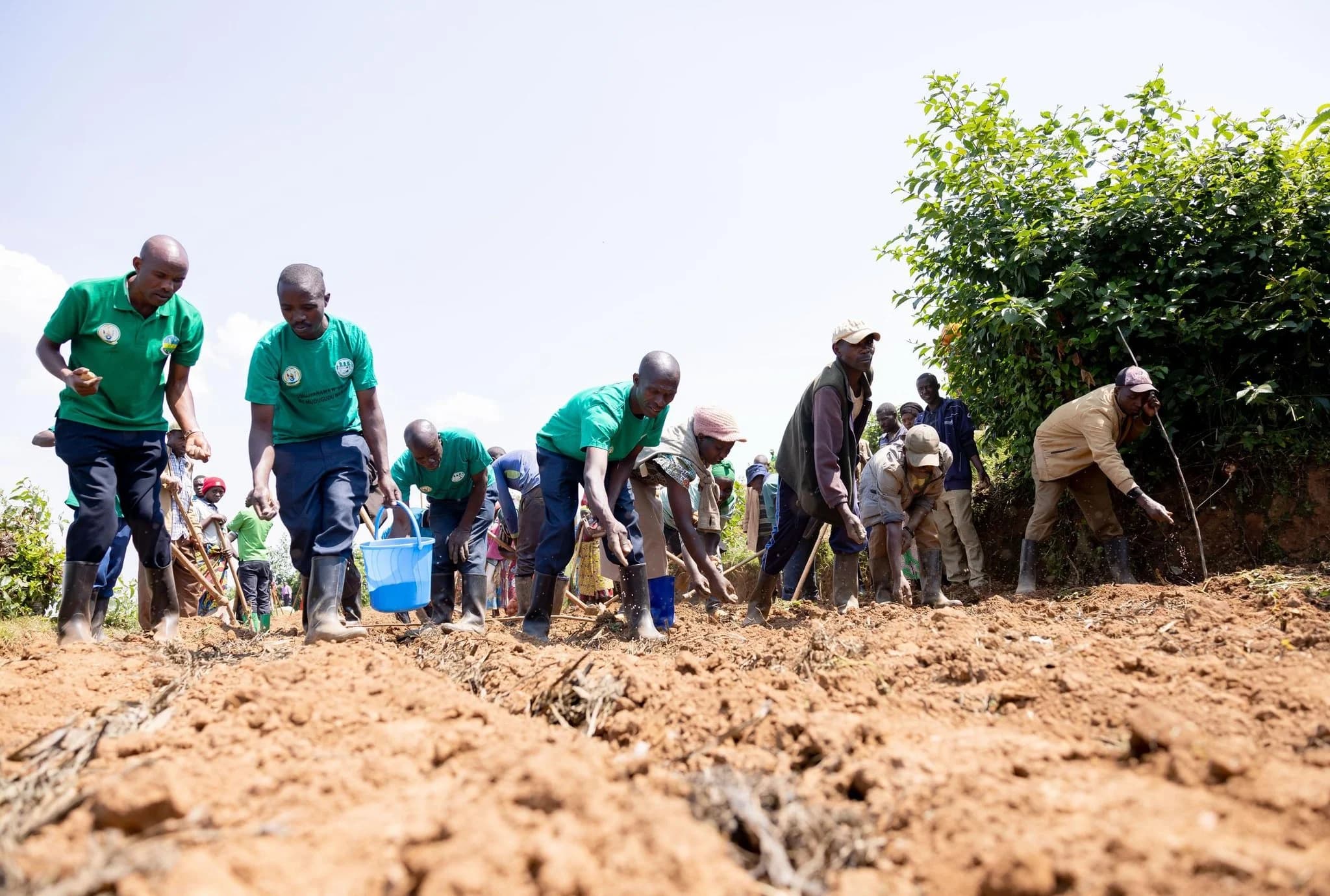
Rwanda’s Prime Minister, Dr. Edouard Ngirente, officially launched the 2025 B Agricultural Season on Friday, February 28, in Burera District, Northern Province. The Prime Minister joined farmers at the Rutuku site in Rusarabuye Sector, Burera District, where potato seeds were planted on 16 hectares. Across the entire Burera District, a total of 7,000 hectares are planned for potato cultivation this season. In this region, potatoes are grown on high hills and wetlands, where the land has been well-prepared and terraced to ensure proper soil conservation. Besides potatoes, farmers in Burera will also cultivate beans, maize, and wheat on more than 21,000 hectares during this agricultural season. Agricultural Season B in Rwanda typically spans from March to June. The main crops cultivated during this season include beans, maize, Irish potatoes, sweet potatoes, cassava, vegetables, and bananas. The previous Season A (September 2024 to February 2025) faced challenges due to delayed and minimal rainfall in certain regions. This prompted many farmers to shift to short-cycle and drought-resistant crops such as sweet potatoes, beans, and cassava. Despite these climatic challenges, the Ministry of Agriculture and Animal Resources (MINAGRI) has implemented measures to mitigate the impact of irregular weather patterns. These measures include distributing drought-resistant crop varieties and expanding irrigation infrastructure. As of November 2024, over 76,000 hectares of farmland have been equipped with irrigation systems, benefiting regions such as Kagitumba, Mpanga, Gabiro, Nasho, and Gako. Looking ahead to Season B, the Rwanda Agriculture and Animal Resources Development Board (RAB) has announced plans to increase cultivated land by 10%. This expansion aims to boost agricultural output by utilizing idle arable land and repurposing 70% of pastureland for crops that can also serve as fodder for livestock. Additionally, an estimated 47,000 tonnes of subsidized fertilizers and 4,200 tonnes of improved seeds for maize, wheat, and soybeans will be distributed to support farmers. Rwanda plans to expand its irrigated farmland from 71,000 hectares in 2024 to 131,000 hectares by 2029 as part of its broader strategy to cope with climate change. Irrigation pumps are being distributed to farmers near water sources, providing a critical buffer against prolonged dry spells.
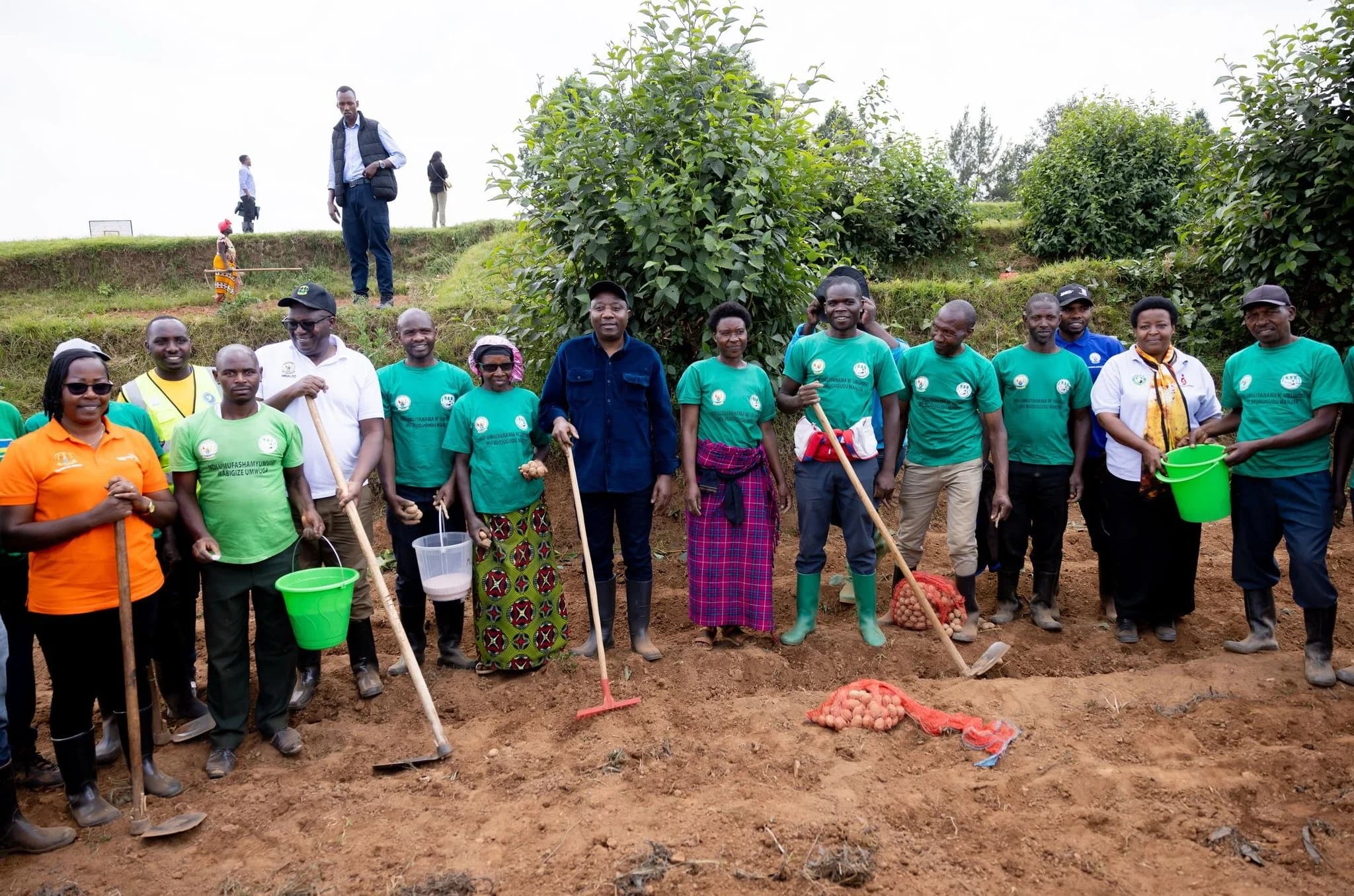
The Prime Minister joined farmers at the Rutuku site in Rusarabuye Sector, Burera District, where potato seeds were planted on 16 hectares.



Comments
No comments yet. Be the first to share a thought.