
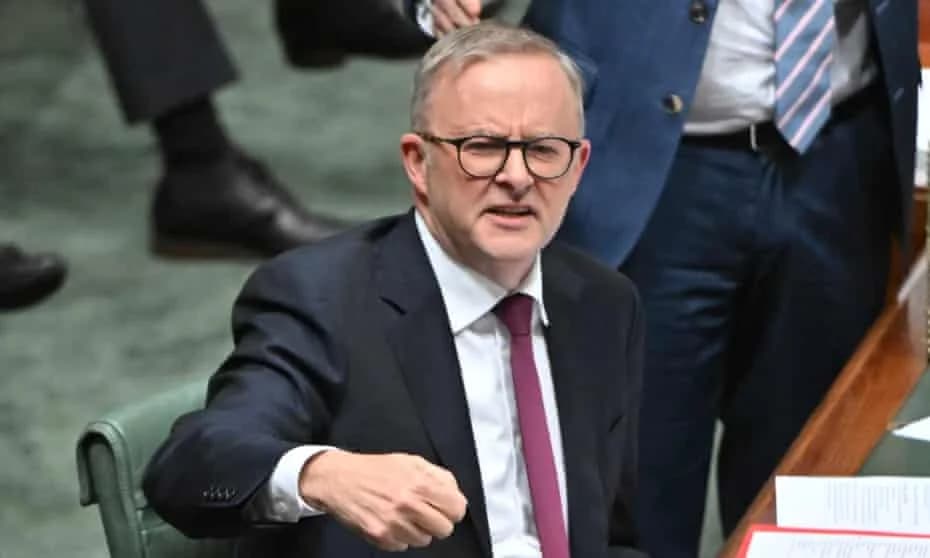
In a striking display of political rivalry, Prime Minister Anthony Albanese and Opposition Leader Peter Dutton have found themselves in what Sky News host Liz Storer has aptly termed a “playground fight” over the pressing issue of climate change. This confrontation underscores the deep divisions within Australia's political landscape regarding environmental policy and the urgency of climate action. The Battle Lines Albanese’s Climate Agenda Since assuming office, Prime Minister Anthony Albanese has made climate change a central pillar of his administration. His government has committed to mor
In a striking display of political rivalry, Prime Minister Anthony Albanese and Opposition Leader Peter Dutton have found themselves in what Sky News host Liz Storer has aptly termed a “playground fight” over the pressing issue of climate change. This confrontation underscores the deep divisions within Australia's political landscape regarding environmental policy and the urgency of climate action. The Battle Lines Albanese’s Climate Agenda Since assuming office, Prime Minister Anthony Albanese has made climate change a central pillar of his administration. His government has committed to more ambitious carbon reduction targets and is actively promoting renewable energy sources. Albanese's stance is clear: Australia must take decisive action to combat climate change, both to protect the environment and to align with global standards. The Albanese government has introduced policies aimed at reducing carbon emissions, investing in green technologies, and phasing out coal dependency. These measures include substantial investments in solar and wind energy projects, incentives for electric vehicle adoption, and a robust plan to meet the Paris Agreement commitments. Dutton’s Counterpoint Opposition Leader Peter Dutton, on the other hand, represents a more conservative approach. He has criticized the Albanese government's climate policies as economically damaging and overly ambitious. Dutton argues that the proposed measures could lead to increased costs for consumers and businesses, potentially harming the economy and leading to job losses in traditional energy sectors like coal and gas. Dutton’s alternative vision includes a more gradual transition to renewable energy, with a continued role for fossil fuels to ensure energy security and economic stability. He emphasizes the need for a balanced approach that considers both environmental goals and economic impacts. The “Playground Fight” Accusations and Rhetoric Liz Storer, a Sky News host, characterized the clash between Albanese and Dutton as a “playground fight,” highlighting the increasingly personal and combative nature of their exchanges. The term suggests a level of immaturity and unproductive bickering that distracts from the substantive debate on climate policy. Both leaders have resorted to strong rhetoric and pointed accusations. Albanese has accused Dutton of being a climate change denier and of pandering to the fossil fuel industry at the expense of future generations. Dutton, in turn, has labeled Albanese's policies as reckless and ideologically driven, claiming they will lead to economic hardship without significantly impacting global carbon levels. Public and Political Reactions The “playground fight” has elicited mixed reactions from the public and political commentators. Supporters of Albanese applaud his commitment to urgent climate action and view Dutton’s stance as regressive and obstructive. Conversely, Dutton’s supporters argue that his approach is pragmatic and protects Australia’s economic interests. Political analysts suggest that this confrontation reflects broader societal divides on climate change, where ideological and economic concerns intersect. The heated debate has also underscored the difficulty of achieving bipartisan consensus on environmental issues in Australia. The Way Forward Need for Constructive Dialogue While the “playground fight” characterization captures the contentious nature of the climate debate, it also underscores the need for more constructive dialogue. Effective climate policy requires collaboration and compromise, balancing environmental imperatives with economic realities. Potential for Common Ground Despite their differences, there is potential for common ground. Both leaders recognize the importance of addressing climate change, albeit through different means. Areas such as investment in emerging technologies, support for regional communities transitioning from fossil fuels, and enhancing energy efficiency can provide a basis for cooperative efforts. Engaging Stakeholders A successful climate strategy will also require engaging a wide range of stakeholders, including industry, scientists, and community groups. Transparent discussions and inclusive policy-making can help bridge the divide and foster a more unified approach to climate action.



Comments
No comments yet. Be the first to share a thought.