
Venezuela is living through a moment of profound uncertainty following the capture of President Nicolás Maduro by U.S. forces, an event that has dramatically altered the country’s political landscape but has failed to bring clarity or calm to daily life. Instead of public celebrations, many cities, especially the capital Caracas, are marked by fear, silence and anxiety about what may come next. According to BBC News Mundo, the dominant feeling among ordinary Venezuelans is fear. Armed police patrol the streets, checkpoints have increased, and there are growing reports of journalists being det
Venezuela is living through a moment of profound uncertainty following the capture of President Nicolás Maduro by U.S. forces, an event that has dramatically altered the country’s political landscape but has failed to bring clarity or calm to daily life. Instead of public celebrations, many cities, especially the capital Caracas, are marked by fear, silence and anxiety about what may come next. According to BBC News Mundo, the dominant feeling among ordinary Venezuelans is fear. Armed police patrol the streets, checkpoints have increased, and there are growing reports of journalists being detained or intimidated. Many people avoid political discussions in public, worried that expressing the wrong opinion could lead to reprisals. “There’s so much fear in the streets and in our homes,” one woman told the BBC, a statement that captures the mood of many households across the country. After Maduro’s removal, Delcy Rodríguez, his long-time ally and former vice president, was sworn in as interim president. Her appointment has done little to reassure a population that has lived under the same political elite for years. For many Venezuelans, Rodríguez represents continuity rather than change, raising doubts about whether the system that governed under Maduro has truly been dismantled. Security forces remain loyal to the ruling camp, and pro-government armed groups, commonly known as colectivos, have been seen patrolling neighborhoods, adding to the sense of intimidation. The political shock has also worsened an already fragile economic situation. Food prices are rising, the national currency remains unstable, and uncertainty over oil exports and U.S. sanctions has unsettled markets. Small business owners and street vendors say customers are spending less, afraid of what the next days or weeks may bring. Daily survival, rather than political transition, remains the main concern for many families. Public opinion is sharply divided. Some Venezuelans quietly welcome Maduro’s capture, hoping it could mark the end of years of economic collapse, repression and international isolation. However, very few are willing to express this view openly. Others feel deeply uncomfortable with the role of the United States, describing the operation as a humiliation and a threat to national sovereignty. Many fear that foreign involvement could lead to further instability or even additional military action. Internationally, reactions have been mixed. While the United States has defended its actions, several countries, human rights organizations and legal experts have raised serious concerns about international law and the precedent set by the capture of a sitting head of state. The United Nations has urged restraint, warning that escalation could destabilize the region.
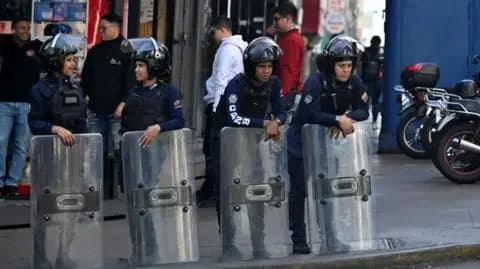
Venezuelan security forces patrol a street in Caracas following the capture of President Nicolás Maduro, as uncertainty and fear spread across the capital.
For ordinary Venezuelans, these diplomatic debates offer little comfort. What they want most is safety, affordable food and a clear political direction—none of which are guaranteed at the moment. As night falls, streets empty earlier than usual, conversations become cautious, and uncertainty shapes everyday life. Venezuela now stands at a crossroads, caught between fear and fragile hope. Whether this moment will lead to genuine political change or simply a continuation of the same power structures under a different name remains an open question. For now, the country waits, anxious and unsure, for answers that have yet to
arrive.



Comments
No comments yet. Be the first to share a thought.