
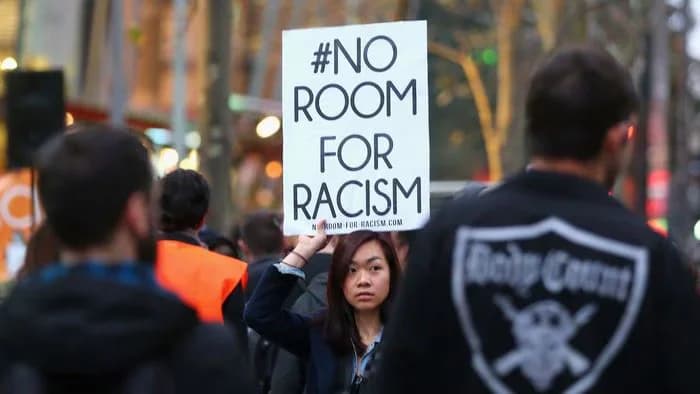
Australia's only national survey tracking reconciliation between Indigenous and non-Indigenous Australians has recorded a dramatic 40 per cent rise in experiences of racism over the past decade. According to ABC News, the 2024 Australian Reconciliation Barometer, a biennial survey conducted by Reconciliation Australia, reveals a significant increase in reported racism against Aboriginal and Torres Strait Islander people, from 39 per cent in 2014 to 54 per cent in 2024. Experiences of racism included verbal abuse, online harassment, denial of service or entry, discrimination in housing access
Australia's only national survey tracking reconciliation between Indigenous and non-Indigenous Australians has recorded a dramatic 40 per cent rise in experiences of racism over the past decade. According to ABC News, the 2024 Australian Reconciliation Barometer, a biennial survey conducted by Reconciliation Australia, reveals a significant increase in reported racism against Aboriginal and Torres Strait Islander people, from 39 per cent in 2014 to 54 per cent in 2024. Experiences of racism included verbal abuse, online harassment, denial of service or entry, discrimination in housing access, and physical violence. Younger First Nations people were disproportionately affected, reporting higher levels of discrimination than other age groups. Instances of racial discrimination were reported across various sectors, including law enforcement, public transport and rideshare services, government institutions, hospitality venues, utility providers, and workplaces. Reconciliation Australia CEO Karen Mundine described the findings as “disheartening” and attributed the increase to multiple factors. “I think probably people are more likely to report those experiences, and people have a greater understanding of what it is,” she said. “Not just in an interpersonal way, but understanding the structural systems that also reinforce racist behaviours and outcomes that are discriminatory.” Ms Mundine said the survey’s findings aligned with anecdotal accounts, particularly in the aftermath of the 2023 Voice referendum campaign. The referendum also had a marked impact on the perceptions of young Australians. Sixty-one per cent of respondents aged 18–24 now believe Australia is a racist country, compared to 41 per cent of the general population. Of the younger cohort, two-thirds said their views were directly shaped by the conduct of the Voice campaign. “I think it's fair to say that young people feel the result around the Voice referendum and Australia's rejection of that proposal signifies to them a rejection,” Ms Mundine said. “They feel it is another experience of racism and structural racism, and of the broader mainstream Australia not wanting Aboriginal and Torres Strait Islander people to have a voice and to be involved and to participate.” Nareen Young, director of the UTS Centre of Indigenous People and Work, said the rise in racism was being driven by “bad behaviour” on social media and a heightened political climate. “The rise of right-wing populism—we know that it's been rejected by and large in Australia—but there are still pockets and they’re active. I think that there's a lot of responsibility there,” she said.
Youth and Multicultural Australians Most Committed to Reconciliation
The Barometer also revealed that younger Australians and those from multicultural backgrounds are leading the way in their commitment to reconciliation. Sixty-six per cent of young people and 56 per cent of multicultural Australians expressed a desire to support the reconciliation process, compared with 42 per cent of the broader population. Ms Mundine credited this shift to improved education about Indigenous history. “I think the difference is there's a growing number of young people who are better educated and better aware,” she said. “We've had curriculum that teaches Aboriginal and Torres Strait Islander history, and particularly around those ideas of reconciliation relationships.” Support for truth-telling also received strong endorsement across demographic groups, with 67 per cent of Anglo-Australians, 81 per cent of multicultural Australians, and 89 per cent of young Australians saying they believe it is important. Ms Mundine said the results should give governments the confidence to pursue truth-telling initiatives. “There is strong support there for the idea of truth-telling, but also for participating in truth-telling,” she said. “Knowing where we've come from, knowing our histories, knowing the things that have gotten us to where we are today influences how we can actually make change today, but also create that change for a better future.” Reconciliation Australia plans to continue advocating for substantive Indigenous policy reforms when the 48th Parliament returns next month. Ms Mundine also urged the federal government to adopt the National Anti-Racism Framework, launched by the Australian Human Rights Commission last year. The framework outlines 63 recommendations, including the creation of an anti-racism taskforce, the establishment of a national body to monitor and prevent Aboriginal deaths in custody, and an independent review of racism within the criminal justice system. “There is a role for governments to play there, a role for businesses to play, as we think about how we create a more just and cohesive society,” Ms Mundine said. Ms Young also called for closer scrutiny of existing anti-racism laws in the workplace. “I think we need to really start thinking about anti-racism in the workplace. That’s failed to be implemented over the 50 years of the Race Discrimination Act,” she said. “The anti-racism framework contains elements that I really support … it’s a brilliant framework. But I think we do need to examine workplaces and the effectiveness of the current legislative framework separately.” The 2024 survey included 532 Aboriginal and Torres Strait Islander participants and 1,990 non-Indigenous respondents



Comments
No comments yet. Be the first to share a thought.