
Reserve Bank of Australia (RBA) Deputy Governor Andrew Hauser has cautioned that former U.S. President Donald Trump's proposed tariffs could carry deep and lasting consequences for the Australian economy, even as financial markets appear to be underreacting. Speaking at an Economic Society of Australia event in Sydney, Hauser said it was “very surprising and puzzling” to observe how casually financial markets were responding to the sweeping macroeconomic changes under way. He noted that while central banks globally are closely monitoring Trump’s tariff plans, equity markets remain buoyant, an
Reserve Bank of Australia (RBA) Deputy Governor Andrew Hauser has cautioned that former U.S. President Donald Trump's proposed tariffs could carry deep and lasting consequences for the Australian economy, even as financial markets appear to be underreacting. Speaking at an Economic Society of Australia event in Sydney, Hauser said it was “very surprising and puzzling” to observe how casually financial markets were responding to the sweeping macroeconomic changes under way. He noted that while central banks globally are closely monitoring Trump’s tariff plans, equity markets remain buoyant, and volatility measures are at historic lows, ABC News reported. “The financial markets, in particular, shrug and move on,” Hauser said. “Equity markets are higher today than they were before the ‘Liberation Day’ events. Measures of implied volatility in markets are back to historic lows. Those are interesting developments.” He added, “You can either be a market believer and say, ‘Well, these guys get it right more often than we do,’ or you could worry a little bit about that. How worried are we about it? We are very, very focused on it. The level of uncertainty is clearly elevated, and the implications for a global trading economy like Australia, of these fundamental changes, are very profound.” Drawing parallels to the United Kingdom’s Brexit experience, Hauser said that while markets may dismiss the immediate impact of events, the long-term consequences can be significant. “The day after Brexit happened, everyone thought the world would end, and it didn’t,” he said. “But 10 years on, you're seeing the profound effects of some of those changes for sustainable growth rates, and for fundamental things in the [UK] economy that … will have more important and lasting effects than the ‘here today, gone tomorrow’ problems.” Hauser, who joined the RBA in February 2023 after more than three decades at the Bank of England, emphasized that global monetary authorities are watching Trump's trade policies “like hawks,” even if traders are not. He expressed particular concern over a growing online narrative that claims “nothing ever happens” as a result of the tariffs, despite their evident macroeconomic implications.
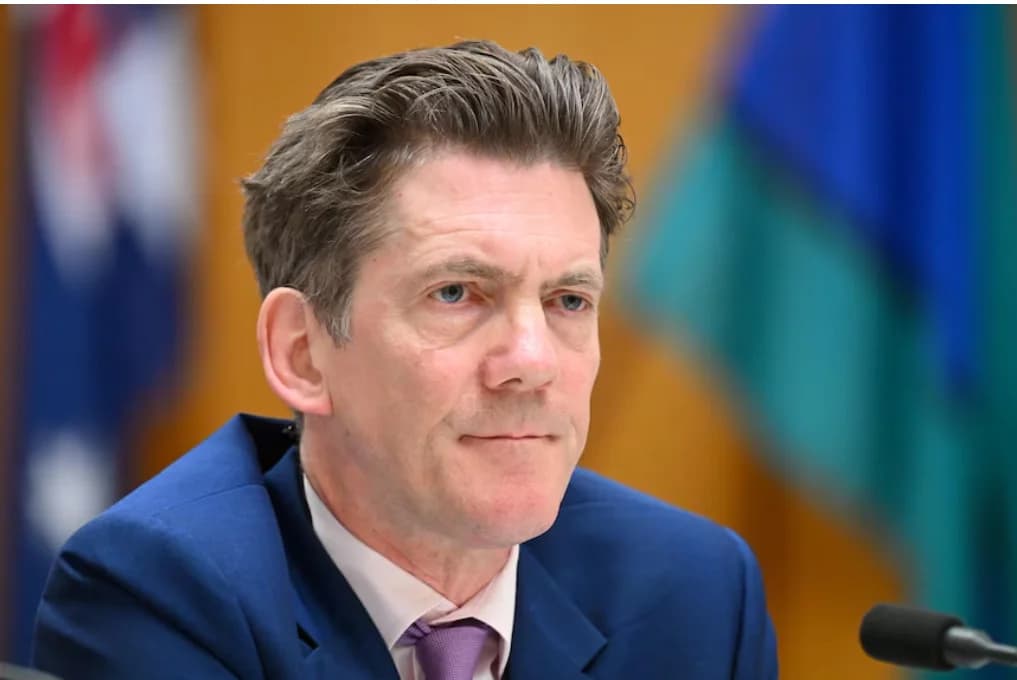
Andrew Hauser worked at the Bank of England during the economic fallout from Brexit. (AAP: Lukas Coch)
Source: ABC News
RBA to Re-evaluate Research Strategy in Response to Global Shifts
In his prepared speech, Hauser said the RBA is re-evaluating its research focus in light of sweeping changes in the global economic landscape. Among the most pressing macroeconomic challenges he outlined were the erosion of free trade, geopolitical realignments, the climate crisis, and the persistent global productivity slowdown. “These are the defining macroeconomic challenges of our age,” Hauser said. “The Bank will be refreshing its research strategy, with a new set of priorities, identifying the big questions that need to be answered to support future policymaking.” He issued a “call to arms” for Australia’s academic and policy communities to cultivate and retain top-tier economic talent, and to ensure research is focused on the most urgent policy challenges.
New Economic ‘Golden Age’ in Australia
Hauser argued that Australia now faces a historic inflection point, comparable to two past periods of significant economic transformation. The first, he said, spanned from the 1920s to the 1960s, when the nation recovered from the Great Depression and managed the post-World War II economic rebuild. The second era covered the economic reforms of the 1980s and 1990s that reshaped Australia’s economic landscape. “Can Australian macroeconomic thinking do it again, as the world economy is once more in flux?” Hauser asked as he called for a third “Golden Age” of Australian economic thinking to guide the country through the next phase of global upheaval.



Comments
No comments yet. Be the first to share a thought.