
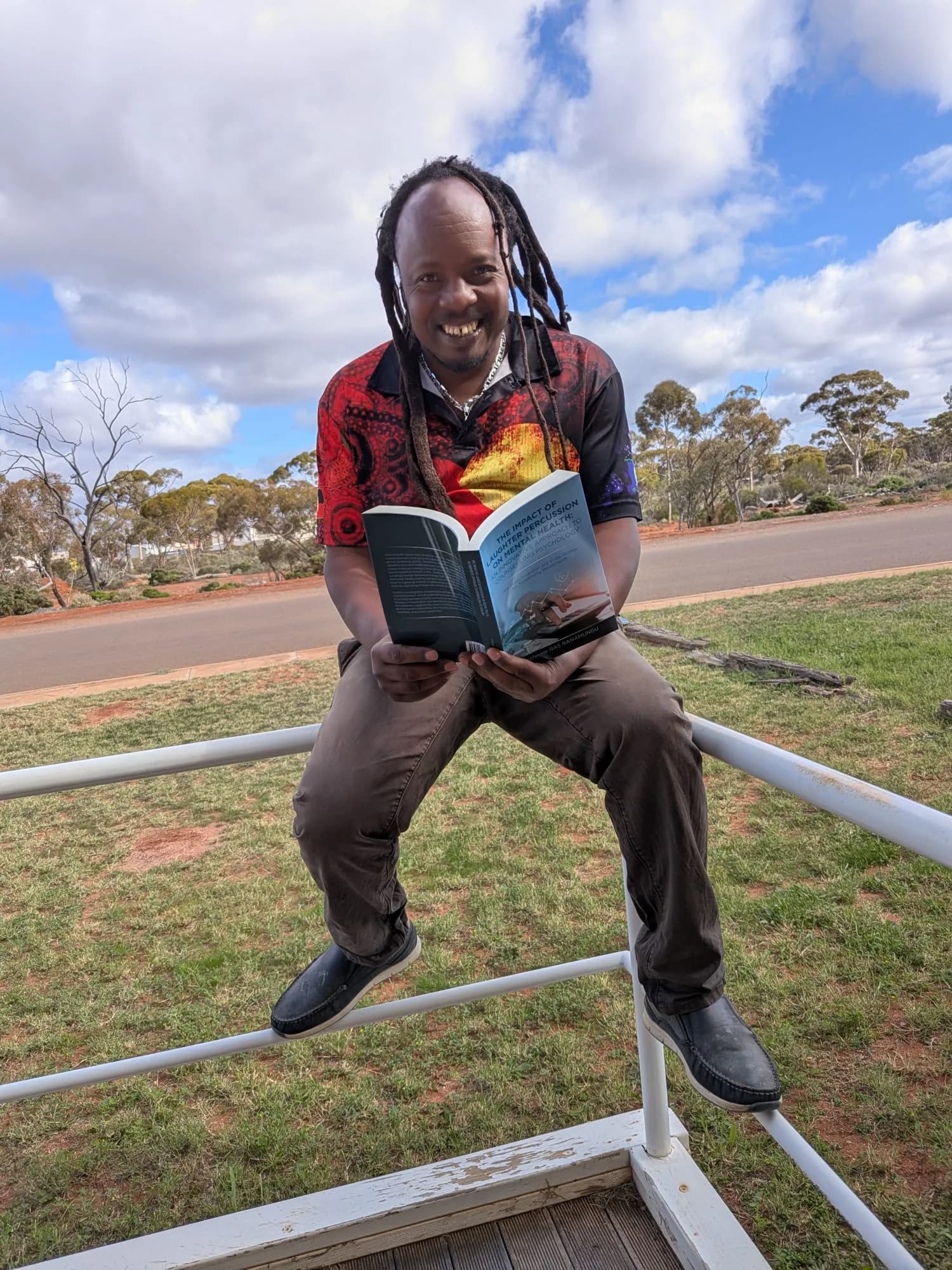
In a world where stress, anxiety, and disconnection have become part of daily life, one visionary educator and healer is using rhythm, joy, and laughter to spark a global transformation. That man is Professor Ras Banamungu, a Rwandan-Australian therapist, educator, musician, and the founder of Laughter Percussion—a unique, innovative approach to mental health and counselling psychology. Professor Ras Banamungu is no stranger to ground-breaking work. He is the author of six influential books, each exploring a new frontier in healing, communication, and personal development: The Smiling Face
In a world where stress, anxiety, and disconnection have become part of daily life, one visionary educator and healer is using rhythm, joy, and laughter to spark a global transformation. That man is Professor Ras Banamungu, a Rwandan-Australian therapist, educator, musician, and the founder of Laughter Percussion—a unique, innovative approach to mental health and counselling psychology. Professor Ras Banamungu is no stranger to ground-breaking work. He is the author of six influential books, each exploring a new frontier in healing, communication, and personal development: The Smiling Face of Australia: Mental Health Self-Help Harmonious Healing: Exploring the Multifaceted Therapeutic Power of Music Therapy. Recognizing Prior Learning: Unlocking Skills and Opportunities (Volume 1). Unleashing Your Potential: A Comprehensive Guide to Personal Development Coaching. Communication Nexus: Unveiling the Power and Reach of Mass Media. The Impact of Laughter Percussion on Mental Health: An Innovative Approach to Counselling Psychology. His latest release—The Impact of Laughter Percussion on Mental Health—presents a bold and joyful method that blends African drumming, laughter therapy, and modern psychology into a transformative approach for people of all ages and backgrounds. Whether in schools, aged care homes, disability support programs, or international community workshops, Laughter Percussion is making waves. Through his platforms—www.ProfessorRasBanamungu.vip and www.LaughterPercussionAcademy.com.au—Professor Ras continues to offer training, workshops, and resources for mental health professionals, educators, and the general public. In this HobeNews exclusive interview, we sit down with Professor Ras Banamungu to explore his latest book, his groundbreaking method, and his mission to spread healing and unity through rhythm and joy. Full Interview with Professor Ras Banamungu Conducted by HobeNews Reporter 1. What inspired you to write this book, Professor Ras? Professor Ras: I was inspired by the overwhelming power of rhythm and laughter to heal pain, build resilience, and connect people. After years of applying this method in diverse settings, I knew it was time to share it with the world in a structured, research-based book. 2. What is Laughter Percussion in your own words? Professor Ras: It’s a joyful fusion of African drumming and therapeutic laughter. It engages your whole being—emotionally, physically, socially—and allows healing to happen naturally, often without the need for words. 3. How does this method support mental health recovery? Professor Ras: It promotes endorphin release, reduces stress hormones, enhances brain function, and rebuilds emotional resilience. It is ideal for people experiencing depression, anxiety, trauma, or social isolation. 4. Who can benefit from Laughter Percussion therapy? Professor Ras: Literally everyone—from children with learning challenges to aged care residents, NDIS clients, trauma survivors, and corporate staff under stress. It works across all ages and backgrounds. 5. Is this book theoretical, practical, or both? Professor Ras: Both. It includes academic grounding in counselling psychology and neuroscience, as well as step-by-step exercises, real-life success stories, and practical session ideas. 6. How did your Rwandan roots influence this work? Professor Ras: Rwanda gave me rhythm, unity, and a cultural belief in communal healing. I carried that into my work, then added research and innovation. Laughter Percussion is the modern, global version of ancient wisdom. 7. What message are you sending to mental health professionals? Professor Ras: I invite them to think beyond the clinical model and embrace joyful, expressive, and culturally grounded healing tools. Laughter Percussion is one such tool—effective, inclusive, and transformative. 8. What role does global strategy play in mental health? Professor Ras: Mental health strategies must go beyond borders. My book shows how this method works within NDIS in Australia, African communities, and international digital therapy programs. It's adaptable and scalable. 9. Can this be used in schools and rehabilitation centres? Professor Ras: Absolutely. It’s already being used in schools, aged care, disability programs, and recovery centres. It enhances group cohesion, confidence, communication, and emotional balance. 10. What challenges did you face writing this book? Professor Ras: One challenge was translating such a sensory, emotional experience into words and research. But I embraced it, knowing that if people could read it, they could feel it too. 11. How has the public responded to the book so far? Professor Ras: The response has been overwhelmingly positive. Many say it gave them hope, others say they now use the exercises in their own communities. It’s sparked a movement. 12. Is this part of a larger educational vision? Professor Ras: Yes. We’re offering diploma programs through the Laughter Percussion Academy, training future facilitators, and building community-based therapeutic networks. The book is just the foundation. 13. Where can readers get a copy? Professor Ras: You can find it on Apple Books, Kobo, Amazon, Google Books, and through my Apple Author Page. It’s globally available. 14. Are there exercises in the book readers can do? Professor Ras: Yes! There are guided laughter drills, rhythm games, breathing exercises, and group facilitation tips. It’s for self-healing and community work alike. 15. How do you ensure it’s culturally adaptable? Professor Ras: I provide the core framework, but I encourage practitioners to adapt it to their own language, instruments, and traditions. Laughter and rhythm are universal—how we express them is beautifully diverse. 16. What makes this approach innovative? Professor Ras: It’s multisensory, joyful, and evidence-based. It works where talk therapy sometimes doesn’t. It’s fun, therapeutic, and rooted in both cultural history and neuroscience. 17. What academic background supports this method? Professor Ras: I have doctorates in Music Therapy, Counselling Psychology, and Business Administration. My books like Harmonious Healing and Communication Nexus provide theoretical foundations to this approach. 18. What is Communication Nexus about and how does it connect? Professor Ras: It explores how mass media and digital platforms affect mental health, identity, and society. Laughter Percussion, too, is a communication method—one that speaks through rhythm, not screens. 19. What’s next for you? Professor Ras: I’m developing an online learning platform, planning international drumming festivals, and working on a new album. I also continue my academic research to expand the evidence base of this work. 20. What is your final message to our HobeNews readers? Professor Ras: Healing doesn’t have to be heavy. Through rhythm, laughter, and love, we can reconnect with our inner joy and each other. Let’s drum together, heal together—Shakalaka-Doo! The Impact of Laughter Percussion on Mental Health: An Innovative Approach to Counselling Psychology Available now on: ✔️ Apple Books ✔️ Amazon ✔️ Kobo ✔️ Google Books Browse all of Professor Ras Banamungu’s titles: Apple Author Page Visit his official author site: www.ProfessorRasBanamungu.vip Join the movement through the academy: www.LaughterPercussionAcademy.com.au From Rwanda to Australia—from trauma to triumph—Professor Ras Banamungu is leading a global rhythmic revolution in healing. It starts with a beat. It ends in joy. Shakalaka-Doo! By HobeNews Reporter



Comments
No comments yet. Be the first to share a thought.