
As anxiety, depression, and emotional stress continue to affect millions of people worldwide, researchers are searching for innovative ways to support mental wellbeing beyond traditional therapy. One emerging approach combines rhythm, laughter, and social participation in what is known as Laughter Percussion a therapeutic practice developed by Idi Ras Banamungu, founder of Laughter Percussion Academy. A recent study by Banamungu, titled “Rhythms of Resilience: Neuropsychological Effects of Laughter Percussion on Anxiety and Depression in a Community-Based Pilot Study,” explores how rhythmic d
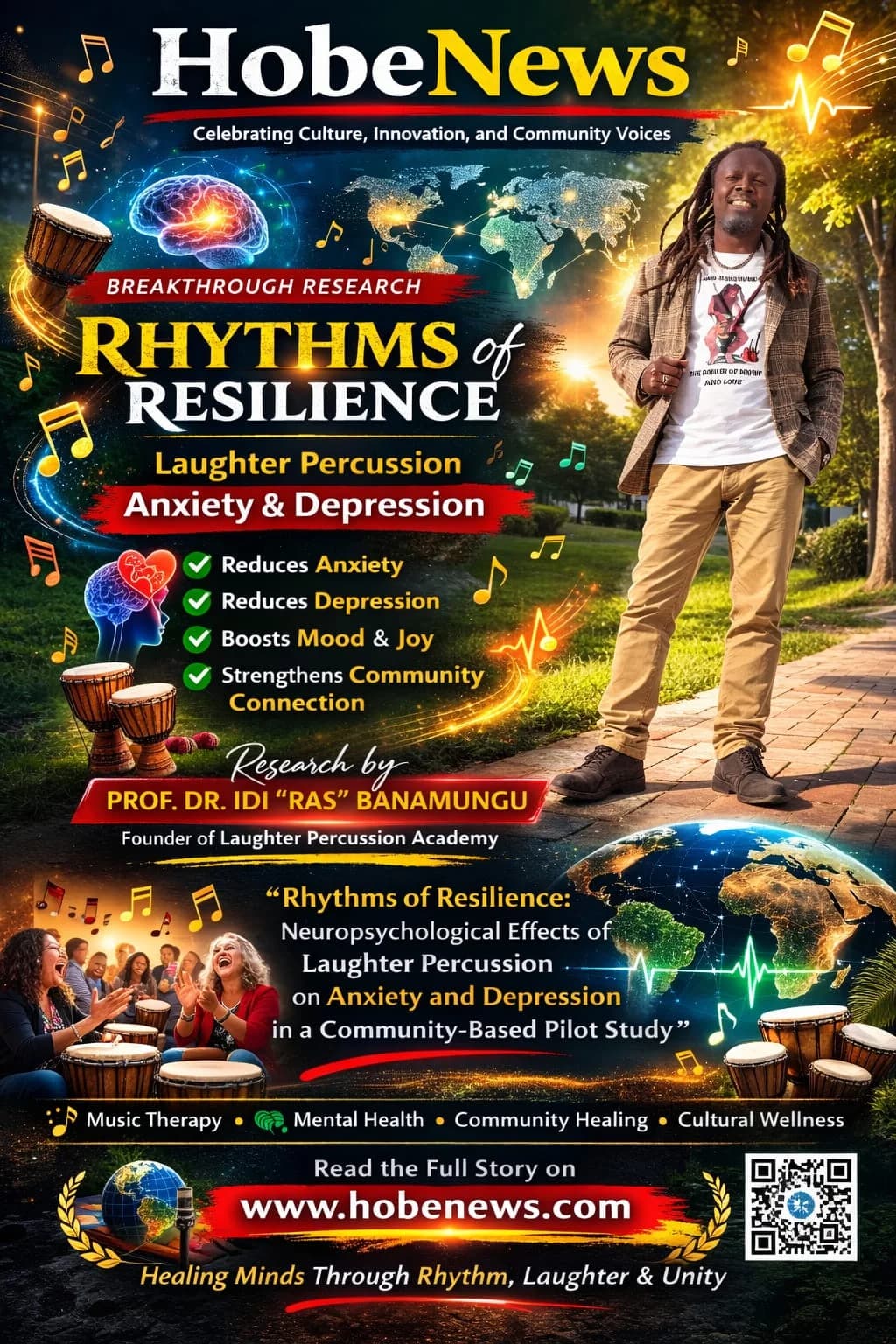
As anxiety, depression, and emotional stress continue to affect millions of people worldwide, researchers are searching for innovative ways to support mental wellbeing beyond traditional therapy. One emerging approach combines rhythm, laughter, and social participation in what is known as Laughter Percussion a therapeutic practice developed by Idi Ras Banamungu, founder of Laughter Percussion Academy. A recent study by Banamungu, titled “Rhythms of Resilience: Neuropsychological Effects of Laughter Percussion on Anxiety and Depression in a Community-Based Pilot Study,” explores how rhythmic drumming and guided laughter exercises can help improve emotional wellbeing. Published in a peer-reviewed academic journal, the research contributes to growing global interest in creative arts therapies as complementary approaches to mental health care. When rhythm meets laughter For many participants in the study, the experience began simply: a circle of people, drums, and shared laughter. But for those struggling with anxiety or emotional stress, the sessions became something more meaningful a moment of relief, connection, and expression. The pilot study involved 60 adult participants who took part in structured Laughter Percussion sessions within a community setting. Researchers assessed participants’ psychological states before and after the sessions to understand how rhythmic engagement and laughter affected mood and emotional wellbeing. During the sessions, participants engaged in activities such as group drumming, guided laughter exercises, musical improvisation, and rhythm-based interaction. The goal was not musical perfection but shared participation. According to the study, many participants reported noticeable changes after the sessions, including improved mood, reduced stress, and stronger feelings of social connection. “We often underestimate the healing power of simple human experiences like rhythm and laughter,” Banamungu explained. “When these elements come together, people reconnect with joy, balance, and community.” The science behind laughter and rhythm The idea that laughter and music can support mental health is not new, but scientific research is increasingly confirming their psychological and neurological benefits. Studies in neuroscience have shown that laughter stimulates the release of endorphins chemicals in the brain that promote feelings of happiness and relaxation. Laughter can also increase dopamine and serotonin levels, which play key roles in regulating mood, while lowering cortisol, the hormone associated with stress. Meanwhile, research in Music Therapy suggests that rhythmic group activities such as drumming can reduce anxiety, encourage emotional expression, and strengthen social bonds. Rhythmic activity also activates several brain regions associated with movement, memory, and emotional processing. This neurological stimulation may explain why music-based therapy often helps people feel more energized and emotionally connected. By combining these elements, Laughter Percussion aims to create a therapeutic experience that engages both the body and the mind. Inspired by cultural traditions The roots of Laughter Percussion are deeply connected to African cultural traditions, where drumming, dance, and communal celebration have long been used as ways to express emotion and strengthen community ties. Originally from Rwanda, Idi Ras Banamungu drew inspiration from these traditions while developing the practice through workshops, participatory arts programs, and academic research in Australia. His work bridges several disciplines, including Counseling Psychology, music therapy, community arts, and cultural studies. By integrating these fields, the approach aims to make mental health support more inclusive and culturally adaptable. Healing in a community setting Unlike many psychological studies conducted in clinical environments, Banamungu’s research focused on community participation. The Laughter Percussion sessions took place in community spaces where participants could interact naturally through rhythm and laughter rather than in a clinical therapy room. This environment allowed individuals to express themselves freely while building connections with others. Participants said the sessions helped them feel less isolated, more comfortable sharing emotions, and more optimistic about their mental wellbeing. Some described the experience as a reminder that healing does not always have to happen alone. A method with broad potential Because Laughter Percussion relies mainly on participation rather than specialized equipment, researchers believe the approach could be applied in many social environments. Possible uses include mental health rehabilitation programs, community support initiatives, schools, workplace wellness programs, and cultural events designed to strengthen social cohesion. Its accessibility and low cost may make it particularly valuable in communities where mental health resources are limited. A growing body of research The study is part of a wider body of academic work by Idi Ras Banamungu exploring how rhythm, laughter, and participatory arts can support psychological resilience. His research spans multiple disciplines, from therapeutic arts and counseling psychology to legal studies such as migration and human rights. This multidisciplinary perspective reflects a broader effort to understand how cultural, social, and psychological factors intersect in human wellbeing. Looking toward the future As global interest in creative arts therapy continues to expand, practices like Laughter Percussion are gaining attention among researchers, educators, and community leaders. While further studies are needed to explore its long-term impact, the early findings suggest that simple human experiences laughter, rhythm, and shared participation may hold powerful potential in supporting emotional health. For Banamungu, the concept represents more than an academic idea. It is part of a larger mission to bring healing, creativity, and joy into communities around the world. In an era when mental health challenges are increasingly visible, the rhythm of a drum and the sound of shared laughter may offer something many people need most: connection.



Comments
No comments yet. Be the first to share a thought.