
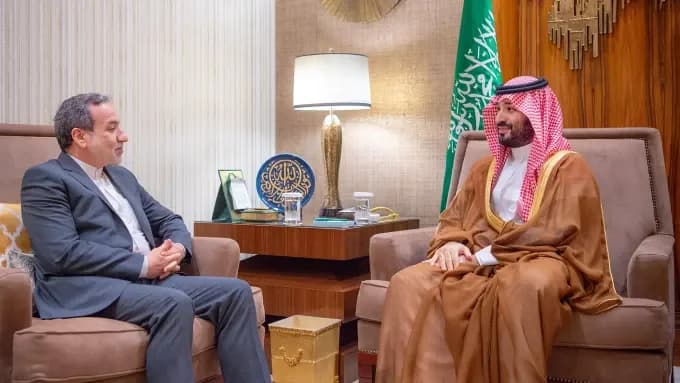
Saudi Arabia has offered to mediate between the Trump administration and Iran in pursuit of a new agreement aimed at limiting Tehran's nuclear program. This initiative reflects the kingdom’s desire to play a more active role in regional diplomacy, addressing growing concerns about nuclear proliferation in the Middle East. The Joint Comprehensive Plan of Action (JCPOA), commonly known as the Iran nuclear deal, was originally signed in 2015 between Iran and six world powers, including the U.S. The agreement sought to curb Iran’s nuclear capabilities in exchange for sanctions relief. However, in
Saudi Arabia has offered to mediate between the Trump administration and Iran in pursuit of a new agreement aimed at limiting Tehran's nuclear program. This initiative reflects the kingdom’s desire to play a more active role in regional diplomacy, addressing growing concerns about nuclear proliferation in the Middle East. The Joint Comprehensive Plan of Action (JCPOA), commonly known as the Iran nuclear deal, was originally signed in 2015 between Iran and six world powers, including the U.S. The agreement sought to curb Iran’s nuclear capabilities in exchange for sanctions relief. However, in 2018, President Donald Trump withdrew the U.S. from the deal, citing Iran’s continued missile development and involvement in regional conflicts. This withdrawal significantly increased tensions between the two countries and led to an uncertain security environment in the region. Saudi Arabia, which has long viewed Iran’s nuclear ambitions with apprehension, has expressed concern over the potential for a nuclear arms race in the region. As a key player in the Gulf Cooperation Council (GCC), Saudi Arabia is now stepping forward with an offer to mediate negotiations between the U.S. and Iran. The kingdom’s mediation could serve as a pivotal diplomatic effort to curb Iran’s nuclear program and reduce regional instability, as reported by CNN. By mediating between the U.S. and Iran, Saudi Arabia aims to achieve several key goals. The primary objective is to prevent Iran from acquiring nuclear weapons, which would pose a significant threat to Saudi Arabia’s national security. Additionally, the kingdom seeks to foster greater regional stability by mitigating the tensions that have fueled proxy conflicts in the Middle East. Finally, Saudi Arabia hopes to strengthen its role as a regional diplomatic leader, positioning itself as a central force in resolving the crisis. However, challenges remain. The U.S. and Iran have deep-rooted distrust, which will make it difficult for both sides to agree on the terms of a new deal. Additionally, Saudi Arabia will have to navigate the complex dynamics of the region, where other actors, such as Israel and the UAE, have their own interests and concerns regarding the nuclear negotiations. Domestic political pressures within both the U.S. and Iran further complicate the chances of reaching a consensus. Despite these challenges, Saudi Arabia’s efforts to mediate represent a significant step toward resolving one of the most pressing security issues in the Middle East. A successful negotiation could not only prevent a nuclear arms race but also pave the way for a more stable and peaceful region. The international community will be closely monitoring these developments, as they could have far-reaching consequences for global security.



Comments
No comments yet. Be the first to share a thought.