
New animal species that survived mass extinction event a half billion years ago Hunan, China — Scientists have unearthed an extraordinary treasure trove of fossils in a small quarry in southern China, revealing 91 previously unknown animal species that survived a catastrophic mass extinction event half a billion years ago. The research team from the Chinese Academy of Sciences collected over 50,000 fossil specimens from a single quarry measuring just 12 meters high, 30 meters long and 8 meters wide between 2021 and 2024. In this small space, they identified more than 150 different species, wit
New animal species that survived mass extinction event a half billion years ago
Hunan, China — Scientists have unearthed an extraordinary treasure trove of fossils in a small quarry in southern China, revealing 91 previously unknown animal species that survived a catastrophic mass extinction event half a billion years ago.
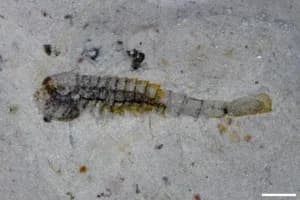
The research team from the Chinese Academy of Sciences collected over 50,000 fossil specimens from a single quarry measuring just 12 meters high, 30 meters long and 8 meters wide between 2021 and 2024. In this small space, they identified more than 150 different species, with 91 new to science.
The fossils, dated to around 512 million years ago, represent the first major discovery of soft-bodied creatures that lived directly after the Sinsk mass extinction event, which killed up to half of all animals 513 million years ago. This extinction brought a sudden end to the Cambrian explosion, evolution's "big bang" that saw most major animal groups emerge roughly 540 million years ago.
Lead author Han Zeng described the fossils as exceptionally well-preserved, with many showing soft body parts including gills, guts, eyes and even nerves. Among the discoveries were ancient relatives of worms, sponges, jellyfish and arthropods, including apex predators called radiodonts.
The findings, published in the journal Nature, reveal that deep-water ecosystems were less severely affected by the mass extinction than shallow-water environments. Researchers believe declining oxygen levels caused by volcanism triggered the Sinsk event.
Surprisingly, some species found in the Chinese quarry had also been discovered at Canada's Burgess Shale site, suggesting these ancient animals could already travel halfway across the world during this early stage of life on Earth.



Comments
No comments yet. Be the first to share a thought.