
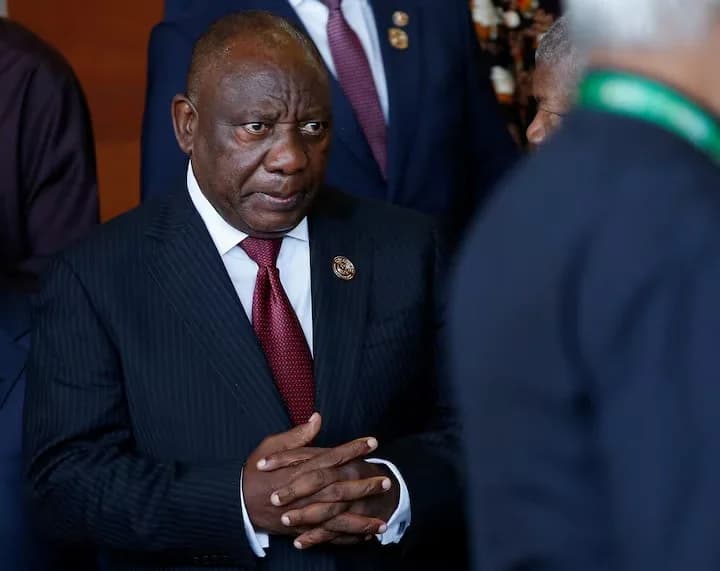
In a landmark move to navigate the current political landscape, South Africa's President Cyril Ramaphosa announced a plan to form a national unity government. This decision comes in the wake of the African National Congress (ANC) failing to secure a majority in the recent parliamentary elections. The ANC, historically the dominant party in South African politics, found itself in an unprecedented situation, prompting the need for a broader coalition to ensure stable governance. Election Results and Political Landscape The results of last week's election revealed a significant shift in the pol
In a landmark move to navigate the current political landscape, South Africa's President Cyril Ramaphosa announced a plan to form a national unity government. This decision comes in the wake of the African National Congress (ANC) failing to secure a majority in the recent parliamentary elections. The ANC, historically the dominant party in South African politics, found itself in an unprecedented situation, prompting the need for a broader coalition to ensure stable governance. Election Results and Political Landscape The results of last week's election revealed a significant shift in the political dynamics of South Africa. For the first time in decades, the ANC did not win enough seats to govern independently. This outcome reflects growing public dissatisfaction with the party, which has been plagued by issues such as corruption, economic stagnation, and high unemployment rates. The ANC's inability to secure a majority indicates a call for change from the electorate, emphasizing the need for a more inclusive and representative government. President Ramaphosa's Response In response to these developments, President Ramaphosa has initiated discussions with various political parties to form a national unity government. The aim is to create a broad alliance that can effectively address the country's pressing issues and restore public confidence in the government. Ramaphosa emphasized the importance of unity and cooperation among all political factions to ensure the nation's stability and progress. "We must put aside our differences and work together for the future of our country," Ramaphosa stated in a press conference. "A national unity government is essential to address the challenges we face and to fulfill the aspirations of all South Africans." The Road to National Unity Forming a national unity government involves negotiating with multiple political parties, each with its own agenda and priorities. Key players in these negotiations include the Democratic Alliance (DA), the Economic Freedom Fighters (EFF), and other smaller parties that have gained traction in recent years. The process is expected to be complex, requiring compromise and collaboration to establish a functioning and effective government. Potential Challenges While the formation of a national unity government holds promise, it also comes with significant challenges. Ensuring cohesive policy-making and governance among parties with diverse ideologies will be a delicate task. Additionally, maintaining the support of the electorate, which is becoming increasingly fragmented, will be crucial for the unity government's success. Historical Context The concept of a national unity government is not entirely new to South Africa. In the immediate aftermath of apartheid, the Government of National Unity (GNU) was established in 1994, bringing together the ANC, the National Party, and the Inkatha Freedom Party to navigate the transition to democracy. This historical precedent highlights both the potential benefits and the complexities involved in such an arrangement. Public Reaction and Expectations The public reaction to President Ramaphosa's announcement has been mixed. Some view it as a necessary step towards inclusive governance, while others are skeptical about the potential for genuine cooperation among political rivals. Nonetheless, there is a general consensus on the urgency of addressing South Africa's socio-economic challenges, including poverty, inequality, and crime.



Comments
No comments yet. Be the first to share a thought.