
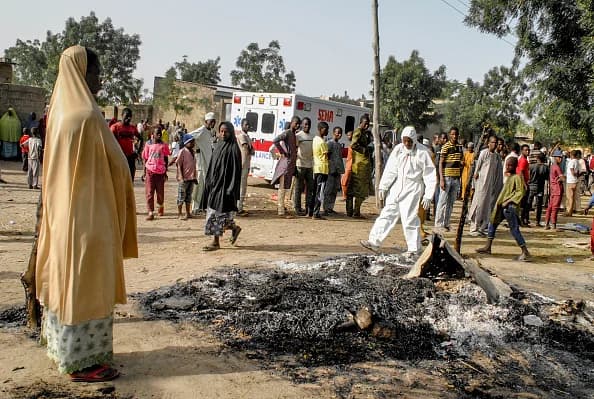
Terrorist groups across Africa are increasingly exploiting women and girls in suicide attacks, using social expectations and cultural norms to evade security detection and create psychological impact within communities. According to security analysts, Boko Haram has become one of the most prominent extremist organisations to use female suicide bombers. The group carried out its first known attack involving a female bomber in 2014 in Nigeria’s Gombe State, and since then has deployed hundreds of women and girls in suicide operations, killing thousands of civilians. Researchers say the use of wo
Terrorist groups across Africa are increasingly exploiting women and girls in suicide attacks, using social expectations and cultural norms to evade security detection and create psychological impact within communities.
According to security analysts, Boko Haram has become one of the most prominent extremist organisations to use female suicide bombers. The group carried out its first known attack involving a female bomber in 2014 in Nigeria’s Gombe State, and since then has deployed hundreds of women and girls in suicide operations, killing thousands of civilians.
Researchers say the use of women in such attacks represents a form of asymmetric warfare, allowing extremist groups to surprise security forces and target civilians in places traditionally considered safe, including markets, schools and homes.
Analyst Usman Anwar noted that many women involved in suicide attacks are not willing participants but are victims of kidnapping, coercion and psychological manipulation. Some are forced into operations without fully understanding the consequences.
Boko Haram’s strategy has also been adopted by other extremist organisations. The Islamic State West Africa Province (ISWAP) began using female suicide bombers in 2015, while Somalia’s al-Shabaab has also used women in targeted attacks. In Uganda, a female member of Islamic State-linked groups carried out a bombing attack in 2025.
Security experts explain that terrorist organisations exploit social assumptions that women are less likely to be viewed as threats. By using women to carry explosives, militants attempt to bypass security measures and increase the shock value of their attacks.
However, analysts stress that the involvement of women in terrorism is complex. While some women may participate voluntarily due to extremist beliefs, many others are victims of violence, abuse and forced recruitment.
Researchers warn that the growing use of female suicide bombers creates difficult challenges for security forces. Authorities must balance preventing attacks with avoiding actions that extremist groups can exploit for propaganda.
Experts argue that improved intelligence, community engagement, technology and early detection systems are necessary to counter this evolving tactic while protecting vulnerable populations.
The trend highlights how extremist groups continue to adapt their strategies, exploiting social vulnerabilities as part of modern asymmetric warfare.



Comments (2)
Thanks for the clear explanation. This is exactly the context I was looking for.
Thanks for the clear explanation. This is exactly the context I was looking for.
Thank you for reading and for joining the conversation.