
Thailand and Cambodia have expressed willingness to negotiate a ceasefire after four days of intense border clashes that have left at least 33 people dead and forced over 168,000 residents to flee their homes, AP News reports. The breakthrough comes after mediation efforts by U.S. President Donald Trump, who warned of potential trade consequences if the violence persisted. In a post on Truth Social Saturday, President Trump announced he had spoken separately with Cambodian Prime Minister Hun Manet and Acting Thai Prime Minister Phumtham Wechayachai, urging both nations to end hostilities. Tru
Thailand and Cambodia have expressed willingness to negotiate a ceasefire after four days of intense border clashes that have left at least 33 people dead and forced over 168,000 residents to flee their homes,
AP News
reports. The breakthrough comes after mediation efforts by U.S. President Donald Trump, who warned of potential trade consequences if the violence persisted. In a post on Truth Social Saturday, President Trump announced he had spoken separately with Cambodian Prime Minister Hun Manet and Acting Thai Prime Minister Phumtham Wechayachai, urging both nations to end hostilities. Trump stated that the leaders had agreed to pursue negotiations and implement an immediate ceasefire. Prime Minister Hun Manet confirmed Sunday that Cambodia was committed to an “immediate and unconditional ceasefire.” He said President Trump informed him that Thailand had also agreed to cease its attacks, following Trump’s call with Phumtham. Hun Manet added that he had directed Foreign Minister Prak Sokhonn to coordinate the next steps with U.S. Secretary of State Marco Rubio and to begin direct talks with Thailand. In a statement, Thailand expressed cautious support for the initiative. According to the Thai Foreign Ministry, Acting Prime Minister Phumtham welcomed Trump’s intervention and agreed in principle to the ceasefire, but emphasized that Cambodia must demonstrate “sincere intention.” Thailand also called for urgent bilateral talks to outline concrete steps toward a peaceful resolution. Tensions erupted on Thursday when a landmine explosion injured five Thai soldiers near the contested border, igniting heavy exchanges of artillery fire. Both countries have since accused each other of initiating the clashes. In response, diplomatic relations soured, with both sides recalling their ambassadors and Thailand closing several border crossings.
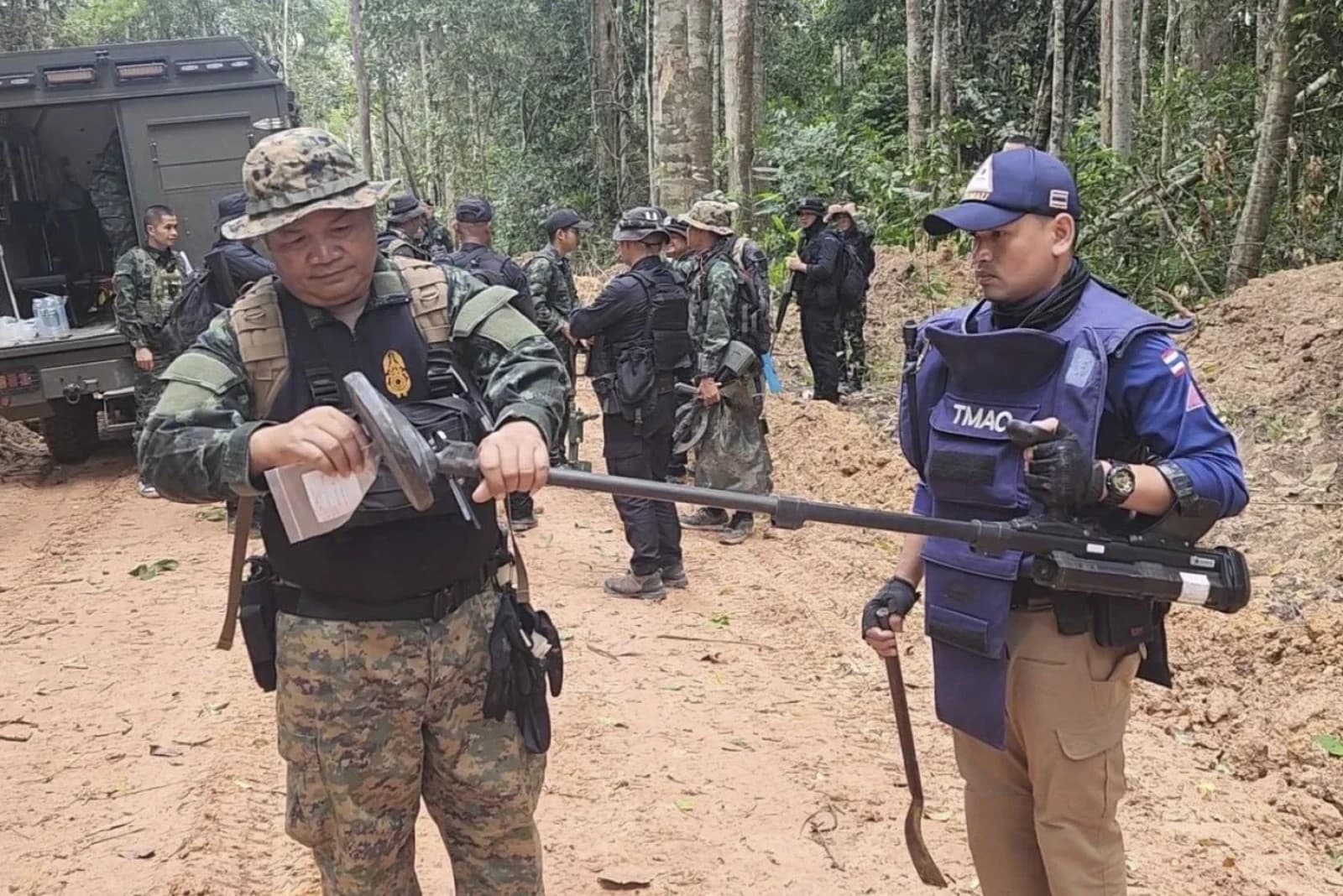
Thai soldiers inspect a border area on Sunday, July 20, 2025, in Ubon Ratchathani province, where the Royal Thai Army said two anti-personnel landmines were found. (Royal Thai Army via AP)
Despite the diplomatic progress, hostilities continued in parts of the disputed frontier on Sunday. Thai Army spokesperson Col. Richa Suksowanont accused Cambodian troops of initiating fresh attacks, including rocket fire targeting civilian homes and the ancient Ta Muen Thom temple — a historic site claimed by both nations. He said Thai forces retaliated with long-range artillery to suppress Cambodian rocket positions. Col. Richa acknowledged President Trump’s mediation efforts but noted that battlefield operations would persist until Cambodia officially commits to talks. “The ceasefire will only be possible once Cambodia formally initiates negotiations,” he stated. Meanwhile, Cambodia’s Defense Ministry accused Thai troops of escalating the conflict and increasing the use of internationally banned cluster munitions. Spokesperson Lt. Gen. Maly Socheata alleged that Thai attacks had caused significant civilian casualties and widespread damage to infrastructure. Thailand has reported 20 deaths [most of them civilians] while Cambodia has recorded 13 fatalities. More than 131,000 people have evacuated from Thai territory, while over 37,000 residents have fled from three Cambodian provinces. Several border villages are now abandoned, and schools and hospitals in the area have closed.
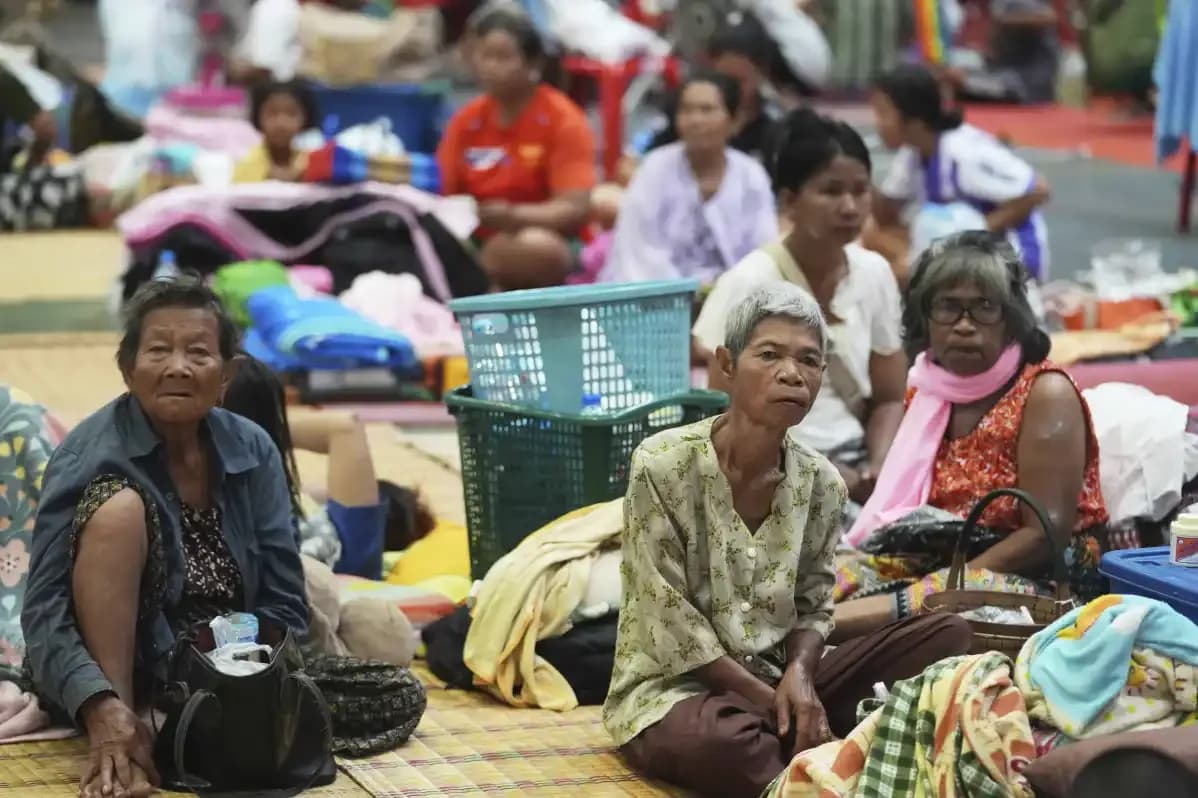
Thailand Residents who fled because of the clash sheltered at evacuation center in Thailand. (File: AP)
The United Nations Security Council has called on the Association of Southeast Asian Nations (ASEAN) to take the lead in mediating peace between the two member states. Human Rights Watch has condemned the reported use of cluster bombs in populated areas and urged both governments to prioritize the safety of civilians. The 800-kilometer (500-mile) border between Thailand and Cambodia has long been a source of dispute, but previous confrontations have been relatively brief. Tensions escalated earlier this year when a Cambodian soldier was killed during a standoff in May, deepening political divisions within Thailand and reigniting the long-standing territorial feud.



Comments
No comments yet. Be the first to share a thought.