
In a recent segment, Sky News host Rita Panahi posited a provocative scenario that has stirred political discussions across the United States: the Democratic Party may persuade President Joe Biden to step down, potentially elevating Vice President Kamala Harris to the presidency. As the nation edges closer to the 2024 election, this possibility raises questions about the strategic maneuvers within the Democratic Party and the implications for the future of American leadership. President Joe Biden, who took office in January 2021, has faced a myriad of challenges, including navigating the ongo
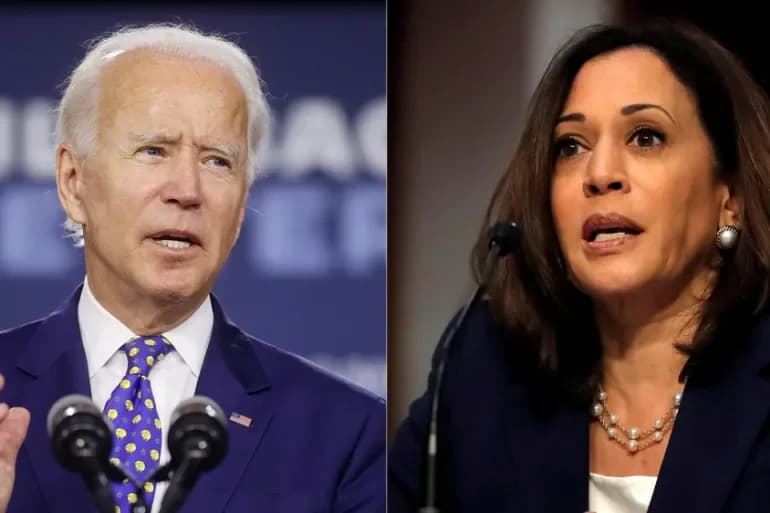
In a recent segment, Sky News host Rita Panahi posited a provocative scenario that has stirred political discussions across the United States: the Democratic Party may persuade President Joe Biden to step down, potentially elevating Vice President Kamala Harris to the presidency. As the nation edges closer to the 2024 election, this possibility raises questions about the strategic maneuvers within the Democratic Party and the implications for the future of American leadership. President Joe Biden, who took office in January 2021, has faced a myriad of challenges, including navigating the ongoing COVID-19 pandemic, addressing climate change, and managing foreign policy crises. Despite significant legislative achievements, such as the passage of the American Rescue Plan and the Infrastructure Investment and Jobs Act, Biden’s approval ratings have experienced fluctuations, influenced by economic concerns and political polarization. Vice President Kamala Harris, the first woman and first person of color to hold the office, has been a historic figure in American politics. However, her tenure has not been without controversy. Critics have pointed to her handling of immigration issues and her perceived lack of visibility on key policy matters as factors that might undermine her electability. Rita Panahi’s assertion that Harris is “unelectable” taps into broader anxieties within the Democratic Party about her potential to galvanize the electorate. The notion of President Biden stepping down is not without precedent in American politics. Historical examples, such as Lyndon B. Johnson’s decision not to seek re-election in 1968, demonstrate that political parties sometimes make bold moves to adapt to changing dynamics. For the Democrats, elevating Harris could be seen as a double-edged sword: while it aligns with progressive values of diversity and representation, it also risks alienating moderate and independent voters who are critical for electoral success. As the election approaches, the Democratic Party faces a critical juncture. The decision to support Biden’s re-election bid or to rally behind a different candidate, such as Kamala Harris, will shape the party’s strategy and the nation’s political landscape. Regardless of the outcome, the debate underscores the complexities of leadership transitions and the high stakes of American presidential elections. Rita Panahi’s commentary highlights a potential shift that could redefine the Democratic Party’s approach to the 2024 election. Whether Joe Biden remains the candidate or Kamala Harris ascends to the highest office, the decision will have profound implications for the future of American democracy and the global perception of U.S. leadership.



Comments
No comments yet. Be the first to share a thought.