
Judging extends far beyond legal procedures; it is an intricate process that involves human psychology, moral reasoning, and cultural dynamics. Throughout history, different societies have employed various methods to administer justice, yet many share common psychological foundations. The biblical story of King Solomon's judgment and the traditional Gacaca courts in Rwanda offer valuable insights into the psychology of judging. Modern perspectives, including those from Dr. Ras Banamungu—an expert in Music Therapy and Counseling Psychology and the developer of Laughter Percussion—enhance our un
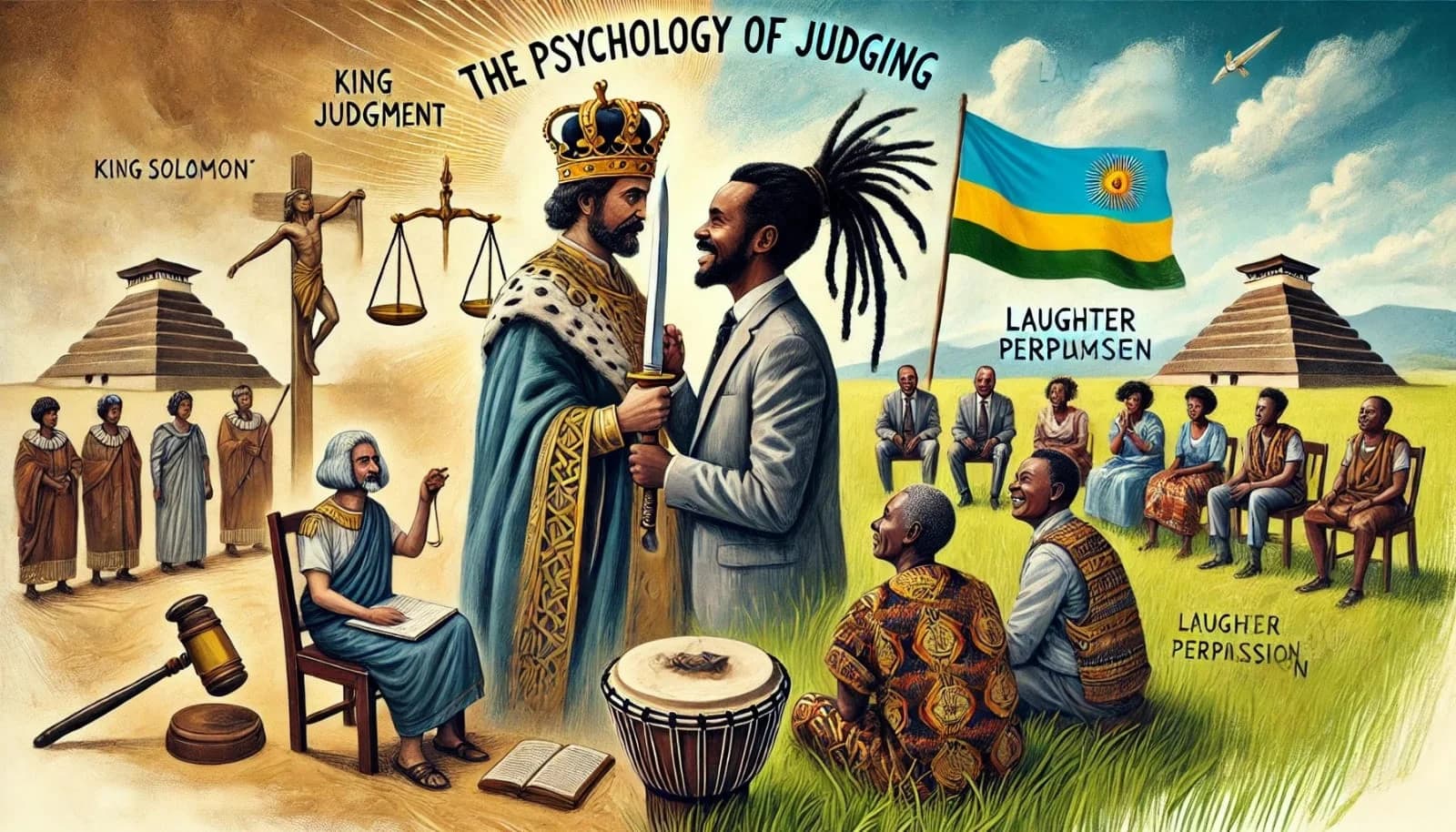
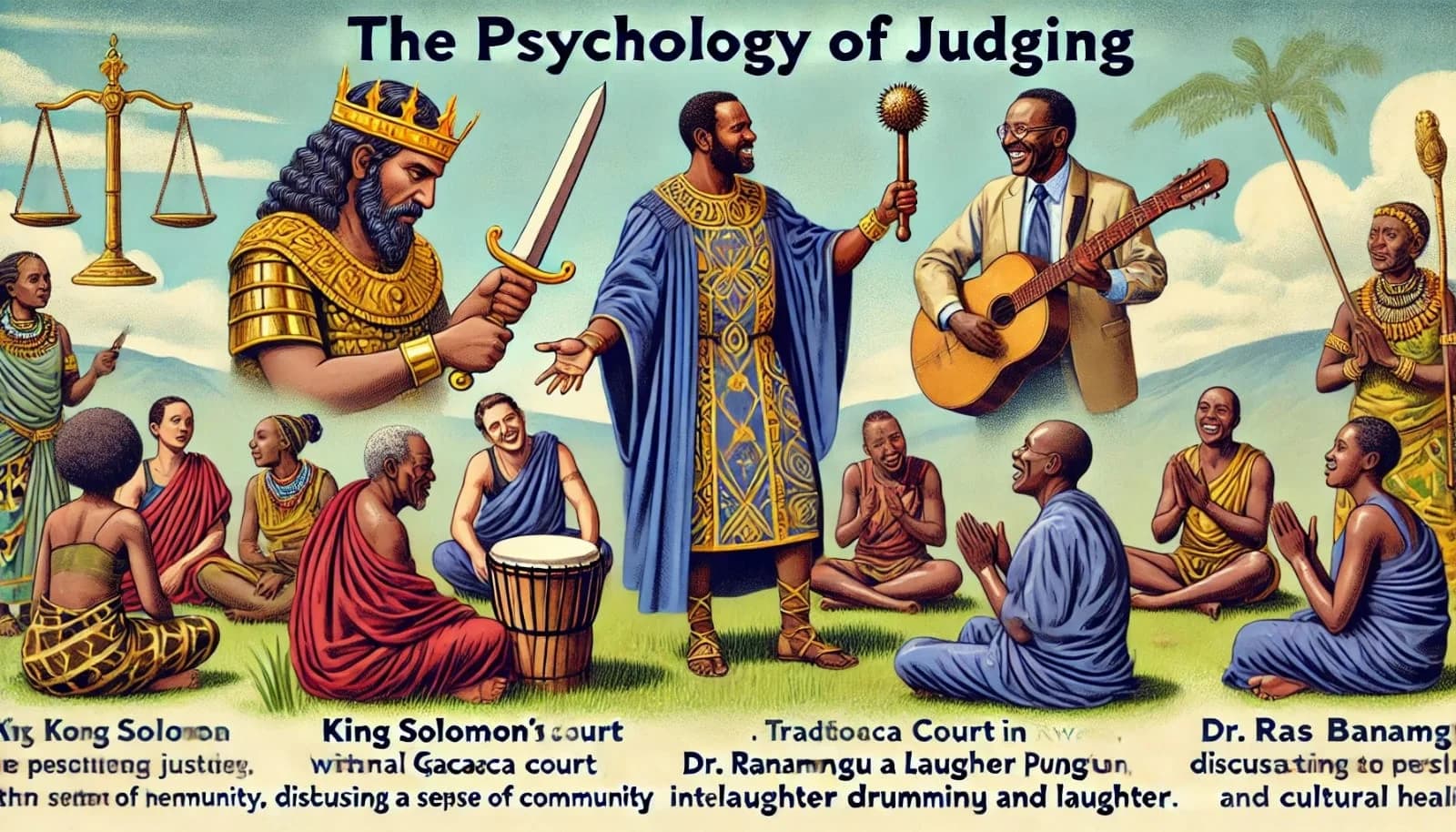
Judging extends far beyond legal procedures; it is an intricate process that involves human psychology, moral reasoning, and cultural dynamics. Throughout history, different societies have employed various methods to administer justice, yet many share common psychological foundations. The biblical story of King Solomon's judgment and the traditional Gacaca courts in Rwanda offer valuable insights into the psychology of judging. Modern perspectives, including those from Dr. Ras Banamungu—an expert in Music Therapy and Counseling Psychology and the developer of Laughter Percussion—enhance our understanding of these approaches. The biblical story of King Solomon's judgment is a classic example of judicial wisdom. It tells of two women who came before the king, both claiming to be the mother of the same infant. With no evidence to support either claim, Solomon used a psychological approach. He suggested cutting the child in half and giving each woman a portion. The real mother immediately pleaded for the child's life, preferring to give up her claim rather than see the baby harmed. The other woman, however, agreed to the division. This reaction revealed the true mother, as Solomon anticipated that a genuine parent would prioritize the child’s safety over winning the dispute. Solomon's strategy highlighted the importance of understanding human behavior and emotions in judicial decision-making. It demonstrated that effective judging requires more than legal knowledge; it also involves empathy, moral reasoning, and an ability to elicit truthful responses through psychological insight. Gacaca Courts: Restorative Justice After the 1994 Genocide Against the Tutsi in Rwanda The Gacaca courts in Rwanda offer another unique example of justice grounded in psychological principles. Following the 1994 genocide against the Tutsi in Rwanda, the conventional legal system struggled to address the vast number of genocide-related cases. The traditional Gacaca system, originally a community-based conflict resolution process, was revived to manage the overwhelming demand for justice. Gacaca, meaning "grass" in Kinyarwanda, traditionally involved community elders gathering on the grass to settle disputes. Post-genocide, this system was adapted to facilitate healing, reconciliation, and justice. It focused on community participation, where victims and perpetrators faced each other publicly. Survivors recounted their experiences, while those accused could confess, seek forgiveness, and show remorse. Genuine remorse often resulted in lighter sentences or reintegration into the community. The psychological framework behind Gacaca emphasized collective healing, restorative justice, and truth-telling. Unlike Western courts, which often focus primarily on punishment, Gacaca aimed to heal the social fabric and address the emotional wounds left by the atrocities. It acknowledged that in the aftermath of mass violence, achieving justice requires addressing both legal and psychological dimensions. In connecting the wisdom of King Solomon and the restorative justice of Gacaca, Dr. Ras Banamungu offers a contemporary perspective. As an expert in Music Therapy and Counseling Psychology, and the developer of Laughter Percussion, Dr. Banamungu’s work emphasizes the relationship between emotional well-being and justice. His therapeutic practice integrates rhythmic drumming and laughter to facilitate emotional healing, reflecting principles similar to those employed in Gacaca. Dr. Banamungu's research in mass communication also informs his views on the role that cultural narratives and collective experiences play in shaping perceptions of justice. His approach to therapy, which draws on cultural elements and community participation, aligns with the restorative goals of Gacaca. By addressing the psychological needs of individuals and communities, he aims to foster healing and reconciliation. Several key themes emerge from the judgment of King Solomon, the Gacaca courts, and Dr. Banamungu’s therapeutic insights: 1. Empathy and Emotional Intelligence: Solomon’s understanding of the maternal bond, Gacaca’s focus on emotional healing, and Dr. Banamungu’s Laughter Percussion all demonstrate the importance of empathy in justice. A judge who understands the emotional state of those involved can make more compassionate and informed decisions. 2. Restorative Justice Over Retribution: Solomon aimed to reunite the child with the rightful mother, while Gacaca sought to restore community harmony. Similarly, Dr. Banamungu’s practices emphasize emotional restoration, showing that healing relationships can be more effective than punishment alone. 3. Community Involvement: Both Gacaca and traditional forms of justice, such as Solomon’s wisdom-seeking, involved the community in decision-making. This approach reflects the belief that justice should resonate with societal values. Dr. Banamungu’s therapeutic methods, which encourage group participation, also highlight the power of community in fostering healing. 4. Psychological Insight for Truth-Seeking: All these examples demonstrate that uncovering truth requires understanding human nature. Solomon created a dilemma to elicit an honest response, Gacaca encouraged confessions, and Dr. Banamungu’s work involves bringing suppressed emotions to the surface for therapeutic resolution. The examples of King Solomon, Gacaca, and Dr. Banamungu’s therapeutic practices show that justice is not only about legal outcomes but also about emotional and psychological well-being. Modern judicial systems could benefit from integrating these insights, emphasizing empathy, restorative justice, and community involvement. Child custody cases, for instance, could consider Solomon’s principle of focusing on the child’s best interests rather than solely on legal rights. Likewise, restorative justice programs inspired by Gacaca have gained traction for addressing the psychological impact of crime, aiming to reduce recidivism and promote rehabilitation. Incorporating therapeutic practices like Laughter Percussion into legal and rehabilitation programs can facilitate more holistic healing. The stories of King Solomon’s judgment and the Gacaca courts in Rwanda, alongside Dr. Ras Banamungu’s contributions in Music Therapy and Counseling Psychology, provide valuable lessons on the psychology of judging. These examples remind us that justice extends beyond legal frameworks, incorporating moral reasoning, emotional intelligence, and cultural understanding. By integrating empathy, restorative practices, and community involvement, judicial systems can achieve justice that resonates with human experiences, fostering healing and social cohesion. In a world where justice often struggles to balance legal standards with emotional realities, drawing on the wisdom of ancient practices and modern therapeutic insights offers a path toward a more compassionate and comprehensive approach to resolving conflicts. Solomon's wisdom, the Gacaca experience, and Dr. Banamungu's innovations challenge us to see judging not just as a legal duty but as a profound act of understanding human nature.



Comments
No comments yet. Be the first to share a thought.