
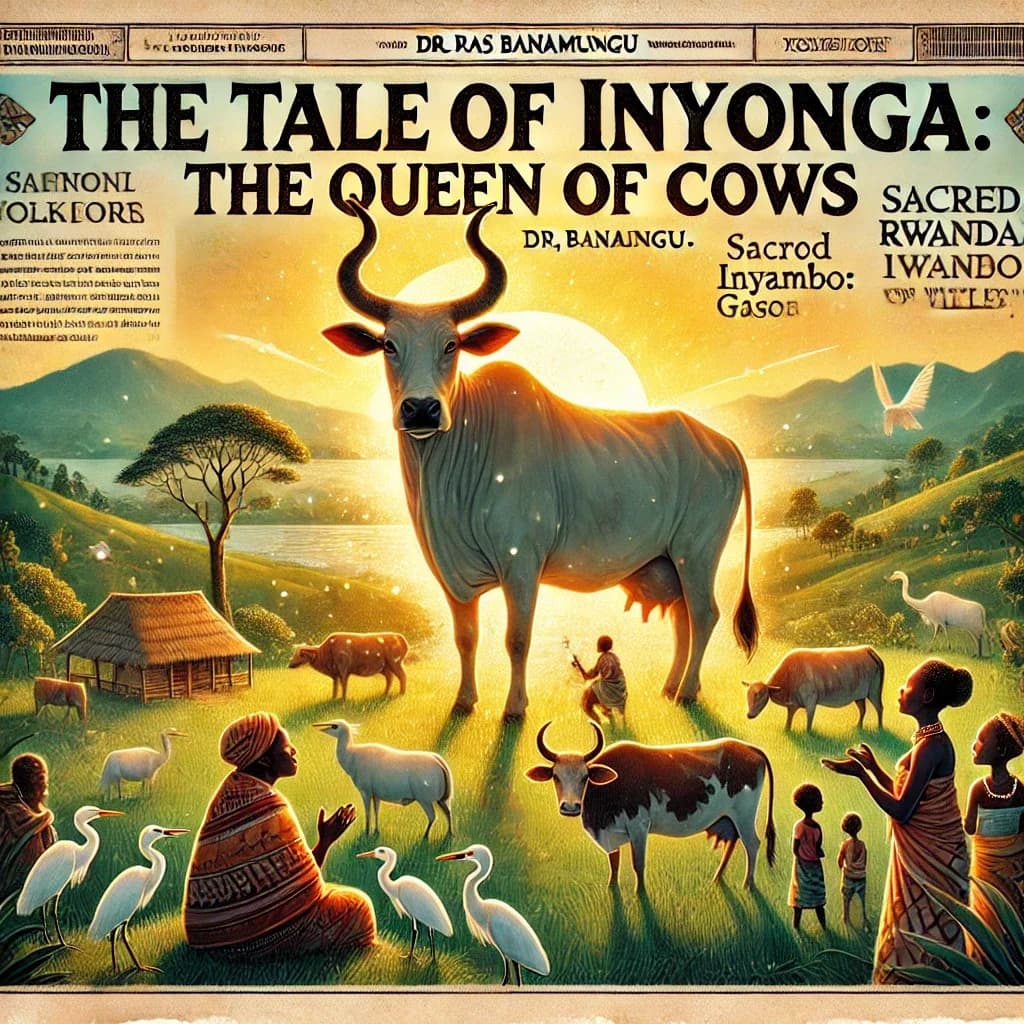
The Tale of Inyonga: The Queen of Cows Long, long ago—so long ago that rivers still sang and mountains danced—there lived a cow unlike any other. Her name was Inyonga. Inyonga was no ordinary cow. She was born in the sacred hills of Gasabo, a land rich with the legacy of kings and queens. It is said she was born at dawn, just as the sun rose from the waters of the Kanyaru River, casting golden rays across the hills. At that moment, a soft wind swept through the valleys, and the elders whispered: A wonder has been born. They said, “This is no mere cow. Inyonga was breathed into life by the s
The Tale of Inyonga: The Queen of Cows Long, long ago—so long ago that rivers still sang and mountains danced—there lived a cow unlike any other. Her name was Inyonga. Inyonga was no ordinary cow. She was born in the sacred hills of Gasabo, a land rich with the legacy of kings and queens. It is said she was born at dawn, just as the sun rose from the waters of the Kanyaru River, casting golden rays across the hills. At that moment, a soft wind swept through the valleys, and the elders whispered: A wonder has been born. They said, “This is no mere cow. Inyonga was breathed into life by the spirit of Ryangombe, and placed in the royal kraal of King Ruganzu.” From that day forward, she became the guardian of all Rwandan cattle. She grazed the hills of Gisaka, where each blade of grass seemed to turn into milk, and that milk fed kings, poets, and the people. When Inyonga looked up to the skies, the rains would fall. When she smiled, crops would grow. When she sighed, peace would settle over the hills. People would travel from distant lands to see her resting on the island of Iwawa, lying there like a queen on her throne. Yet few knew the secret of her homeland. Inyonga’s village was home to sacred white egrets, birds of grace that danced among the cows. These birds nudged the majestic Inyambo cows to be milked. The people collected this milk, shared it with calves, and offered it to elders. It was a place of harmony, abundance, and respect. They used to say, “If you walk through Inyonga’s village at dawn, you’ll smell the freshness of milk, hear children singing, and find elders telling stories as young men guard tradition with pride.” From that tale came an old Rwandan saying: “A cow is never just a beast—when Inyonga is born, she stands alone.” To this day, when a child is born into a family of proud cattle keepers, the elders smile and say: “Habyara Gihanga! Another Inyonga has been born!” The Moral of the Tale: This story teaches that dignity and cultural pride are built through self-respect, community care, and honoring heritage—just as Inyonga once taught the wise ones of the land.


Comments
No comments yet. Be the first to share a thought.