
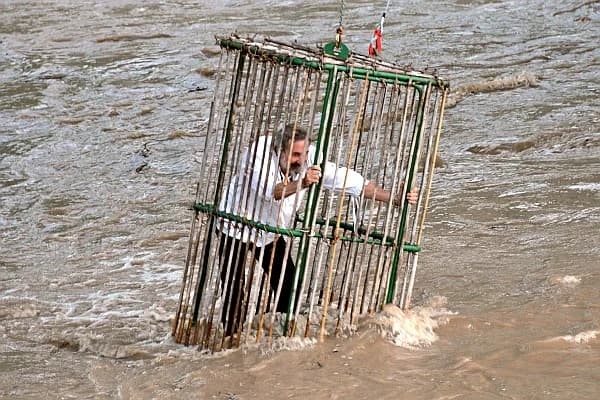
While most politicians face their critics in the polls, in the northern Italian city of Trento, public blunders are met with a medieval cage and a three fold dunking into the icy Adige River. This centuries old satirical tradition, known as "La Tonca," transforms modern political accountability into a theatrical spectacle of communal justice. Every June, during the Feste Vigiliane, the festival celebrating Trento’s patron saint, San Vigilio, thousands gather at the Piazza Duomo for the Tribunale di Penitenza (The Tribunal of Penance). Unlike a standard court, this legal drama is fueled by hu
While most politicians face their critics in the polls, in the northern Italian city of Trento, public blunders are met with a medieval cage and a three fold dunking into the icy Adige River. This centuries old satirical tradition, known as "La Tonca," transforms modern political accountability into a theatrical spectacle of communal justice. Every June, during the Feste Vigiliane, the festival celebrating Trento’s patron saint, San Vigilio, thousands gather at the Piazza Duomo for the Tribunale di Penitenza (The Tribunal of Penance). Unlike a standard court, this legal drama is fueled by humor and irony. A panel of actors, dressed in traditional judicial robes, weighs the crimes of local public figures. These aren't criminal offenses, but rather the year's most embarrassing administrative failures, ridiculous public statements, or failed infrastructure projects. One defendant is ultimately found guilty of having made the most absurd decision of the year and is sentenced to the river. Following the verdict, the guilty party often represented by a good humored volunteer or an actor is marched to the Ponte di San Lorenzo. There, they are locked inside a wicker or metal cage and hoisted over the Adige River. The crowd watches as the cage is lowered three times into the water. While the modern version is a lighthearted event designed for laughter, its origins were significantly more somber. Between the 14th and 17th centuries, La Tonca was a genuine punishment for blasphemers, serving as a public humiliation and a cleansing of the offender's sins against the church and community.
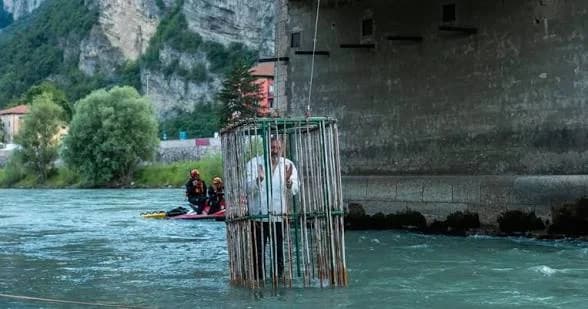
"It is a moment of democratic catharsis," said Giovanni Battisti, a local historian who has studied the Feste Vigiliane. "In the Middle Ages, it was about divine law, today, it’s about making sure those in power don't take themselves too seriously. You can survive a bad policy, but it’s harder to survive being laughed at by the whole town." For those in the cage, the experience is memorable, if a bit chilly. "The water is always colder than you expect," joked a previous participant who represented a local official. "But once you come up for air and hear the crowd cheering, you realize it’s the ultimate form of community bonding." La Tonca serves as a reminder that history isn't just found in books, but in the living rituals of a city. By blending medieval severity with modern satire, Trento manages to hold its leaders accountable through the most human of tools, a sense of humor. In a world of complex politics, sometimes the simplest answer to a dumb decision is a quick dip in a cold river.



Comments
No comments yet. Be the first to share a thought.