
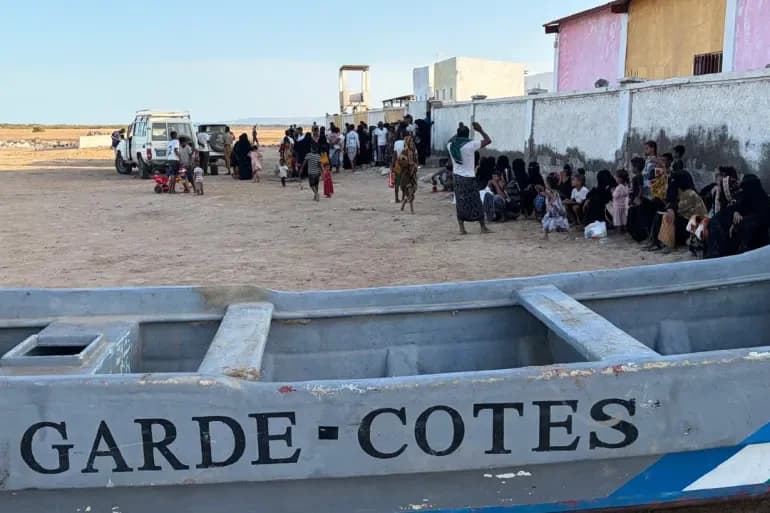
More than 3,400 people fleeing renewed fighting in Yemen have arrived along Djibouti’s northern coast in just 48 hours, placing additional pressure on the small Horn of Africa nation’s already stretched humanitarian system. The arrivals followed a renewed Houthi offensive in Yemen, with fighting forcing residents from several districts and sending thousands towards the Red Sea. Djiboutian authorities say they are preparing to receive as many as 10,000 people if the current pace of arrivals continues. Most of those reaching Djibouti have landed around Obock, near the Bab al-Mandeb Strait. The
More than 3,400 people fleeing renewed fighting in Yemen have arrived along Djibouti’s northern coast in just 48 hours, placing additional pressure on the small Horn of Africa nation’s already stretched humanitarian system. The arrivals followed a renewed Houthi offensive in Yemen, with fighting forcing residents from several districts and sending thousands towards the Red Sea. Djiboutian authorities say they are preparing to receive as many as 10,000 people if the current pace of arrivals continues. Most of those reaching Djibouti have landed around Obock, near the Bab al-Mandeb Strait. They have arrived on a range of vessels, from small wooden dhows to larger ships, with women and children among those making the dangerous sea crossing. Humanitarian officials say some families remain stranded on the Yemeni side because of fuel shortages. The International Organization for Migration estimates that more than 85,000 people have been displaced inside Yemen, with most of the displacement occurring during the first two weeks of September. UNICEF has also warned that children crossing the sea face extreme heat, dehydration and limited access to safe drinking water. Djibouti, which has a population of fewer than 1.2 million people, has mobilised its coastguard, navy, army and health services to rescue people at sea and provide food and first aid after their arrival. The Markazi camp near Obock, which previously accommodated thousands of Yemenis during the 2015 conflict, is again being used to shelter new arrivals. The crisis is also raising concerns about the wider security of the Red Sea and Bab al-Mandeb, one of the world's most important maritime routes. Djibouti's strategic location has made it a major base for international military and shipping interests, meaning prolonged instability in the area could have consequences far beyond the refugee crisis. Djibouti already hosts more than 36,000 registered refugees and asylum seekers, mainly from Somalia, Ethiopia and Yemen. Humanitarian agencies are now warning that limited resources and declining international aid could make it increasingly difficult to provide adequate shelter, food and protection if the influx continues. For Djibouti, the latest arrivals are a reminder of how quickly instability across the Red Sea can become a humanitarian emergency on the African side. Officials are calling for urgent international support as the country prepares for the possibility of thousands more people seeking safety on its shores.



Comments
No comments yet. Be the first to share a thought.