
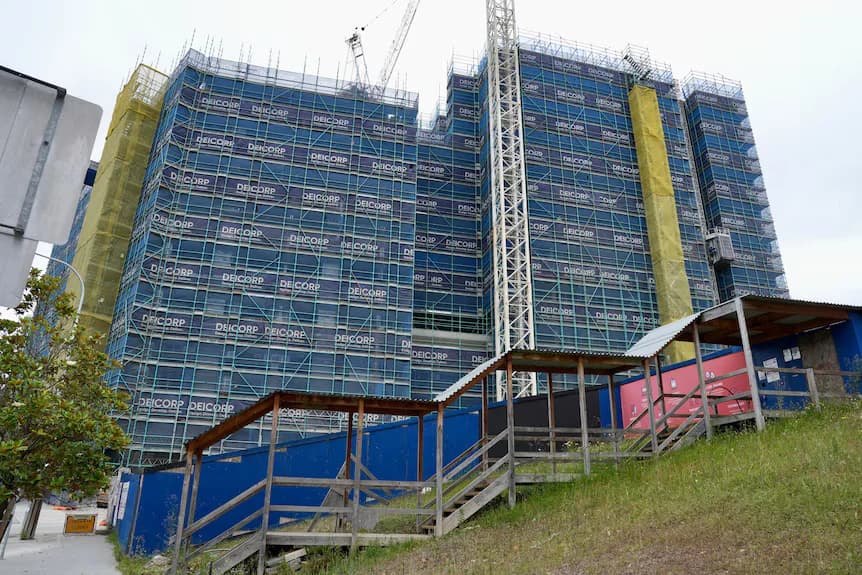
Once considered a niche market, three-bedroom apartments are becoming increasingly sought after in Australia’s tight housing landscape. Yet despite their rising appeal, they remain a rare find, the “golden unicorn” of the property market. Property experts and urban planners are now urging governments and developers to prioritise the construction of larger apartments to address the national housing crisis. Without targeted incentives and reform, they warn, Australia could face “worsening shortages and affordability issues” in years to come. Richard Temlett, National Executive Director at prop
Once considered a niche market, three-bedroom apartments are becoming increasingly sought after in Australia’s tight housing landscape. Yet despite their rising appeal, they remain a rare find, the “golden unicorn” of the property market. Property experts and urban planners are now urging governments and developers to prioritise the construction of larger apartments to address the national housing crisis. Without targeted incentives and reform, they warn, Australia could face “worsening shortages and affordability issues” in years to come. Richard Temlett, National Executive Director at property advisory firm Charter Keck Cramer, said the traditional idea of the "Great Australian Dream" -
owning a standalone house-
is becoming unattainable for many. “The apartment market is emerging as more people realise a freestanding house is out of reach,” Mr Temlett said. In cities like Sydney, families are increasingly choosing apartment living to stay within desirable school zones or shorten their daily commute. However, there are simply not enough larger apartments to meet this growing demand. Rising construction costs and rigid planning regulations are exacerbating the shortage, Temlett added. “Where are our kids and grandchildren going to live? We need more housing of different types, and buyers and renters need more choice.”
The Numbers Behind the Demand
According to ABC News, Ben Carter, Associate Director at Charter Keck Cramer, said data from the Australian Bureau of Statistics shows apartment living has grown in popularity across all age groups since 2006, particularly among 20–29-year-olds. Statistically, census data from 2021 revealed Sydney leads in the number of three-bedroom apartments, with 64,340 of its 487,666 total apartments offering three bedrooms. In contrast, Melbourne had just 17,157 three-bedroom units among its 204,442 apartments. However, Carter noted that developers are starting to respond, with a higher proportion of three-bedroom units appearing in newer residential projects.
Space Still a Scarce Commodity
Matthew Kandelaars from the Property Council of Australia echoed the concerns, saying the market’s viability for larger apartments has been stretched to the limit. “Planning delays, rising costs, low site productivity, and state taxes that penalise larger apartments are stifling supply,” he said. This scarcity is something Melbourne resident Sarah knows too well. She and her family originally hoped to buy a house but settled for a two-bedroom 1970s apartment in inner-city Collingwood, prioritising proximity over size. “I don’t drive, so it had to be near public transport and bike paths,” she said. “The commute was under 10 minutes, and we loved spending time outdoors.” However, after seven years and the pressures of COVID-19 lockdowns, her growing family needed more space. They eventually managed to purchase a small three-bedroom house in a neighbouring suburb — but not without challenges. “There just weren’t many decent family-sized apartments,” Sarah said. “Some of the three-bedroom ones had a large master bedroom and two tiny rooms with no natural light.”
Australians Open to Apartment Living; If It's Done Right
Infrastructure Victoria’s 2023
Our Home Choices
report found that 20% of respondents would trade a detached house in the outer suburbs for a well-located townhouse or apartment, if the price were comparable. 25% said they’d still prefer a detached house in growth areas, citing affordability as the deciding factor.
Policy Levers and Market Signals
Adam Haddow, President of the Australian Institute of Architects and Director of SJB Sydney, said demand for family-sized apartments is growing, but government support is essential to drive the market in that direction. “There hasn’t historically been a big market for family apartments, but that’s changing,” Haddow said. “We’re even seeing demand for four-bedroom apartments — which was unthinkable two years ago.” However, affordability remains a key concern. “We need to deliver family apartments for middle-income earners, not just wealthy families,” Haddow added. He proposed mechanisms such as reduced mortgage rates to stimulate both demand and developer confidence. Dr Michael Fotheringham, Managing Director of the Australian Housing and Urban Research Institute (AHURI) said Australia’s home ownership model is evolving, but the housing industry is slow to adapt. “Nationally, we build six freestanding houses for every apartment,” he said. “Tastes have shifted, but developers and policymakers haven’t always kept up.” To accelerate the delivery of larger apartments, Fotheringham suggested targeted tax exemptions and cost-saving initiatives for both buyers and developers. He said, “diversifying housing supply isn’t just about choice; it’s about sustainability and long-term affordability for Australian families.”
ABC News
contributed to the article.



Comments
No comments yet. Be the first to share a thought.