
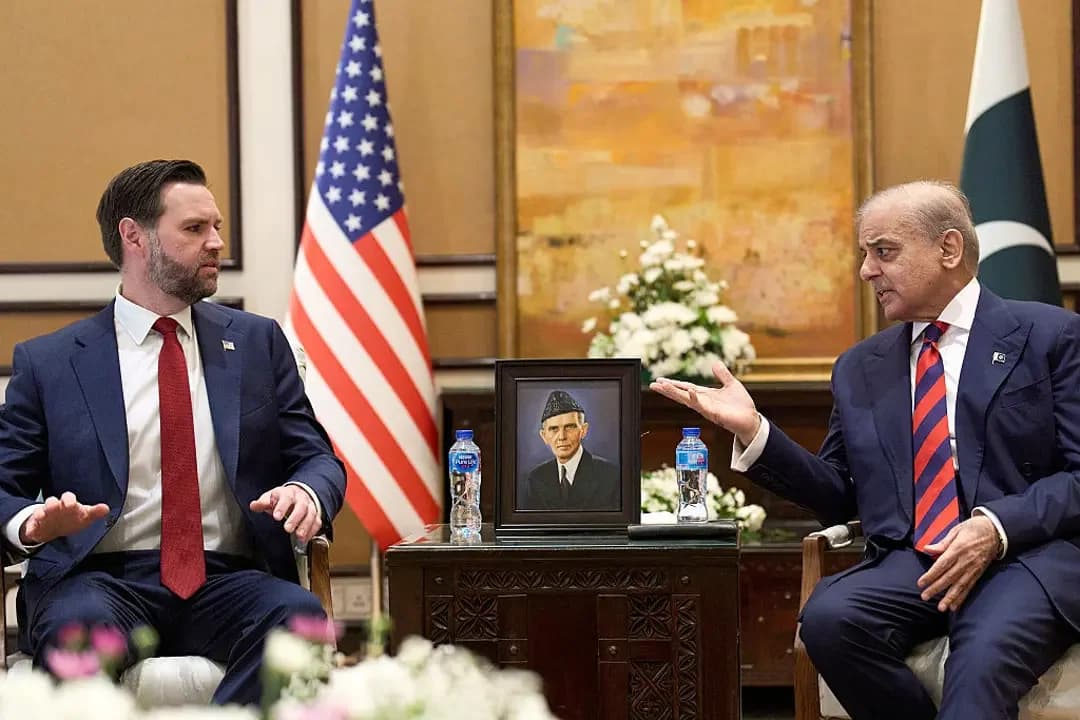
President Donald Trump on Saturday canceled a planned trip by U.S. officials to Pakistan for Iran-related diplomatic discussions, as fast-moving backchannel negotiations continued alongside competing proposals and regional mediation efforts. The delegation was expected to include U.S. special envoy Steve Witkoff and Jared Kushner, Trump’s son-in-law, who were due to travel to Islamabad for Pakistan-mediated discussions linked to efforts to de-escalate tensions with Iran. Trump said he canceled the trip because it was unnecessary to send officials on a long journey when discussions could be han
President Donald Trump on Saturday canceled a planned trip by U.S. officials to Pakistan for Iran-related diplomatic discussions, as fast-moving backchannel negotiations continued alongside competing proposals and regional mediation efforts.
The delegation was expected to include U.S. special envoy Steve Witkoff and Jared Kushner, Trump’s son-in-law, who were due to travel to Islamabad for Pakistan-mediated discussions linked to efforts to de-escalate tensions with Iran.
Trump said he canceled the trip because it was unnecessary to send officials on a long journey when discussions could be handled remotely. “I see no point of sending them on an 18-hour flight in the current situation. It’s too long. We can do it just as well by telephone. The Iranians can call us if they want,” he told reporters.
The cancellation came as Iran’s Foreign Minister Abbas Araghchi concluded meetings in Pakistan with Pakistani officials but did not hold any direct talks with U.S. representatives. Iranian officials said no U.S.–Iran meeting was planned, stressing that Araghchi’s visit was focused solely on consultations with Islamabad as part of its mediation role.
Araghchi later departed Islamabad for Oman after about 20 hours of talks with Pakistani officials, where he was expected to continue regional consultations.
Shortly after the cancellation, Trump said Iran submitted an updated diplomatic proposal, describing it as an improved version of earlier drafts and stating that a revised paper arrived within minutes of his decision. He also said the new proposal was “much better” than the previous one.
Iranian officials have indicated that any movement toward formal negotiations remains tied to broader conditions, including demands related to U.S. pressure in regional waters.
In a separate development, Pakistani Prime Minister Shehbaz Sharif held a 50-minute phone call with Iranian President Masoud Pezeshkian on Saturday night, discussing regional tensions and mediation efforts, according to a statement from Sharif's office cited by CBS News.
The United States continues to maintain heightened maritime operations in the region, with ships being redirected away from Iranian ports under U.S. Central Command–led enforcement measures since early April, and three vessels seized for non-compliance.
The episode follows earlier disruptions in the same diplomatic track, including the cancellation of a planned trip by Vice President JD Vance earlier in the week, underscoring the volatility of ongoing indirect negotiations between Washington and Tehran.
Araghchi, writing on social media, said he is waiting “to see if the U.S. is truly serious about diplomacy,” reflecting continued uncertainty over whether backchannel engagement can develop into formal talks.



Comments
No comments yet. Be the first to share a thought.