
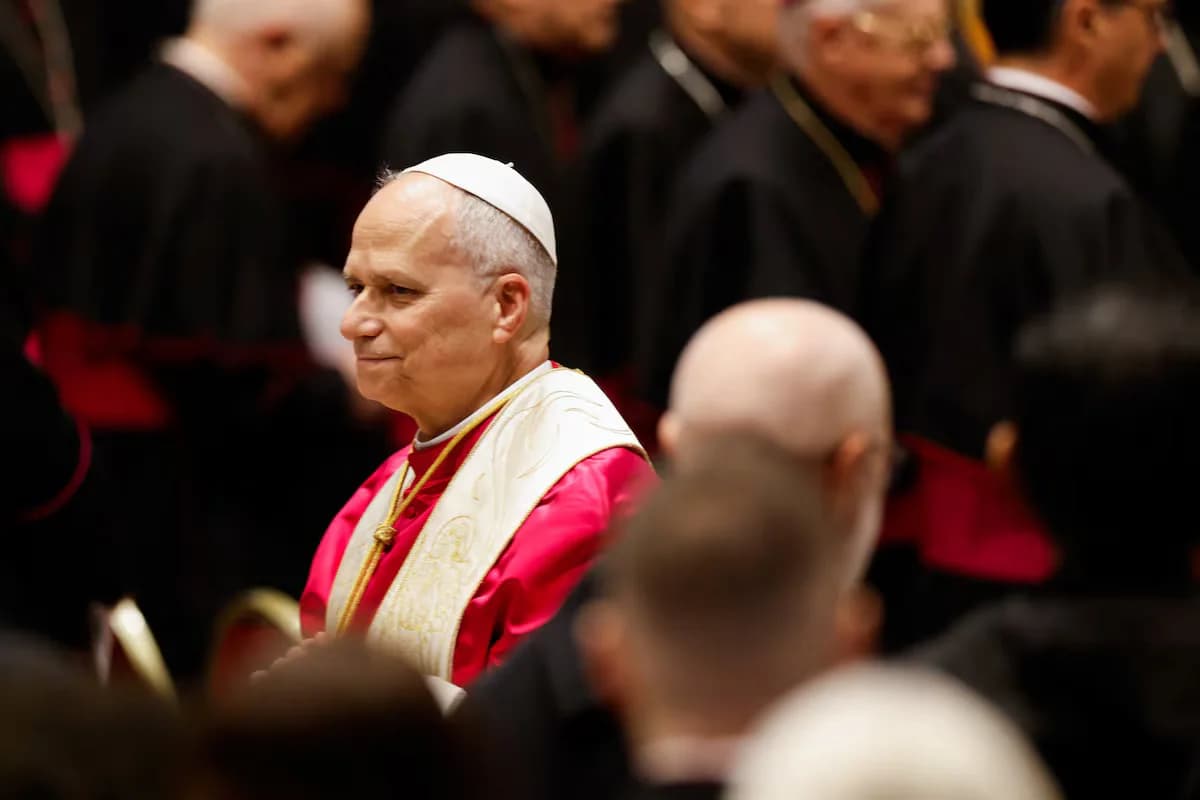
On April 13, 2026, in the United States, Donald Trump criticized a figure identified as “Pope Leo,” describing him as “terrible” on foreign policy and “weak” on crime, remarks that quickly spread across global media and sparked debate over the role and impact of political rhetoric on moral and religious authority Trump’s remarks targeting a figure identified as “Pope Leo” come amid ongoing political debates in the United States over crime, immigration, and foreign policy—issues that have consistently shaped his public communication. Donald Trump has frequently emphasized strong border securi
On April 13, 2026, in the United States, Donald Trump criticized a figure identified as “Pope Leo,” describing him as “terrible” on foreign policy and “weak” on crime, remarks that quickly spread across global media and sparked debate over the role and impact of political rhetoric on moral and religious authority Trump’s remarks targeting a figure identified as “Pope Leo” come amid ongoing political debates in the United States over crime, immigration, and foreign policy—issues that have consistently shaped his public communication. Donald Trump has frequently emphasized strong border security, strict law enforcement, and a more assertive international posture. Analysts note that his public statements often reflect these priorities, particularly when responding to global voices or institutions that promote alternative approaches. Religious institutions and leaders at the global level often engage in public discussions on humanitarian issues such as peace, migration, and social justice. These positions can sometimes differ from more hardline political perspectives, leading to public disagreement that reflects deeper differences in values and policy direction. Experts suggest that criticism directed at religious figures is often less about individuals themselves and more about competing worldviews—one emphasizing moral and humanitarian responsibility on a global scale, and the other prioritizing national security and domestic interests. Communication specialists also note that strong political language is frequently used to simplify complex policy debates and reinforce political identity among supporters. However, they warn that when such rhetoric is directed at moral or religious institutions, it can contribute to increased polarization in society. Observers further highlight that unclear or inconsistent reporting around figures such as “Pope Leo” underscores the importance of verification in fast-moving news environments, where misinformation or ambiguity can quickly influence public perception. Overall, the incident reflects broader tensions in global discourse between political authority and moral leadership, showing how the language of influential figures can shape public debate beyond policy discussions alone.



Comments
No comments yet. Be the first to share a thought.