
U.S. President Donald Trump drew criticism after making several historical references during his speech marking America's 250th Independence Day celebrations on July 4, with critics arguing that some of his remarks were historically inaccurate. The address was delivered as part of the "Salute to America 250" celebrations on the National Mall, despite severe weather that forced the cancellation of the Independence Day Parade and temporarily led authorities to evacuate parts of the venue because of thunderstorms and extreme heat. Before taking the stage, Trump insisted the event would continue r
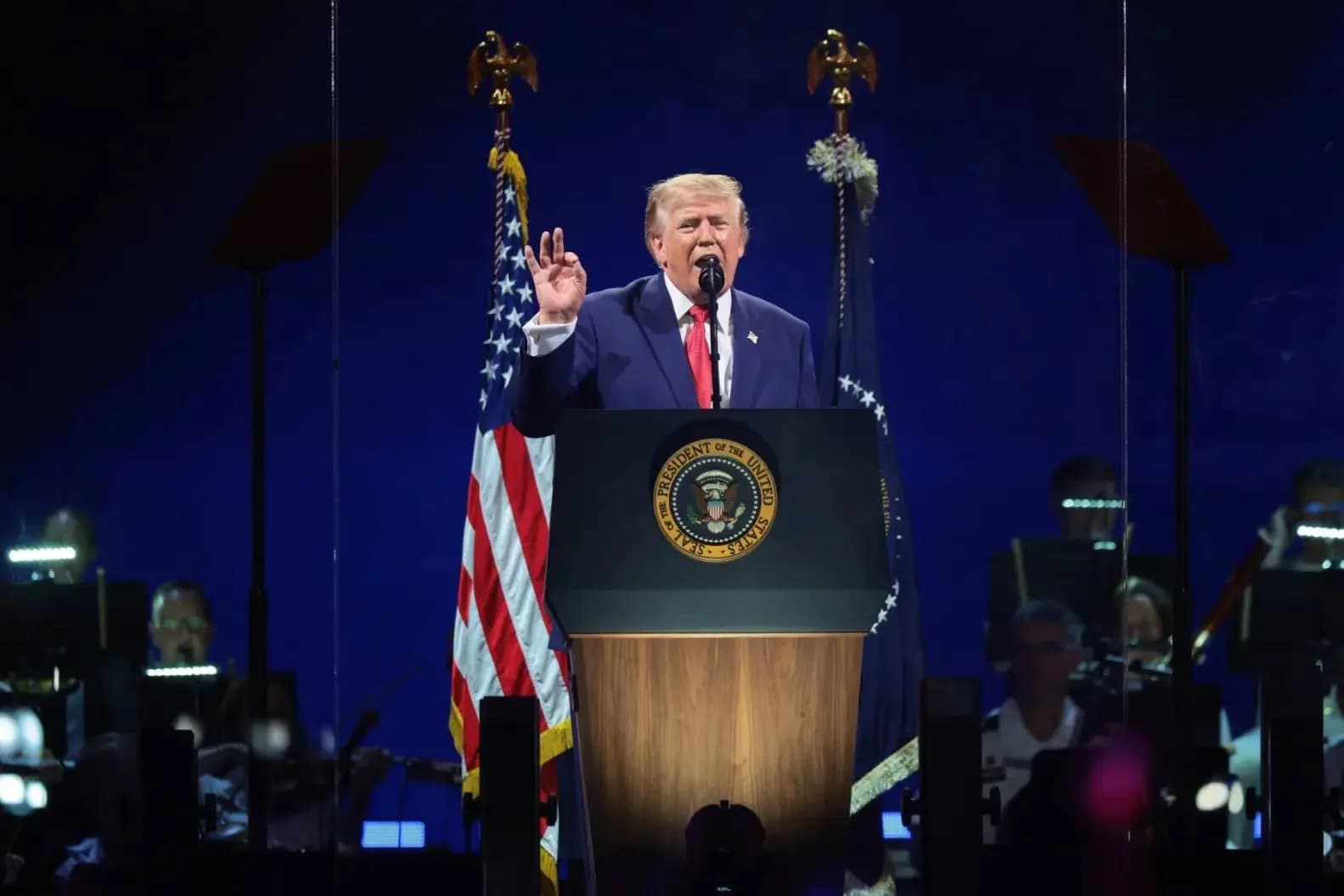
U.S. President Donald Trump drew criticism after making several historical references during his speech marking America's 250th Independence Day celebrations on July 4, with critics arguing that some of his remarks were historically inaccurate.
The address was delivered as part of the "Salute to America 250" celebrations on the National Mall, despite severe weather that forced the cancellation of the Independence Day Parade and temporarily led authorities to evacuate parts of the venue because of thunderstorms and extreme heat.
Before taking the stage, Trump insisted the event would continue regardless of the weather. According to Fox News anchor Bret Baier, the president compared his determination to the courage of Allied troops during the D-Day landings in Normandy, saying that if soldiers could storm the beaches on D-Day, he could proceed with his speech despite the storms.
During his address, Trump said, "As our Declaration of Independence tells us, we are all made in the image of one almighty God." Historians and fact-checkers noted that the Declaration of Independence does not contain that exact wording. Instead, the document states that "all men are created equal" and are "endowed by their Creator with certain unalienable Rights."
Trump also referred to the American Civil War, describing enslaved people who escaped and joined the Union Army as "a very big, big deal at the time." His comments came amid continued debate over his administration's support for restoring the names of military bases that honored Confederate figures.
The president additionally praised veterans from World War II, calling them "the greatest generation" before joking that he "hated to admit that" they deserved the title.
The speech sparked debate among historians, political commentators, and members of the public. Critics argued that some of Trump's historical references were inaccurate or misleading, while supporters viewed the address as a patriotic celebration marking the nation's 250th anniversary.
The Fourth of July event formed part of a broader national commemoration of the United States' semiquincentennial, featuring military displays, fireworks, concerts, and public celebrations across the country.



Comments
No comments yet. Be the first to share a thought.