
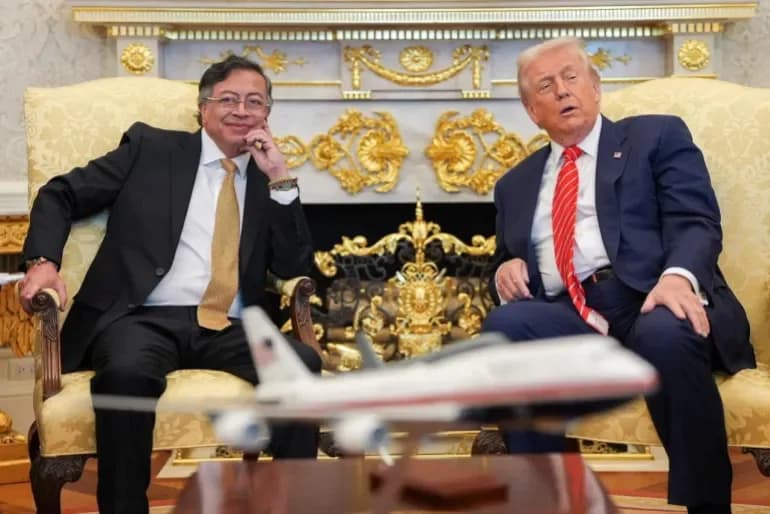
US President Donald Trump hosted Colombian President Gustavo Petro at the White House on a 4 days visit in a closely watched meeting aimed at easing months of diplomatic strain between the two long-standing allies, whose relations have been shaken by disputes over migration, drug policy and regional security. The meeting, held largely behind closed doors and without a joint press appearance, came just weeks after Trump publicly threatened punitive measures including military action — against Colombia. Despite the recent tensions, both leaders signalled cautious optimism following their first
US President Donald Trump hosted Colombian President Gustavo Petro at the White House on a 4 days visit in a closely watched meeting aimed at easing months of diplomatic strain between the two long-standing allies, whose relations have been shaken by disputes over migration, drug policy and regional security.
The meeting, held largely behind closed doors and without a joint press appearance, came just weeks after Trump publicly threatened punitive measures including military action — against Colombia. Despite the recent tensions, both leaders signalled cautious optimism following their first in-person talks since Trump began his second term.
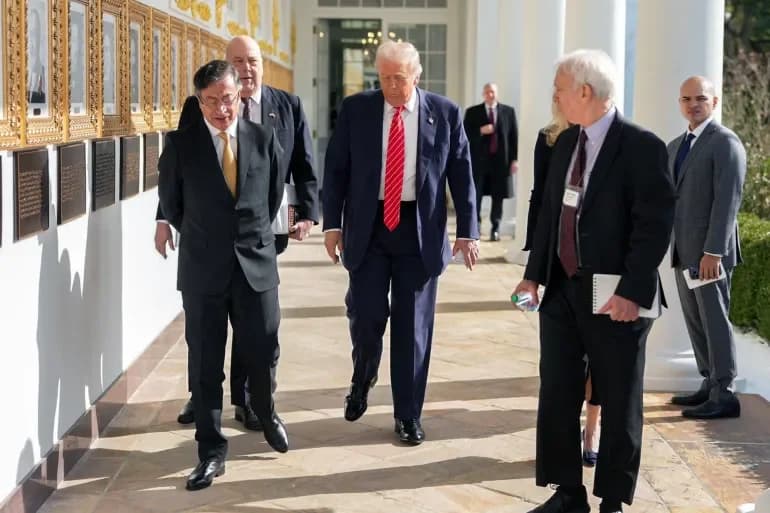
President Petro of Colombia hosted by us president Trump
Petro later described the encounter as positive, sharing on social media a signed message from Trump that read: “Gustavo – A great honor – I love Colombia.”
From confrontation to cautious engagement
Relations between the two leaders got off to a rocky start early in Trump’s second term. In January 2025, Petro objected to the US practice of shackling Colombian migrants during deportation flights, temporarily barring US aircraft from landing in Colombia. “The US cannot treat Colombian migrants as criminals,” Petro wrote at the time, triggering a sharp response from Trump, who threatened steep tariffs and accused Colombia of undermining US national security. Petro ultimately allowed the flights to resume, but the public exchange set the tone for a year of tense relations. In recent weeks, however, both leaders appeared to recalibrate. A January phone call paved the way for Monday’s meeting, suggesting a mutual desire to stabilise ties amid shared concerns over narcotics trafficking and regional instability.
Drug policy and human rights concerns
Counter-narcotics cooperation featured prominently in the discussions, according to officials familiar with the talks. Trump has pressed Petro to adopt a more aggressive approach to combating cocaine production, a stance that has drawn criticism from human rights groups. Amnesty International USA issued a statement during the meeting warning that “militarisation is not a public-security strategy,” urging both governments to ensure any bilateral security cooperation includes enforceable human-rights safeguards and accountability mechanisms. The group also raised concerns about the safety of human rights defenders in Colombia and criticised what it described as the destabilising impact of recent US military actions in Venezuela. A
meeting without ceremony, but heavy symbolism
The visit was notably low-key. There was no formal welcoming ceremony and no joint news conference, a departure from typical White House protocol for visiting heads of state. Still, images released by the Colombian presidency showed the two leaders shaking hands in the Oval Office and walking together near the Rose Garden.
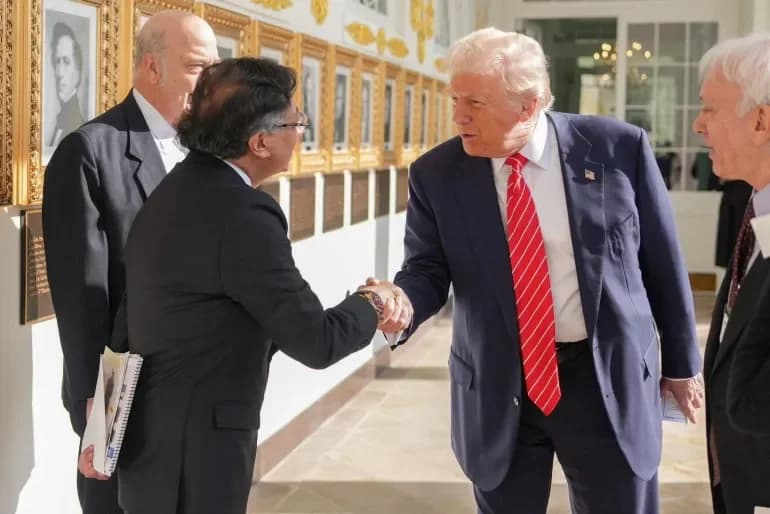
Petro meeting president Trump in a highly anticipated meeting
Analysts say the subdued tone reflects lingering mistrust but also underscores the importance both sides place on preserving decades-long security and economic ties that have made Colombia one of Washington’s closest partners in Latin America.
Broader regional backdrop
The Trump-Petro meeting unfolded against a backdrop of wider regional tensions, including US pressure on Latin American countries over Cuba and Venezuela, and scrutiny of aggressive US immigration enforcement at home. These issues continue to shape perceptions of Washington’s role in the hemisphere. For now, the White House talks appear to have halted the downward slide in US–Colombia relations. Whether they mark a lasting reset or merely a temporary thaw will depend on how both governments navigate migration, drug policy and human rights concerns in the months ahead. Source: Al Jazeera



Comments
No comments yet. Be the first to share a thought.