
U.S. President Donald Trump has announced that a landmark agreement aimed at ending hostilities between the United States and Iran is scheduled to be signed on Sunday, despite Iranian officials expressing uncertainty over the timeline. In a statement posted on Truth Social, Trump said the agreement would lead to the immediate reopening of the Strait of Hormuz, one of the world's most strategically important shipping routes. "The Deal is scheduled to get signed tomorrow, and immediately after it is signed, the Hormuz Strait is OPEN TO ALL," Trump wrote. The announcement came shortly after Iran'
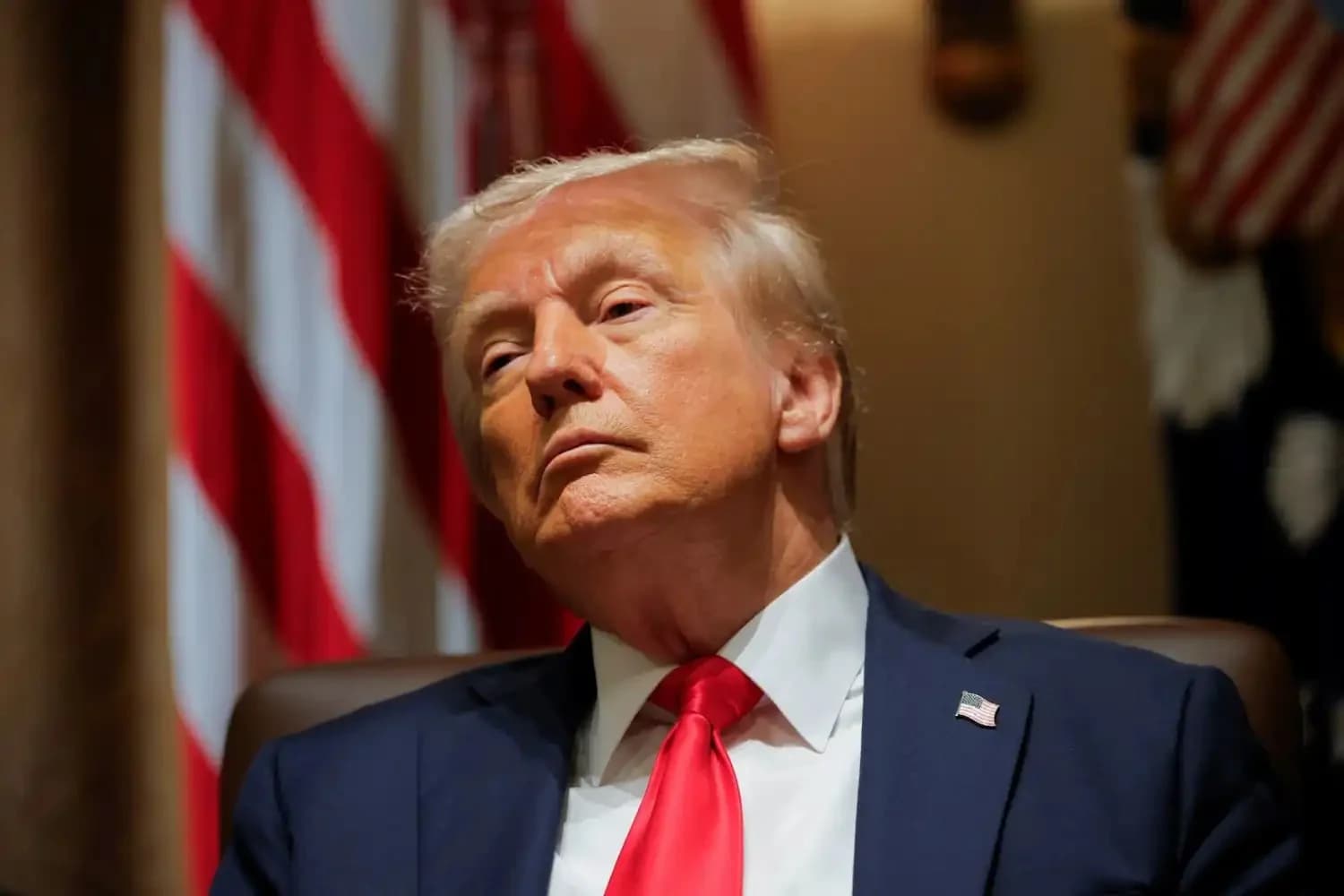
U.S. President Donald Trump has announced that a landmark agreement aimed at ending hostilities between the United States and Iran is scheduled to be signed on Sunday, despite Iranian officials expressing uncertainty over the timeline.
In a statement posted on Truth Social, Trump said the agreement would lead to the immediate reopening of the Strait of Hormuz, one of the world's most strategically important shipping routes.
"The Deal is scheduled to get signed tomorrow, and immediately after it is signed, the Hormuz Strait is OPEN TO ALL," Trump wrote.
The announcement came shortly after Iran's Foreign Ministry spokesman, Esmaeil Baghaei, urged caution regarding reports of an imminent signing. Speaking to reporters, Baghaei stated that discussions were progressing but indicated that the memorandum of understanding was unlikely to be finalized immediately.
"We will have to wait and see about the exact date of the signing of the memorandum of understanding, although it will not be tomorrow," he said.
Pakistan, which has played a key mediating role in the negotiations, echoed Trump's optimism. Prime Minister Shehbaz Sharif announced on social media that both sides were approaching a final agreement and that preparations were underway for an electronic signing ceremony.
"We are closer to a peace deal than ever before," Sharif wrote. "With finalisation likely expected within the next 24 hours, Pakistan is preparing for the electronic signing of the peace deal immediately after, followed by technical-level talks next week."
Key Elements of the Proposed Agreement
According to Iranian Foreign Minister Seyed Abbas Araghchi, the proposed deal would include measures to end regional hostilities and restore stability in critical maritime corridors. The agreement reportedly provides for the reopening of the Strait of Hormuz and the lifting of U.S. restrictions affecting Iranian ports.
Araghchi also indicated that broader negotiations concerning Iran's nuclear program would take place at a later stage.
U.S. officials have confirmed portions of the proposed framework, emphasizing that economic incentives and sanctions relief for Iran would be tied to Tehran's compliance with its commitments under the agreement.
Trump further suggested that the deal would eventually address concerns surrounding Iran's stockpile of enriched uranium. In his social media post, he stated that the United States would, at an appropriate time, secure and eliminate what he described as Iran's "nuclear dust."
For decades, Western governments have accused Iran of pursuing nuclear weapons capabilities, allegations that Tehran has consistently denied. Iranian authorities maintain that their nuclear program is intended solely for peaceful purposes, including electricity generation and scientific research.
Regional Implications
The agreement is also expected to have significant implications for regional security. Araghchi stated that the framework includes provisions aimed at ending the conflict involving Israel and Hezbollah in Lebanon, although previous U.S. reports suggested that Lebanon's role in the negotiations remained unresolved.
The current crisis began on February 28, when U.S. and Israeli forces launched strikes across Iran. Tehran responded with attacks targeting Israel and U.S.-allied Gulf states and effectively restricted navigation through the Strait of Hormuz, a vital route for global oil and liquefied natural gas exports.
Although both sides agreed to a ceasefire in April, sporadic military exchanges have continued, including two rounds of retaliatory strikes earlier this week.
Cautious Optimism
Efforts to finalize an agreement have faced repeated setbacks in recent weeks, with several anticipated breakthroughs failing to materialize during the final stages of negotiations.
Despite lingering uncertainties, statements from Washington, Tehran, and Islamabad suggest that diplomats are closer than ever to securing a formal agreement that could ease tensions in the Middle East, restore maritime trade routes, and create conditions for future negotiations on Iran's nuclear program.
If signed, the deal would mark one of the most significant diplomatic developments in the region in recent years.
Comments
No comments yet. Be the first to share a thought.