
After months of fraught negotiations, U.S. President Donald Trump has struck a significant trade agreement with the European Union, easing fears of a looming transatlantic trade war. The deal, finalized during a high-stakes meeting at Trump’s Turnberry golf resort in Scotland, reduces the threat of sweeping tariffs and restores a degree of stability to the world’s largest trading partnership, as The Guardian reports. European Commission President Ursula von der Leyen confirmed the breakthrough after a tense 40-minute meeting with Trump. “We have a deal,” she announced, describing the outcome
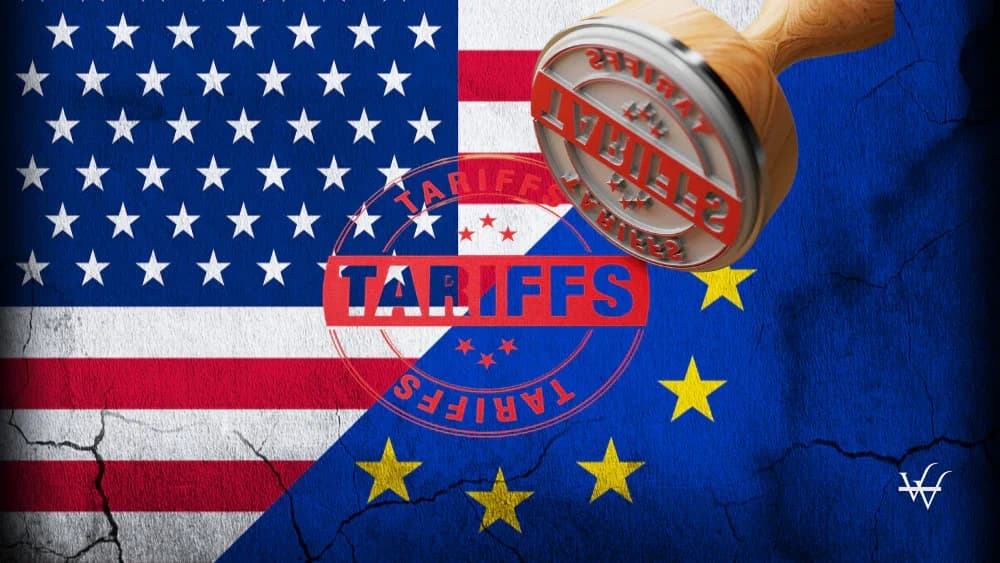
After months of fraught negotiations, U.S. President Donald Trump has struck a significant trade agreement with the European Union, easing fears of a looming transatlantic trade war. The deal, finalized during a high-stakes meeting at Trump’s Turnberry golf resort in Scotland, reduces the threat of sweeping tariffs and restores a degree of stability to the world’s largest trading partnership, as The Guardian reports. European Commission President Ursula von der Leyen confirmed the breakthrough after a tense 40-minute meeting with Trump. “We have a deal,” she announced, describing the outcome as “a big deal, a huge deal” that promises “stability” and “predictability” for both economies. “The two biggest economies should have a good trade flow,” she added. Trump echoed the sentiment, hailing the agreement as a “powerful deal” and calling it “an important” partnership. “It solves a lot of stuff and was a great decision,” he said. Before the meeting began, Trump had remarked, “This is really the biggest trading partnership in the world, so we should give it a shot.” Leading up to the last-minute talks, there had been considerable uncertainty. Trump had declared only an hour before the meeting that the odds of reaching an agreement were “50-50” due to “three or four sticking points.” Von der Leyen later described the encounter as “tough” and “very difficult,” noting the visible tension at the outset. “You saw the tension at the beginning. So we had to work hard to come to a common position,” she told reporters at Glasgow airport. Under the terms of the new arrangement, the United States will impose a 15% baseline tariff on most EU imports, a significant reduction from the 30% threat but still higher than the pre-Trump era average of 4.8%. A punitive 50% tariff remains in place on steel exports, drawing criticism from affected industries. Trump retains the power to raise tariffs again if the EU fails to meet its commitments. Confusion briefly clouded the inclusion of pharmaceuticals in the deal. While Trump claimed the sector would be exempt, von der Leyen later clarified at Prestwick airport that “it is agreed that we have 15% for pharmaceuticals,” adding, “Whatever the decisions later on is of the president of the United States: how to deal with pharmaceuticals in general? Globally, that’s on a different sheet of paper.” The agreement also eliminates tariffs entirely on a number of sectors, including “all aircraft and component parts, certain chemicals, certain generics, semiconductor equipment, certain agricultural products, natural resources and critical raw materials,” von der Leyen revealed. As part of the wider deal, the EU has committed to purchasing $750 billion worth of American oil, gas, liquified gas, nuclear fuel, and semiconductors over three years, while investing an additional $600 billion in the U.S, including in military equipment. A senior U.S. official confirmed Trump retains the authority to raise tariffs if European investments fall short. The pact, which stabilizes the €1.4 trillion trade relationship between Washington and Brussels, came just days before Trump’s August 1 deadline to impose a 30% tariff on EU goods if negotiations had failed. German Chancellor Friedrich Merz applauded the agreement, saying it spared Germany’s export-driven economy [particularly its auto sector] from major harm. Carmakers like Volkswagen, BMW, and Mercedes had been hit hard by an existing 27.5% U.S. tariff. Italy’s Prime Minister Giorgia Meloni called the deal “positive” but said more detail was needed, emphasizing that the agreement “ensures stability.” Speaking on the flight back to Brussels, EU trade commissioner Maroš Šefčovič admitted that the outcome marked a “significant victory” for Trump’s hardball tactics, noting that the 15% rate is worse than the EU’s position before Trump’s presidency. “I think that what was most important for us was to make sure we would have this predictability and we would have stability for our businesses,” Šefčovič said. He also described the negotiating environment as “very intense,” adding that Trump had proven to be “a very tough negotiator.” According to The Guardian, the deal is expected to calm global financial markets, which had been on edge due to fears of escalating trade tensions. Last week, markets surged after Trump secured a separate trade deal with Japan, and optimism is growing that progress may also be achieved with China. Trump indicated on Sunday that the U.S. and China are “very close” to another trade agreement, while reports from the South China Morning Post suggested both sides may announce a 90-day pause in tariffs ahead of an August 12 deadline. Trump, clearly satisfied, praised the EU delegation during the signing ceremony held in the DJT ballroom of his Turnberry resort. “I’m very honoured to have done the deal,” he told von der Leyen, noting that her team had been “fantastic.” The two leaders shook hands, flanked by key figures on both sides, including U.S. Commerce Secretary Howard Lutnick and Trade Representative Jamieson Greer, alongside top EU officials such as Šefčovič, Björn Seibert, Sabine Weyand, and Tomas Baert.
Comments
No comments yet. Be the first to share a thought.