
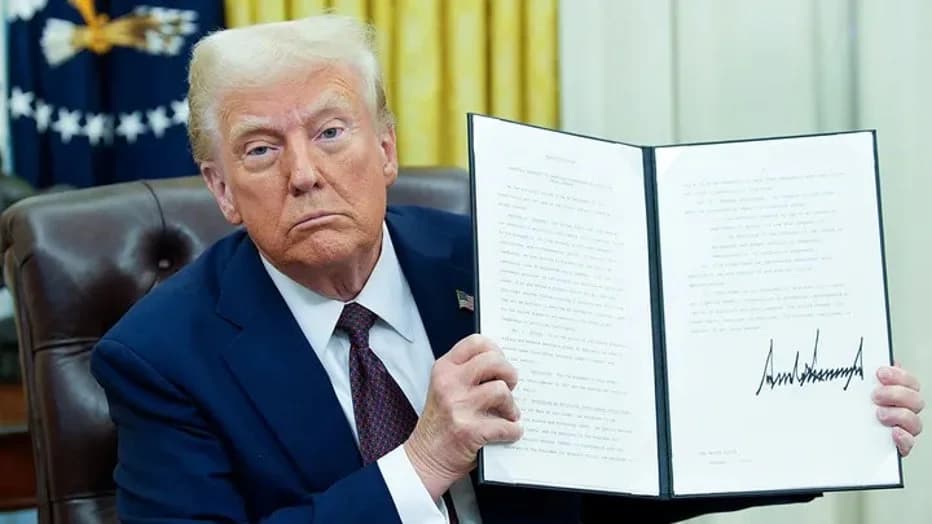
In a controversial policy move, former U.S. President Donald Trump has issued two executive orders: officially designating English as the national language of the United States and renaming the Gulf of Mexico to the “Gulf of America.” While Trump and his supporters argue that these decisions reinforce American identity and unity, the orders have sparked widespread debate, both domestically and internationally. On March 1, 2025, Trump signed an executive order establishing English as the official language of the United States. The order mandates that all federal government operations be conduc
In a controversial policy move, former U.S. President Donald Trump has issued two executive orders: officially designating English as the national language of the United States and renaming the Gulf of Mexico to the “Gulf of America.” While Trump and his supporters argue that these decisions reinforce American identity and unity, the orders have sparked widespread debate, both domestically and internationally. On March 1, 2025, Trump signed an executive order establishing English as the official language of the United States. The order mandates that all federal government operations be conducted exclusively in English, overturning a 2000 directive that required federal agencies to provide multilingual services. Proponents of the order argue that it promotes national cohesion, streamlines government processes, and strengthens a unified American identity. However, critics warn that it could marginalize non-English-speaking communities, limit access to essential public services, and disproportionately affect immigrant populations. Despite the federal directive, states and local governments retain authority over their own language policies. Some jurisdictions, such as Harris County, Texas, have already stated their intention to continue offering multilingual services to accommodate their diverse populations. In another executive order signed on January 20, 2025, Trump directed the renaming of the Gulf of Mexico to the “Gulf of America.” The former president described the change as a symbolic effort to honor American heritage and strengthen national pride. The Gulf, a critical region for trade, energy production, and tourism, plays a significant role in U.S. economic and geopolitical affairs. However, the renaming has been met with criticism, particularly from historians and international diplomats. Mexican officials have strongly opposed the decision, arguing that it disregards the region's historical and geographical context. Analysts also warn that the move could strain U.S.-Mexico relations, potentially affecting trade and security cooperation between the two nations. The executive orders have elicited mixed reactions. Supporters see them as necessary measures to preserve American culture and national unity. However, opponents argue that they are divisive and unnecessary, particularly in a country known for its multicultural and multilingual identity. The renaming of the Gulf of Mexico has triggered diplomatic concerns, with Mexican authorities expressing discontent and calling for international discussions on the matter. Some experts suggest that the controversy could lead to tensions in U.S.-Mexico relations, especially in areas of trade and border security. As the debate continues, legal challenges to both executive orders are expected. Advocacy groups and political opponents have already signaled plans to contest the decisions in court, setting the stage for a prolonged battle over language policy and national identity in the United States. Source : Reuters



Comments
No comments yet. Be the first to share a thought.