
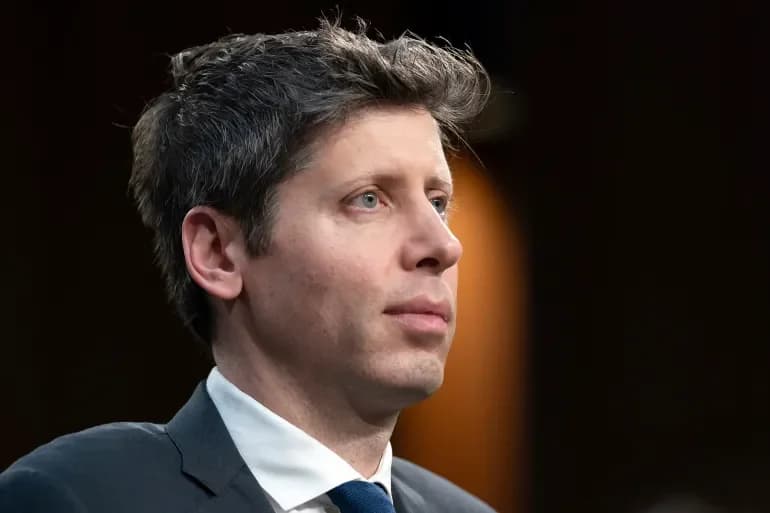
Families of victims of one of Canada's deadliest mass shootings filed lawsuits against OpenAI and its chief executive Sam Altman in a United States federal court on Wednesday, alleging the company identified the shooter as a credible threat eight months before the attack but chose not to alert police. The February shooting in Tumbler Ridge, British Columbia, left eight people dead, many of them children. The lawsuits, filed in federal court in San Francisco, accuse OpenAI leaders of not alerting police because doing so would have exposed the volume of violence-related conversations on ChatGPT
Families of victims of one of Canada's deadliest mass shootings filed lawsuits against OpenAI and its chief executive Sam Altman in a United States federal court on Wednesday, alleging the company identified the shooter as a credible threat eight months before the attack but chose not to alert police.
The February shooting in Tumbler Ridge, British Columbia, left eight people dead, many of them children.
The lawsuits, filed in federal court in San Francisco, accuse OpenAI leaders of not alerting police because doing so would have exposed the volume of violence-related conversations on ChatGPT and potentially jeopardized the company's path to a nearly $1 trillion initial public offering.
The attack
Jesse Van Rootselaar shot her mother and stepbrother at home before killing an educational assistant and five students aged 12 to 13 at her former school on February 10, according to police. Van Rootselaar, who was 18, killed eight people before dying by suicide. Twenty-five people were also injured in the attack. (Aljazeera)
What OpenAI knew
According to one of the complaints, OpenAI's automated systems in June 2025 flagged ChatGPT conversations in which the shooter described gun violence scenarios. Safety team members recommended contacting police after concluding she posed a credible and imminent threat of harm. But Altman and other OpenAI leadership overruled the safety team and police were never called, the lawsuit alleges. (U.S News)
OpenAI has acknowledged that the shooter created a second account to keep using ChatGPT after her original account was deactivated, something the lawsuit claims OpenAI explicitly directed deactivated users to do on its website. An OpenAI spokesperson disputed that allegation.
The lawsuits
Seven wrongful death lawsuits were filed in San Francisco federal court on behalf of five children and an educator killed in the attack. The lawsuits seek an unspecified amount of damages and a court order requiring OpenAI to overhaul its safety practices, including mandatory law enforcement referral protocols.
The American lawyer representing some of the plaintiffs said they will likely be seeking more than $1 billion in damages.
OpenAI's response
In his letter to the Tumbler Ridge community last week, Altman said he had been in touch with local authorities and called the community's pain "unimaginable," adding that he was "deeply sorry" the company did not alert law enforcement to the account that was banned in June.
An OpenAI spokesperson called the shooting "a tragedy" and said the company has a zero-tolerance policy for using its tools to assist in committing violence, adding that it has already strengthened its safeguards, including improving how ChatGPT responds to signs of distress and strengthening how it assesses and escalates potential threats of violence. (Aljazeera)
Broader legal context
The Tumbler Ridge lawsuits come after multiple suits against OpenAI have been filed in U.S. state and federal courts in recent months over claims ChatGPT facilitated harmful behaviour, suicide, and in at least one case a murder-suicide. Florida Attorney General James Uthmeier announced earlier this month a criminal investigation into ChatGPT's role in a 2025 shooting at Florida State University.

Comments
No comments yet. Be the first to share a thought.