
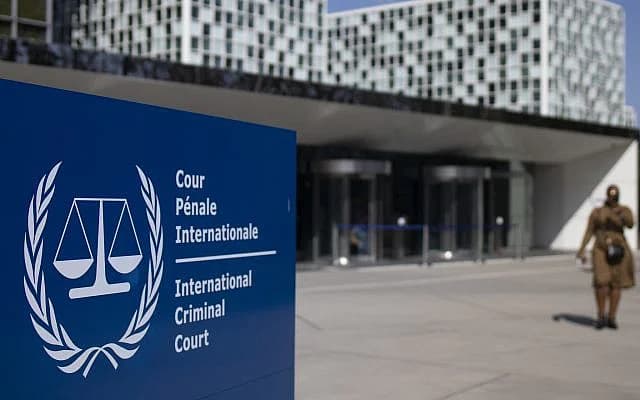
In a significant move reflecting ongoing tensions between the United States and the International Criminal Court (ICC), the U.S. House of Representatives has passed the Illegitimate Court Counteraction Act. This legislation, approved by a vote of 247-155, aims to sanction ICC officials following efforts by the court's prosecutor to seek arrest warrants for top Israeli leaders. The legislation, driven primarily by the Republican-controlled House, seeks to impose severe restrictions on ICC officials involved in the investigation led by prosecutor Karim Khan. This investigation has targeted Isra
In a significant move reflecting ongoing tensions between the United States and the International Criminal Court (ICC), the U.S. House of Representatives has passed the Illegitimate Court Counteraction Act. This legislation, approved by a vote of 247-155, aims to sanction ICC officials following efforts by the court's prosecutor to seek arrest warrants for top Israeli leaders. The legislation, driven primarily by the Republican-controlled House, seeks to impose severe restrictions on ICC officials involved in the investigation led by prosecutor Karim Khan. This investigation has targeted Israeli Prime Minister Benjamin Netanyahu and Defense Minister Yoav Gallant, accusing them of war crimes committed in Gaza. Key Provisions of the Act The Illegitimate Court Counteraction Act includes several stringent measures designed to penalize ICC officials: Travel Restrictions: The bill prohibits entry into the United States for ICC officials connected to the prosecution of Israeli leaders. This move underscores the U.S. government's disapproval of the ICC's actions and its intent to limit the influence and operational capacity of the court on American soil. Property Transactions: The legislation also restricts any property transactions within the U.S. involving these ICC officials. This provision aims to economically isolate and exert pressure on the court by cutting off access to U.S.-based assets and financial services. Political Context and Implications The passage of this bill highlights the complex relationship between the U.S., Israel, and the ICC. The United States has long been a staunch ally of Israel, often providing diplomatic and military support. This legislative action reinforces that alliance, sending a clear message that the U.S. will not tolerate international legal actions perceived as unjust or politically motivated against Israeli officials. Republican lawmakers, who largely supported the bill, argue that the ICC's pursuit of arrest warrants against Netanyahu and Gallant represents an overreach of its mandate and a politically biased action against a key U.S. ally. They contend that the ICC lacks the authority to prosecute Israeli officials and that such actions undermine national sovereignty and international diplomacy. Conversely, the 155 votes against the bill, predominantly from Democratic representatives, reflect concerns over the broader implications of sanctioning an international judicial body. Critics argue that this legislation could set a dangerous precedent, potentially weakening international accountability mechanisms and diminishing the U.S.'s standing as a proponent of global justice and human rights. International Reactions The ICC has yet to issue a formal response to the passage of the Illegitimate Court Counteraction Act. However, this move is likely to strain relations further between the U.S. and the court, which have been tenuous since the ICC's establishment. Previous administrations have expressed varying degrees of skepticism and support towards the ICC, reflecting the ongoing debate over its role and effectiveness in the international legal system. Israel, on the other hand, has welcomed the U.S. legislative action. Israeli officials have consistently rejected the ICC's jurisdiction over the Palestinian territories, arguing that the court does not have the authority to investigate or prosecute actions taken by Israel in self-defense against terrorism.



Comments
No comments yet. Be the first to share a thought.