
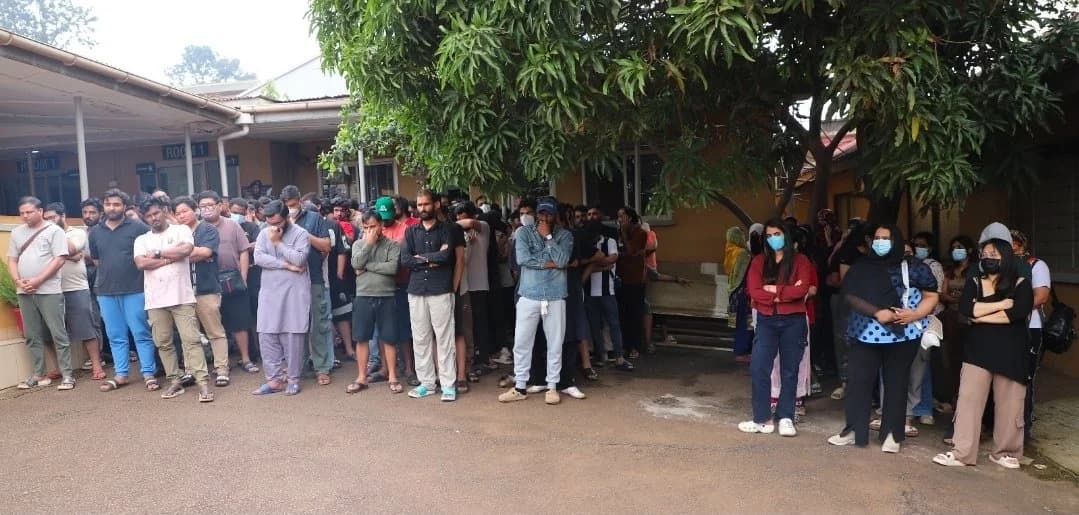
Ugandan authorities said Tuesday that they have arrested 231 foreign nationals in coordinated operations targeting illegal immigration, unlicensed business activity, and suspected criminal networks. The operations, led by the National Citizenship and Immigration Control (NCIC) under the Ministry of Internal Affairs and the Directorate of Citizenship and Immigration Control, were confirmed by spokesperson Simon Peter Mundeyi, who said those detained were found without valid work permits, visas, or identification documents. Ministry of Internal Affairs spokesperson Simon Peter Mundeyi / X Daily
Ugandan authorities said Tuesday that they have arrested 231 foreign nationals in coordinated operations targeting illegal immigration, unlicensed business activity, and suspected criminal networks.
The operations, led by the National Citizenship and Immigration Control (NCIC) under the Ministry of Internal Affairs and the Directorate of Citizenship and Immigration Control, were confirmed by spokesperson Simon Peter Mundeyi, who said those detained were found without valid work permits, visas, or identification documents.
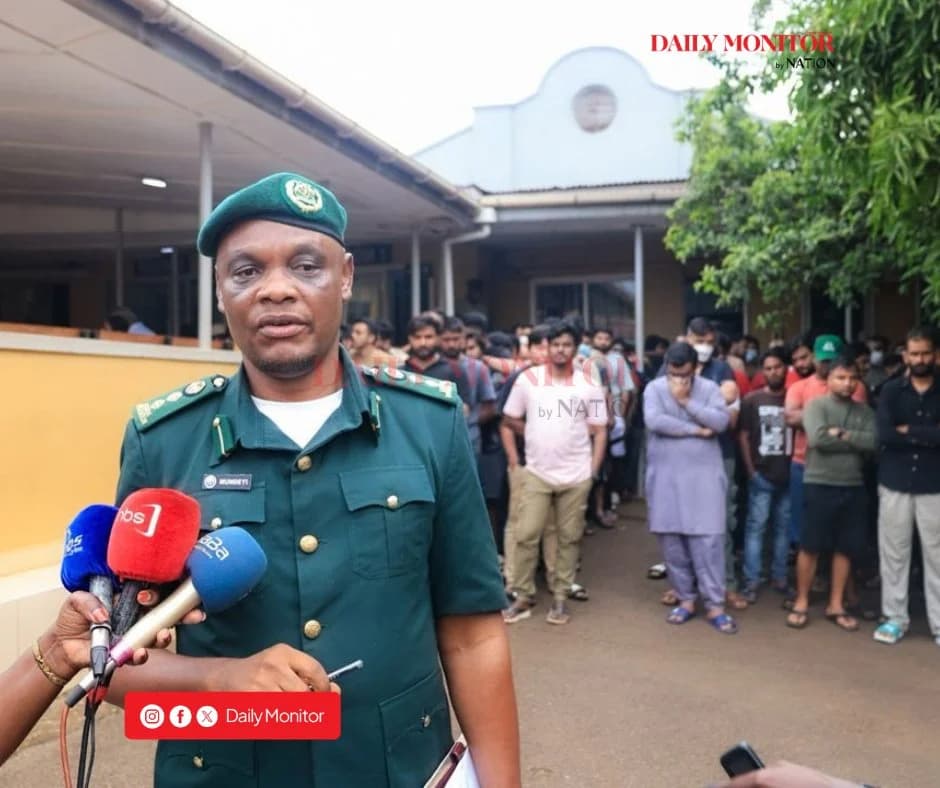
Ministry of Internal Affairs spokesperson Simon Peter Mundeyi / X Daily Monitor
The NCIC said it is intensifying its crackdown on irregular migration as part of a nationwide commitment to national security and the rule of law.
In one intelligence-led operation conducted on the night of April 27/28, 2026, in the Bukoto–Ntinda area of Kampala, authorities arrested 169 individuals at an apartment complex.
The group included people from Pakistan, India, Bangladesh, Ghana, Myanmar, Ethiopia, Sri Lanka, Cambodia, Thailand, Nepal, Indonesia, and Malaysia. According to the Ministry of Internal Affairs, they were staying in “a highly restricted, self-contained apartment complex equipped with its own restaurant and internal facilities designed to restrict movement and ensure total focus on illicit operations.” Officials said 36 of those detained were women.
Many of the occupants were living on the premises without passports or legal immigration status, according to officials. Computers and other IT equipment were recovered, which authorities said were used in alleged illegal online activities, including cyber scams, illegal gaming, betting, and organized scamming.
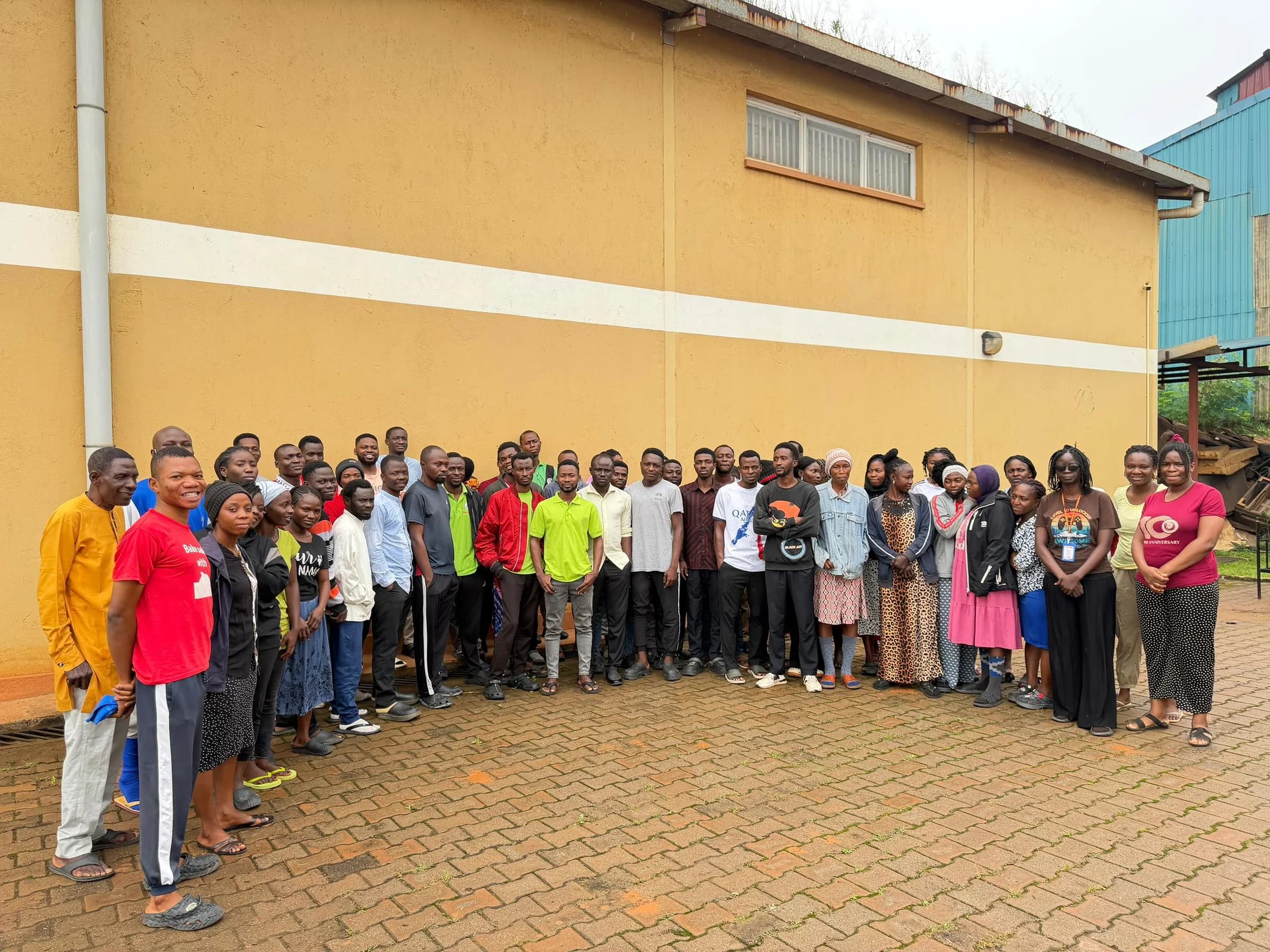
NCIC arrested 62 Nigerian nationals operating illegally in Adjumani (without work permits) /X Immigration Uganda
In a separate operation on Monday in Adjumani District in northern Uganda, 62 Nigerian nationals, who are now being kept in the Namanve facility, were arrested for operating a church and other businesses without valid work permits, Mundeyi said.
He added that many of those detained lacked basic identification, with some claiming their passports had been withheld by employers or facilitators. Authorities are now categorizing those arrested into suspected trafficking victims, visa overstayers, and criminal suspects, with different legal processes expected for each group.
All 231 individuals are currently undergoing screening and processing, with cases involving suspected trafficking or criminal activity to be referred to appropriate law enforcement agencies for further investigation.
“We did not find them with passports,” Mundeyi said, adding that investigations are ongoing to identify those responsible for facilitating illegal entry and employment.
Officials said individuals identified as victims of trafficking may receive assistance, while those found in violation of immigration laws could face deportation. Suspected traffickers and individuals linked to criminal activity may be prosecuted under Ugandan law.
Mundeyi told Associated Press that those detained fall into three categories: suspected trafficking victims, alleged perpetrators, and immigration violators who overstayed their visas without engaging in criminal activity.
He said victims and overstayers would be assisted to leave Uganda at their own cost, while suspected ringleaders could face criminal charges and possible deportation. Uganda, which hosts large numbers of refugees from countries including Democratic Republic of Congo, Burundi and South Sudan, has long maintained relatively open entry policies for many African nationals.
The Ministry of Internal Affairs and NCIC urged the public to report suspicious activity to the nearest immigration office or police station as part of ongoing enforcement efforts.



Comments
No comments yet. Be the first to share a thought.