
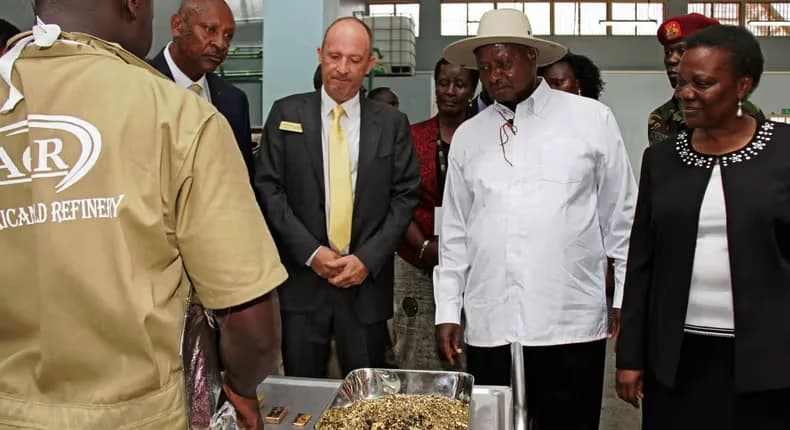
Uganda has taken a major step to strengthen its gold industry, as the Bank of Uganda signed contracts worth $160 million to purchase domestically refined gold from local suppliers. The agreements, made with EuroGold Refinery Ltd and Feldstein Trading Limited , are part of a broader strategy to retain more value within the country and reduce reliance on exporting raw gold to foreign markets. Under the deal, the central bank will initially purchase 100 kilograms of gold refined within Uganda. This marks the beginning of the Domestic Gold Purchase Programme, an initiative designed to promote valu
Uganda has taken a major step to strengthen its gold industry, as the Bank of Uganda signed contracts worth $160 million to purchase domestically refined gold from local suppliers.
The agreements, made with EuroGold Refinery Ltd and Feldstein Trading Limited, are part of a broader strategy to retain more value within the country and reduce reliance on exporting raw gold to foreign markets.
Under the deal, the central bank will initially purchase 100 kilograms of gold refined within Uganda. This marks the beginning of the Domestic Gold Purchase Programme, an initiative designed to promote value addition, improve transparency, and strengthen local supply chains.
The move reflects a shift in Uganda’s economic strategy—prioritizing local processing over raw exports. For years, a significant portion of the country’s gold wealth has been lost through the export of unprocessed minerals. By supporting domestic refineries, the government aims to capture more revenue, create jobs, and build a sustainable gold ecosystem.
EuroGold, based in Kampala, has been at the forefront of refining efforts, working closely with small-scale miners to meet international standards. Feldstein Trading joins the initiative to ensure consistent supply and enhance the reliability of the local gold market.
Uganda’s gold sector has become a key pillar of its economy. In 2024, gold accounted for 37% of total export revenue, generating $3.4 billion. Early 2025 figures suggest even stronger performance, supported by rising global gold prices and increasing demand.
The new policy is expected to further boost economic growth, with projections indicating GDP could exceed 10% in the 2025/2026 fiscal year. Beyond revenue, the strategy is also aimed at fostering industrialization and improving livelihoods across the mining value chain.
Uganda’s approach aligns with a broader trend across Africa, where countries are seeking to maximize benefits from natural resources by encouraging local processing and reducing dependency on external markets.
With this move, Uganda positions itself as a rising force in Africa’s gold industry focused not just on extraction, but on capturing full economic value at home.



Comments
No comments yet. Be the first to share a thought.