
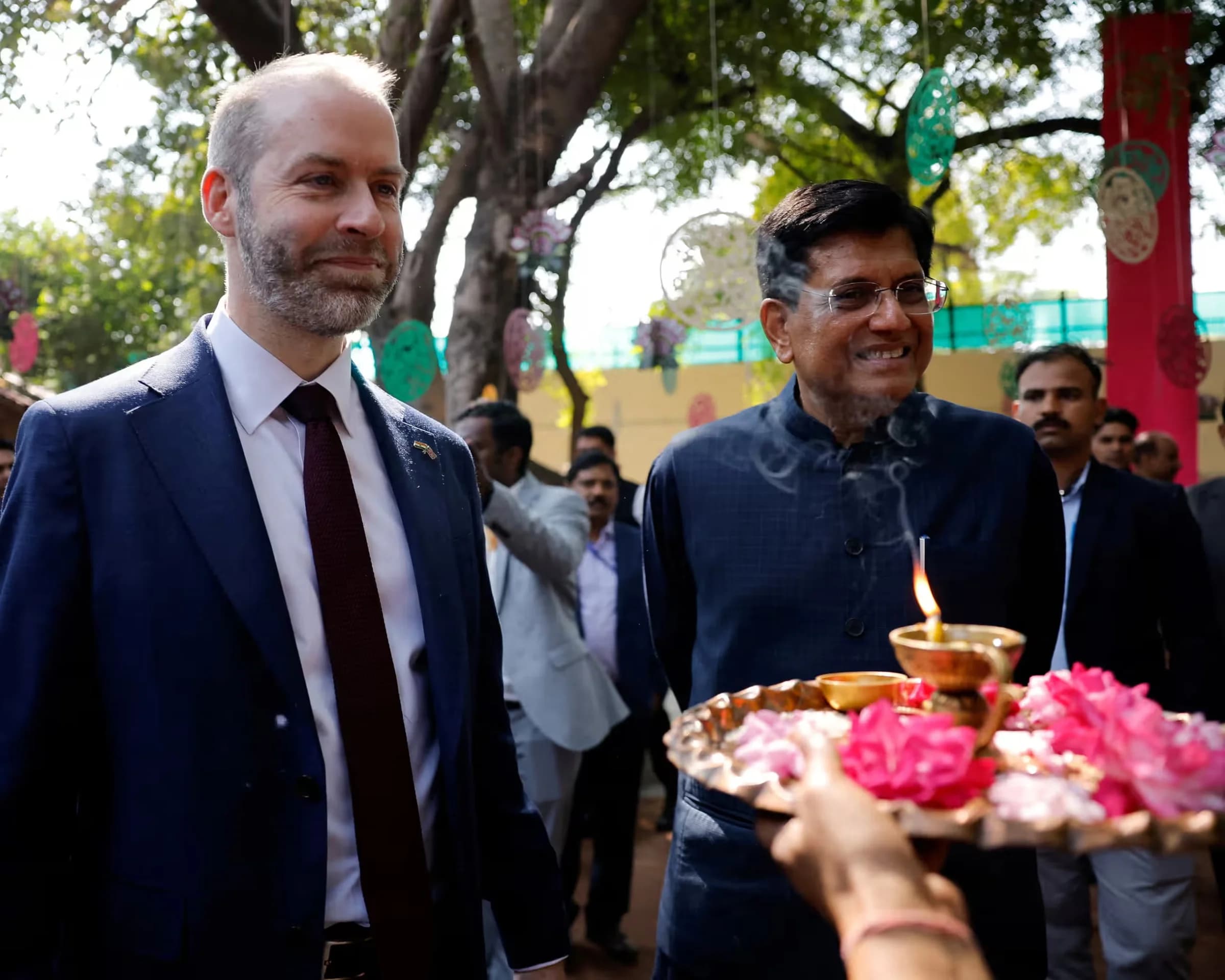
Britain and India have finalized a long-anticipated free trade agreement that UK ministers say will add £4.8 billion annually to the British economy by 2040. Concluded on Tuesday after more than three years of complex negotiations spanning multiple governments, the deal is seen as one of the most significant economic opportunities following Brexit. Prime Minister Keir Starmer described the agreement as a “landmark deal” that will “grow the economy and deliver for British people and business,” following a call with Indian Prime Minister Narendra Modi. The agreement is expected to bring substa
Britain and India have finalized a long-anticipated free trade agreement that UK ministers say will add £4.8 billion annually to the British economy by 2040. Concluded on Tuesday after more than three years of complex negotiations spanning multiple governments, the deal is seen as one of the most significant economic opportunities following Brexit. Prime Minister Keir Starmer described the agreement as a “landmark deal” that will “grow the economy and deliver for British people and business,” following a call with Indian Prime Minister Narendra Modi. The agreement is expected to bring substantial benefits to key UK sectors, especially automotive and alcohol, which have faced difficulties under former U.S. President Donald Trump’s tariff policies. Under the new terms, India will reduce its 150% tariffs on British whisky and gin to 75%, and further to 40% within ten years. Car tariffs will also drop from 100% to 10%, with export quotas in place for both British and Indian vehicles. In total, India will reduce tariffs on 90% of British product lines, encompassing items such as cosmetics, lamb, salmon, soft drinks, chocolate, biscuits, medical devices, airplane parts, and electrical machinery. These tariff cuts are valued at approximately £400 million based on 2022 figures. The UK will reciprocate by lowering tariffs on Indian clothing, footwear, and food products, offering British consumers access to more affordable goods and greater variety. While a bilateral investment treaty—aimed at providing legal protections for investors—remains unresolved, both countries have agreed to continue discussions. Starmer and Modi are expected to formally sign the deal in the coming months. Modi expressed optimism on social media, saying the nations had concluded an “ambitious and mutually beneficial free trade agreement,” and shared his intention to welcome Starmer to India soon. Officials anticipate the agreement will increase UK-India bilateral trade by £25.5 billion by 2040, raise UK GDP by £4.8 billion, and boost wages by £2.2 billion annually. British negotiators called it India’s most ambitious trade deal to date. Among the notable provisions is a double contribution convention, allowing Indian and British workers temporarily residing in each other’s countries to avoid paying social security contributions for up to three years—a major win for Delhi. The deal includes visa facilitation for Indian professionals in select sectors, although no changes to broader immigration policy are involved. The agreement also features chapters focused on anti-corruption, gender equality, environmental protections, and labor standards. UK Business and Trade Secretary Jonathan Reynolds held decisive talks with his Indian counterpart, Piyush Goyal, in London last week, finalizing the majority of outstanding issues. Following a short trip to Norway, Goyal returned for further negotiations, and teams worked throughout the weekend to complete the deal. Reynolds had revived the stalled negotiations during a March visit to Delhi, securing a commitment from both sides not to reopen previously settled chapters agreed under Conservative leadership. This trade pact, considered the largest and most economically meaningful post-Brexit deal for the UK, was a long-standing goal for previous Conservative prime ministers. Both Boris Johnson and Liz Truss set—and missed—Diwali deadlines, and Rishi Sunak’s near-final deal was shelved due to the UK general election. Reynolds said: “By striking a new trade deal with the fastest-growing economy in the world, we are delivering billions for the UK economy and wages every year and unlocking growth in every corner of the country. In times of global uncertainty, a pragmatic approach to global trade is more important than ever.” Mark Kent, chief executive of the Scotch Whisky Association, welcomed the deal as “a once-in-a-generation agreement” and a major milestone for scotch whisky. “The reduction of the current 150% tariff on scotch whisky will be transformational,” he said, predicting exports to India could rise by £1 billion over five years and create 1,200 jobs across the UK.



Comments
No comments yet. Be the first to share a thought.