
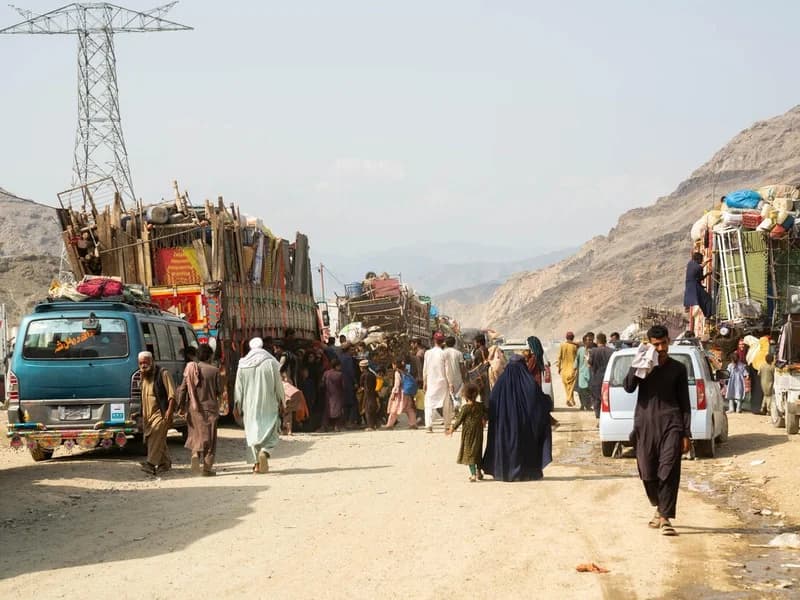
Up to 3.2 million people in Iran have been temporarily displaced amid ongoing U.S.-Israel strikes on Iran, according to the United Nations High Commissioner for Refugees (UNHCR). Speaking at a press briefing at the Palais des Nations on March 12, Ayaki Ito , UNHCR's emergency response coordinator for the Middle East, said preliminary assessments indicate that between 600,000 and 1 million Iranian households have been forced to leave their homes. Most displaced families are reportedly fleeing Tehran and other major urban centers, moving toward northern provinces and rural areas in search of saf
Up to 3.2 million people in Iran have been temporarily displaced amid ongoing U.S.-Israel strikes on Iran, according to the United Nations High Commissioner for Refugees (UNHCR).
Speaking at a press briefing at the Palais des Nations on March 12, Ayaki Ito, UNHCR's emergency response coordinator for the Middle East, said preliminary assessments indicate that between 600,000 and 1 million Iranian households have been forced to leave their homes.
Most displaced families are reportedly fleeing Tehran and other major urban centers, moving toward northern provinces and rural areas in search of safety.
“This figure is likely to continue rising as military hostilities persist, marking a worrying escalation in humanitarian needs,” Ito said.
The crisis is also affecting refugee populations already living in Iran. Iran hosts approximately 1.65 million registered refugees, the majority of whom fled Afghanistan, many of whom already face precarious living conditions and limited access to services.
Humanitarian officials warn that renewed displacement inside Iran could leave these refugee communities particularly exposed, as they often lack strong support networks.
UNHCR noted that displacement pressures are not limited to Iran. Population movements and humanitarian challenges are also being monitored in neighboring countries, including Lebanon, Syria, Afghanistan, and Pakistan, where refugee-hosting communities could face increased strain if displacement spreads further.
The agency is coordinating with governments and humanitarian partners across the region to assess needs and strengthen preparedness.
With a longstanding operational presence in Iran, the United Nations High Commissioner for Refugees runs reception services, helplines, and assistance programs across the country. Ito said UNHCR is adapting its operations to respond to rising displacement and is working with national authorities to strengthen preparedness.
UNHCR urged all parties to the conflict to protect civilians and ensure humanitarian access.
The agency also called on countries in the region to keep borders open for people seeking safety, emphasizing that international refugee protection obligations must continue to be respected as the crisis evolves.
Humanitarian officials warn that if the strikes intensify, the number of displaced people could rise further, increasing pressure on aid systems both inside Iran and across the wider region.



Comments
No comments yet. Be the first to share a thought.