
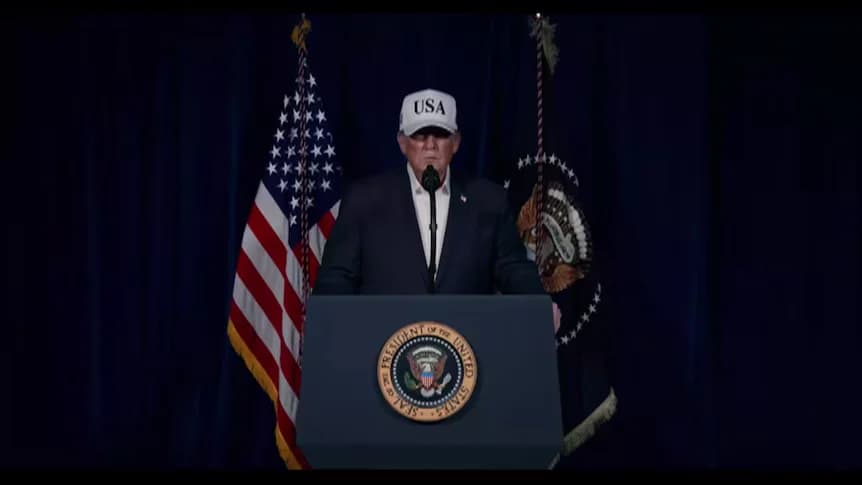
The United States and Israel have launched large-scale military strikes on Iran, dramatically escalating tensions in the Middle East and sparking widespread international reaction. On 28 February 2026. President Donald Trump announced the beginning of “ major combat operations ” against Iran in a campaign aimed at crippling Tehran’s nuclear and ballistic missile capabilities. Trump acknowledged that American casualties were possible, stressing the long-term strategic goal of preventing Iran from posing a threat to U.S. interests and allies. Israeli Prime Minister Benjamin Netanyahu described
The United States and Israel have launched large-scale military strikes on Iran, dramatically escalating tensions in the Middle East and sparking widespread international reaction. On 28 February 2026.
President Donald Trump announced the beginning of “major combat operations” against Iran in a campaign aimed at crippling Tehran’s nuclear and ballistic missile capabilities. Trump acknowledged that American casualties were possible, stressing the long-term strategic goal of preventing Iran from posing a threat to U.S. interests and allies.
Israeli Prime Minister Benjamin Netanyahu described the coordinated strikes as a pre-emptive action to eliminate what his government calls an “existential threat” posed by Iran’s nuclear ambitions. “Our joint action will create the conditions for the brave Iranian people to take their fate into their own hands,” Netanyahu said, emphasizing cooperation with U.S. forces.
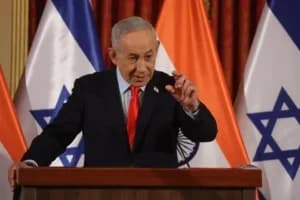
Israel’s Prime Minister Benjamin Netanyahu speaks during a press conference with his Indian counterpart Narendra Modi, in Jerusalem, Thursday, Feb. 26, 2026. (Gil Cohen Magen/Pool Photo via AP)
Iran responded with missile and drone launches targeting Israel and U.S. military bases in the region, vowing a decisive and crushing response to the attacks. Tehran’s foreign ministry condemned the strikes and insisted that Iran was prepared for sustained defence, with officials stating that the response “will be crushing” after what they called a pre-planned offensive by the United States and Israel.
The strikes come after weeks of stalled diplomatic negotiations aimed at averting conflict over Iran’s contentious nuclear programme and missile development. Recent talks in Geneva had shown limited progress, but failed to produce a breakthrough.
Reactions from governments and international figures have been swift and varied. Dmitry Medvedev, deputy chairman of Russia’s Security Council, sharply criticised the operation, saying it demonstrated that “all negotiations with Iran are a cover operation” and implying Western impatience with Tehran’s stance. Lebanese Prime Minister Nawaf Salam warned against dragging the region “into adventures that threaten its security and unity.” Norwegian Foreign Minister Espen Barth Eide questioned the legality of preventive strikes under international law.
Elsewhere, the European Union called the situation “perilous”, urging “maximum restraint” to protect civilians and uphold international norms, while countries such as India issued advisories urging their citizens to exercise “utmost caution” amid the escalating instability.
This unfolding crisis marks one of the most significant escalations between the United States, Israel, and Iran in years, raising urgent concerns about the potential for wider regional conflict and its implications for global security and diplomacy. The coming days are likely to shape not only the future of U.S.-Iran relations but also the broader strategic landscape of the Middle East.



Comments
No comments yet. Be the first to share a thought.