
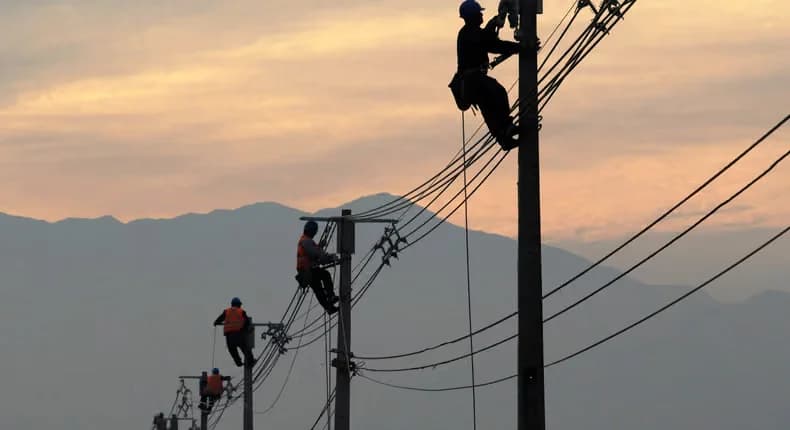
The United States is expanding its involvement in the Lobito Corridor by supporting preparations for a major electricity infrastructure initiative in the Democratic Republic of Congo (DRC) and Zambia, targeting mining regions rich in copper and cobalt. The U.S. Trade and Development Agency (USTDA) has signed an agreement with Anzana Electric Group to fund a feasibility study examining the expansion of hydropower generation and upgrades to electricity distribution networks in DRC’s Lualaba Province and Zambia’s Copperbelt and North-Western provinces. The U.S. agency says the planned infrastruc
The United States is expanding its involvement in the Lobito Corridor by supporting preparations for a major electricity infrastructure initiative in the Democratic Republic of Congo (DRC) and Zambia, targeting mining regions rich in copper and cobalt. The U.S. Trade and Development Agency (USTDA) has signed an agreement with Anzana Electric Group to fund a feasibility study examining the expansion of hydropower generation and upgrades to electricity distribution networks in DRC’s Lualaba Province and Zambia’s Copperbelt and North-Western provinces. The U.S. agency says the planned infrastructure could improve electricity reliability for mining operations and more than three million people in the surrounding communities. The newly announced U.S. support is a $3 million grant to Anzana for the feasibility study. The wider electrification initiative has previously been estimated at about $300 million, meaning the larger figure represents the proposed project rather than the value of the new U.S. grant. The study will assess the rehabilitation of existing hydropower facilities, potential new generation capacity and the expansion of electricity distribution networks. It will also examine ways to connect more homes and businesses to reliable electricity while helping mining companies reduce their dependence on costly diesel generators. The initiative forms part of the broader Lobito Corridor, a strategic route linking mineral-producing areas of the DRC and Zambia with Angola’s Atlantic port of Lobito. The corridor is being developed to improve the movement of copper, cobalt and other critical minerals to international markets, while attracting investment in transport, energy and related infrastructure. For Washington, the electricity project also supports efforts to strengthen critical-mineral supply chains. USTDA says the feasibility study will identify potential U.S. suppliers and help structure the project to attract private financing and U.S. equipment and engineering services. Reliable electricity remains a major challenge in the mineral-rich region. USTDA says mining activity consumes a large share of available power in parts of the DRC and Zambia, leaving households and local businesses underserved. Expanding generation and distribution could therefore support both mining activity and wider economic development along the Lobito Corridor. The latest initiative adds an energy component to the growing international effort around the Lobito Corridor, alongside investments in transport, digital connectivity, ports and mineral processing. Its eventual impact will depend on the results of the feasibility study, financing arrangements and whether the proposed infrastructure moves into construction.



Comments (5)
I didn’t know about this. Appreciate the reporting.
A thoughtful read on a complicated topic.
Interesting angle. Any data on how this compares to last year?
Thanks for the clear explanation. This is exactly the context I was looking for.
Thank you for reading and for joining the conversation.
I didn’t know about this. Appreciate the reporting.