
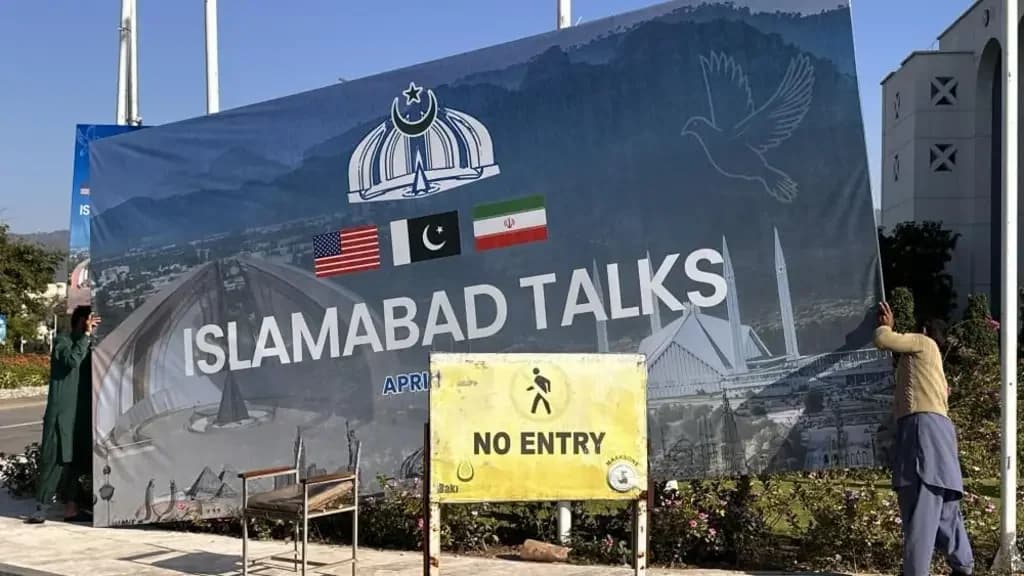
High-level peace talks between the United States and Iran in Islamabad, Pakistan, have ended without a deal, underscoring the deep mistrust that continues to define relations between the two countries. The negotiations, which lasted more than 20 hours, brought together senior delegations led by US Vice-President JD Vance and Iran’s Parliament Speaker Mohammad Bagher Ghalibaf . Despite what both sides described as intensive and serious discussions, no agreement was reached. Iranian officials were quick to blame the outcome on what they described as a failure by Washington to build trust. Ghalib
High-level peace talks between the United States and Iran in Islamabad, Pakistan, have ended without a deal, underscoring the deep mistrust that continues to define relations between the two countries. The negotiations, which lasted more than 20 hours, brought together senior delegations led by US Vice-President JD Vance and Iran’s Parliament Speaker Mohammad Bagher Ghalibaf. Despite what both sides described as intensive and serious discussions, no agreement was reached. Iranian officials were quick to blame the outcome on what they described as a failure by Washington to build trust. Ghalibaf stated that Iran entered the negotiations with goodwill and presented forward-looking proposals, but ultimately felt the US did not do enough to address Tehran’s concerns. He emphasized that past conflicts and experiences have made Iran cautious, reinforcing a long-standing lack of confidence in US intentions. From the American side, Vance maintained that the United States participated in the talks in good faith and offered what he called a clear and final proposal. However, he said Iran refused to accept key conditions, particularly regarding its nuclear program. Washington’s core demand remains that Iran commit to never developing nuclear weapons, a position Tehran continues to reject, insisting its program is peaceful. Several critical issues contributed to the breakdown of negotiations. Among them was the dispute over Iran’s nuclear ambitions, as well as tensions surrounding the Strait of Hormuz, a strategically vital route for global oil shipments. Iranian officials described control over the strait as a red line, signaling its importance to national security and economic leverage. These disagreements, combined with the broader context of recent conflict, created an atmosphere filled with suspicion and limited room for compromise. The failure to reach an agreement has cast uncertainty over the fragile ceasefire currently in place. While both sides had paused hostilities to allow space for diplomacy, the lack of progress increases the risk of renewed tensions. US President Donald Trump now faces a difficult choice between escalating pressure or continuing negotiations, a decision that could shape the direction of the conflict in the coming weeks. International leaders have called for restraint and renewed dialogue. UK Prime Minister Keir Starmer urged both sides to find a path forward and maintain the ceasefire, stressing the importance of stability in the region. Although the Islamabad talks did not produce an immediate breakthrough, diplomats suggest they could serve as a starting point for future discussions, as both sides weigh their options in a highly tense geopolitical environment.



Comments
No comments yet. Be the first to share a thought.