
A bipartisan delegation of US lawmakers has travelled to Denmark in an effort to calm rising tensions sparked by President Donald Trump’s renewed push for the United States to annex Greenland, a semi-autonomous Danish territory in the Arctic. The 11-member congressional delegation met Danish members of parliament, Prime Minister Mette Frederiksen, and Greenland’s Prime Minister Jens-Frederik Nielsen. Leading the group, Senator Chris Coons said the visit was intended to listen to local perspectives and convey them to Washington in order to “lower the temperature” around the increasingly sensit
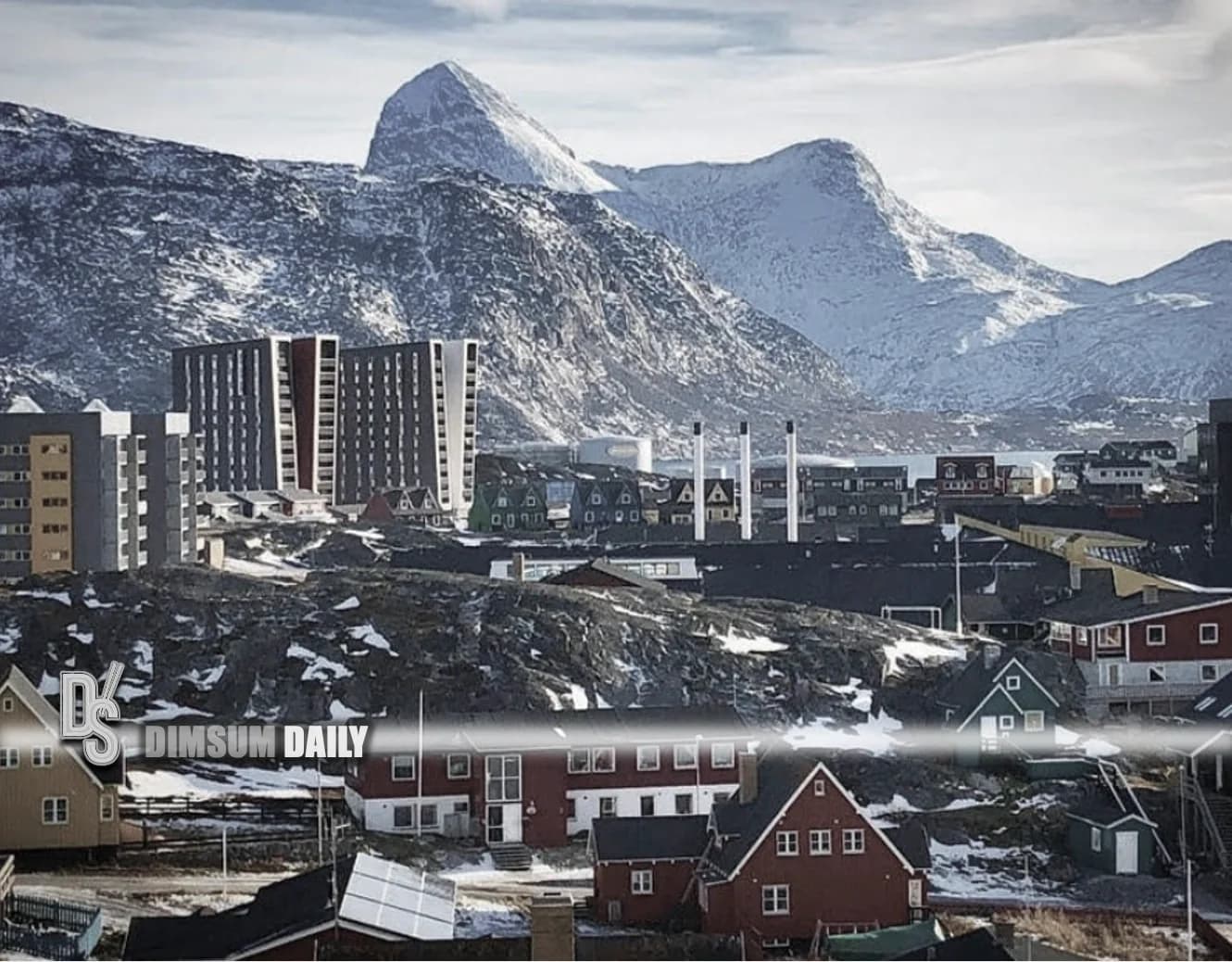
A bipartisan delegation of US lawmakers has travelled to Denmark in an effort to calm rising tensions sparked by President Donald Trump’s renewed push for the United States to annex Greenland, a semi-autonomous Danish territory in the Arctic. The 11-member congressional delegation met Danish members of parliament, Prime Minister Mette Frederiksen, and Greenland’s Prime Minister Jens-Frederik Nielsen. Leading the group, Senator Chris Coons said the visit was intended to listen to local perspectives and convey them to Washington in order to “lower the temperature” around the increasingly sensitive issue. President Trump has repeatedly argued that Greenland is vital to US national security, saying the United States could acquire the territory “the easy way” or “the hard way” — remarks widely interpreted as references to purchasing the island or using force. Both Denmark and Greenland have firmly rejected any idea of a US takeover. Greenland, while sparsely populated, is rich in natural resources and occupies a strategically critical position between North America and the Arctic. Its location makes it important for early-warning missile defense systems and for monitoring shipping and military activity in the region. The US already maintains a long-standing military presence there, with more than 100 personnel stationed at the Pituffik Space Base, which has been operated by the United States since World War Two. Existing agreements with Denmark allow Washington to deploy additional troops to Greenland if it deems necessary. Despite this, Trump has insisted that the US needs to “own” Greenland to properly defend it against potential threats from Russia or China. Denmark has warned that any military action against Greenland would effectively end Nato, the transatlantic alliance founded on the principle of collective defence among its members. Nato has never faced a scenario in which one member might use force against another. European allies have rallied strongly behind Denmark, stressing that Arctic security is a shared responsibility within Nato. Several countries — including France, Germany, Sweden, Norway, Finland, the Netherlands and the United Kingdom — have sent small military contingents to Greenland as part of reconnaissance and reassurance efforts. French President Emmanuel Macron has confirmed that France will soon deploy land, air and sea assets to the region. The US congressional visit comes just days after high-level talks in Washington failed to dissuade Trump from his plans. Although most members of the delegation are Democrats who oppose the president, it also includes Republican Senators Thom Tillis and Lisa Murkowski, both strong supporters of Nato. Asked what Congress could do to restrain the president, Murkowski pointed to lawmakers’ constitutional authority over federal spending, noting that Congress must approve funding for any military operation. Greenlandic MP Aaja Chemnitz described her meeting with US lawmakers as encouraging. “We need friends. We need allies,” she told the BBC. However, she cautioned that the situation remains volatile. “It’s a marathon, not a short sprint. The pressure from the US side is something we’ve seen since 2019. It would be naive to think that everything is over now,” she said, adding that developments are changing “almost hour by hour.” Murkowski is among the sponsors of a bipartisan bill designed to block any US annexation of Greenland. At the same time, a Republican congressman has introduced a rival bill supporting the idea, highlighting deep divisions within US politics over the issue. Trump’s envoy to Greenland, Jeff Landry, told Fox News that the US should negotiate directly with Greenland’s leaders rather than Denmark. He suggested that a deal was still possible, saying the president was “serious” and had already made his expectations clear. Landry added that future talks could involve Secretary of State Marco Rubio and Vice-President JD Vance, framing the US position as one based on “liberty, economic strength and protection,” rather than conquest. As diplomatic efforts continue, Greenland and Denmark appear determined to resist US pressure, while seeking broader international support to preserve stability in the Arctic and within Nato. Source: BBC



Comments
No comments yet. Be the first to share a thought.