
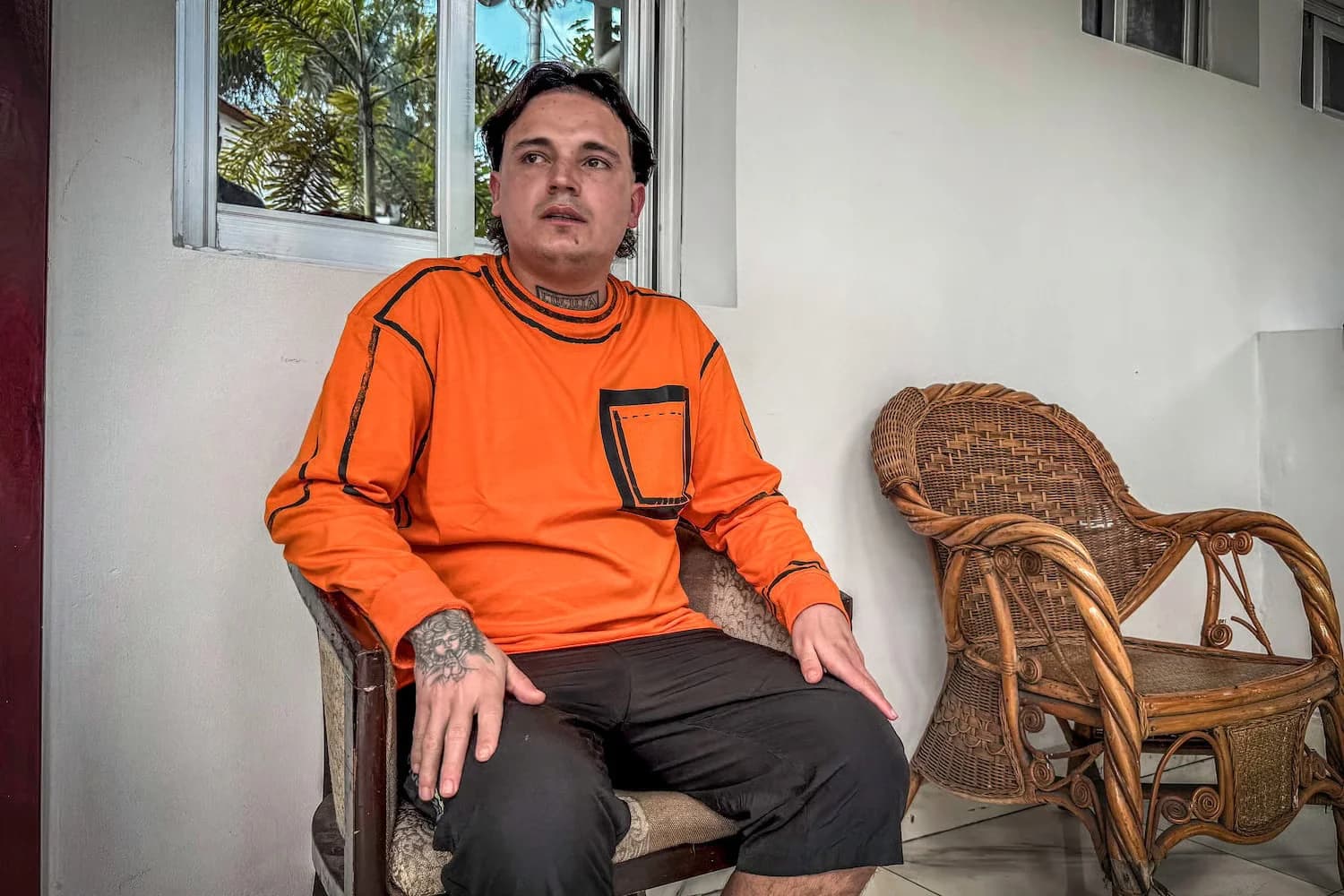
Fifteen Latin American migrants deported by the United States government to the Democratic Republic of Congo last month say they have been left in legal limbo in a hotel outside Kinshasa, forced to choose between returning to countries they fled or remaining stranded in a nation they had never heard of. The migrants, from Colombia, Ecuador and Peru, were flown to Kinshasa on 16 April as part of the Trump administration's so-called third-country deportation policy, which sends migrants to countries other than their own as a deterrent against illegal entry into the United States. The policy has
Fifteen Latin American migrants deported by the United States government to the Democratic Republic of Congo last month say they have been left in legal limbo in a hotel outside Kinshasa, forced to choose between returning to countries they fled or remaining stranded in a nation they had never heard of.
The migrants, from Colombia, Ecuador and Peru, were flown to Kinshasa on 16 April as part of the Trump administration's so-called third-country deportation policy, which sends migrants to countries other than their own as a deterrent against illegal entry into the United States.
The policy has drawn fresh scrutiny after a US judge ruled this week that one of the 15, Colombian national Adriana Maria Quiroz Zapata, was likely deported illegally after Congo had informed Washington it could not accept her due to a medical condition. The judge has ordered immigration officials to return her to the United States.
A lawyer representing the group, Alma David, said several of the deportees held US protection orders, legal shields barring their return to their home countries due to documented risks of torture or persecution. Despite this, they were removed to Congo. None of the 15 has a criminal record in the United States, according to the Congolese government.
The Department of Homeland Security, in a statement, said: "Anyone who has been deported received full due process."
Upon arrival, officials from the International Organization for Migration (IOM) gave the migrants seven days to decide whether to return to Latin America, with IOM support, or remain in Congo independently, without work authorization and at their own expense. The group is currently on three-month tourist visas.
Hugo Palencia, 25, a Colombian national who said he had been working as a food delivery driver in Aurora, Colorado, before his arrest, described the situation as an "unspoken prison."
"No human should live in this kind of unspoken prison," he said. "You don't know how your child or your spouse woke up, how your family is. It's very hard when your family depends on you."
Palencia said he had been shielded by a US judge from deportation to Colombia due to the risk of torture, but was sent to Congo instead. He has since agreed to return home, having concluded that Congo posed greater risks.
Another Colombian woman, who requested anonymity citing safety concerns, said she could not return home after being kidnapped and tortured by an armed group. She crossed into the United States from Mexico in September 2024 seeking asylum and spent 18 months in immigration detention in Arizona before being deported to Congo, despite holding a court-issued torture protection order, verified by the New York Times using government documents and court records.
"Where on earth is this place?" she said she recalled thinking upon learning of her destination. "What you're doing isn't legal."
The deportation arrangement has provoked criticism inside Congo. Human rights lawyer Jean-Claude Katende wrote that the decision was "detrimental to the interests of the Congolese," accusing the government of granting the Trump administration too many concessions, including preferential access to the country's mineral resources.
Congolese President Félix Tshisekedi, speaking at a rare press conference last week, said he had accepted the migrants "simply because it's what the Americans wanted," adding that deportees could not be "bad boys." He joked that the migrants were now "living the Congolese dream."
His remarks drew immediate criticism given that Congo is already grappling with one of the world's worst humanitarian crises, with millions of its own citizens internally displaced, largely due to the ongoing conflict in the country's east.
The migrants are housed in a hotel with barbed-wire perimeter walls on the outskirts of Kinshasa, where costs are covered by the IOM and the US government. Conditions include sporadic electricity and water, occasional rats, and a compound shared with dozens of Israeli military instructors and Congolese soldiers observed on site by the Times.
Most of the group have agreed to return to Latin America. The IOM said it does not force returns and that the seven-day deadline represents a minimum support period that can be extended.
Source: The New York Times



Comments
No comments yet. Be the first to share a thought.