
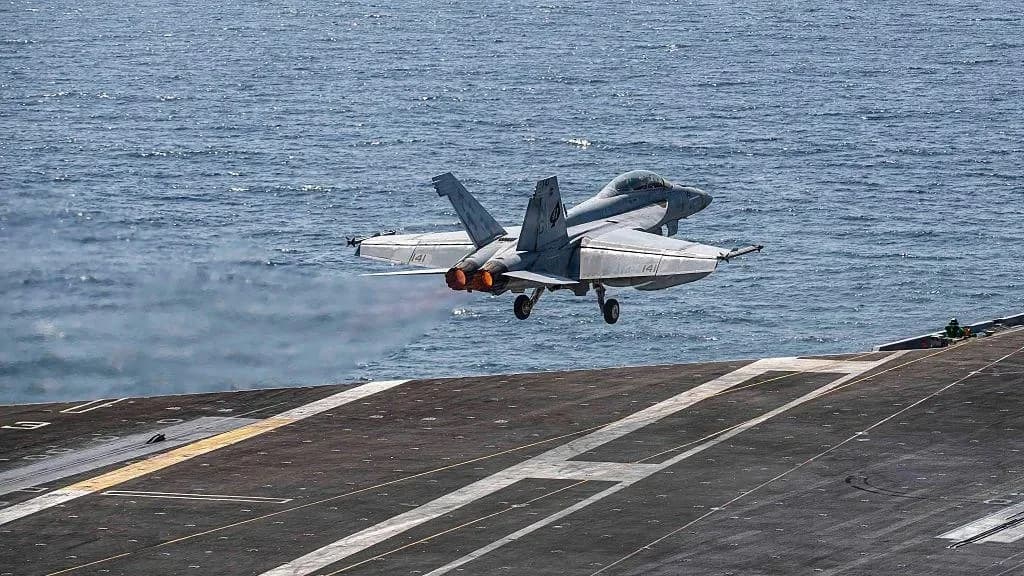
The United States military has carried out fresh strikes on targets in Iran for the second time in three days, further intensifying tensions amid a fragile ceasefire and ongoing negotiations over the three-month conflict. US Central Command (Centcom) confirmed that American forces targeted a military site in the port city of Bandar Abbas, a strategic location near the Strait of Hormuz. The military also said it shot down four Iranian one-way attack drones that it described as a threat to shipping routes in the area. According to Centcom, the Bandar Abbas site was struck just as it was preparin
The United States military has carried out fresh strikes on targets in Iran for the second time in three days, further intensifying tensions amid a fragile ceasefire and ongoing negotiations over the three-month conflict.
US Central Command (Centcom) confirmed that American forces targeted a military site in the port city of Bandar Abbas, a strategic location near the Strait of Hormuz. The military also said it shot down four Iranian one-way attack drones that it described as a threat to shipping routes in the area.
According to Centcom, the Bandar Abbas site was struck just as it was preparing to launch a fifth drone. Iranian media reported explosions in the eastern part of the city following the strikes.
The latest action follows earlier US “self-defence” strikes earlier in the week, which targeted Iranian missile positions and vessels allegedly preparing to deploy naval mines in the Strait of Hormuz. US officials said those operations were intended to protect American troops and secure international shipping lanes.
Centcom described the latest strikes as “measured, purely defensive, and intended to maintain the ceasefire.” However, Iran condemned the attacks, calling them a “grave violation of the ceasefire” and warning that it would respond to what it described as ongoing aggression.
The renewed military exchanges come despite a fragile ceasefire agreement and continuing diplomatic efforts to end a conflict that has severely disrupted maritime traffic through the Strait of Hormuz, a key global energy route through which a significant share of the world’s oil and gas supplies pass.
The escalation has already had wider economic implications, with global energy prices rising amid uncertainty over shipping security in the region.
US President Donald Trump has maintained a hardline stance, stating that Iran remains “not satisfied” with ongoing negotiations and warning that the United States could resume a larger bombing campaign if no agreement is reached.
While earlier remarks suggested a potential breakthrough in talks, officials now say progress has stalled, with both sides continuing to exchange accusations and military actions.
Iranian officials, meanwhile, insist they will not remain passive in the face of continued strikes and have vowed to respond to further attacks.
The situation remains highly volatile, with fears that continued military exchanges could further destabilize the region and derail already fragile peace efforts.



Comments
No comments yet. Be the first to share a thought.